Emergency Fund for Retirees in India: Where to Park Safety Corpus
Retirement in India isn’t just about stopping work-it’s about surviving without a regular paycheck. Many retirees face unexpected costs: a sudden hospital bill, a broken water heater, a family emergency, or even inflation eating into their pension. Without a safety net, even well-planned retirements can turn stressful. That’s where an emergency fund, or safety corpus, comes in. It’s not a luxury. It’s non-negotiable.
Why Retirees Need a Separate Emergency Fund
Most people think their pension, savings, or property is enough. But pensions in India rarely keep up with inflation. A ₹25,000 monthly pension in 2020 is worth less than ₹19,000 today in real terms. Medical inflation? It’s been rising at 12% annually over the last five years, according to the National Health Profile. A single hospital stay can wipe out months of savings.
Unlike younger workers, retirees can’t go back to work easily. They don’t have time to rebuild. That’s why your emergency fund must be separate from your regular retirement savings. Don’t mix it with your fixed deposits meant for monthly income. Don’t tie it up in mutual funds that can drop 10% in a market crash. Your safety corpus should be untouched, reliable, and instantly accessible.
How Much Should You Save?
The standard advice is three to six months of expenses. For retirees, that’s not enough. Aim for 12 to 18 months. Why? Because recovery takes longer. A broken hip doesn’t heal in 90 days. A sudden drop in pension due to policy changes? It could take a year to appeal. A family member needs urgent help? You can’t wait for a loan approval.
Let’s say your monthly expenses are ₹30,000. That means your safety corpus should be ₹3.6 lakh to ₹5.4 lakh. This isn’t about being rich. It’s about being prepared. Most retirees in India have less than ₹2 lakh in liquid assets, according to a 2024 RBI survey. That’s not enough.
Where to Park Your Safety Corpus
Not all savings accounts are equal. You need something that’s safe, liquid, and gives you a little more than zero. Here’s where your money should go.
1. High-Interest Savings Accounts
Some private banks now offer savings accounts with interest rates above 6%. Yes, you read that right. Banks like Kotak Mahindra, IDFC First, and IndusInd offer 6.5% to 7% for senior citizens. Compare that to the 3.5% most public sector banks give. The difference? On ₹5 lakh, you earn ₹35,000 extra per year. That’s ₹2,900 extra every month-enough to cover a rise in medicine prices.
These accounts let you withdraw anytime. No penalties. No lock-ins. And they’re covered by DICGC insurance up to ₹5 lakh per bank. That’s your safety net within a safety net.
2. Senior Citizen Fixed Deposits (SCFD)
SCFDs are the backbone of retiree savings. Interest rates for seniors are 0.5% to 0.75% higher than regular FDs. As of early 2026, top banks like SBI, HDFC, and Axis offer 7.25% to 7.75% for 1- to 3-year tenures.
But here’s the trick: don’t put all your corpus in one FD. Break it into three parts:
- ₹2 lakh in a 1-year FD (for quick access)
- ₹2 lakh in a 2-year FD (better interest)
- ₹1.5 lakh in a 3-year FD (highest rate)
This way, you get a portion maturing every year. Need cash? Just renew the 1-year FD. No penalty. No disruption.
3. Post Office Senior Citizen Savings Scheme (POSCSS)
Still one of the most trusted options. Launched in 2004, it’s backed by the government. Current interest rate: 8.2% (as of January 2026). That’s the highest among all retail instruments for retirees.
Minimum deposit: ₹1,000. Maximum: ₹30 lakh per person. Tenure: 5 years. You can extend it by 1 year at maturity. Interest is paid monthly-perfect for covering recurring expenses. It’s safe, simple, and immune to market swings.
Only downside? You can’t open it online. You need to visit a post office. But for most retirees, that’s a small price to pay for peace of mind.
4. Liquid Mutual Funds (for the tech-savvy)
If you’re comfortable using a smartphone, consider liquid mutual funds. These invest in ultra-short-term government bonds and treasury bills. Returns: 6.5% to 7.5% annually. You can withdraw within 24 hours. No exit load. No lock-in.
Top performers in 2025: Parag Parikh Liquid Fund, ICICI Prudential Liquid Fund, and SBI Liquid Fund. They’re safe, but not 100% risk-free. A fund can lose 0.1% in a single day during extreme market stress. That’s rare-but it happens. Only use this if you already have 80% of your corpus in guaranteed instruments.

What NOT to Do
Many retirees make these mistakes:
- Putting it in real estate - You can’t sell a house in 48 hours. And even if you can, the process takes months.
- Investing in stocks - A 20% drop in the market during a health crisis? That’s not emergency money. That’s panic.
- Using your PPF or EPF - These are long-term instruments. Withdrawing early reduces your retirement income.
- Keeping cash at home - Inflation, theft, or loss can erase it. And you won’t earn anything.
How to Set It Up in 3 Steps
- Calculate your monthly expenses - Include rent, groceries, medicine, utilities, and a buffer for unexpected costs. Don’t forget inflation. Add 8% per year.
- Divide your target corpus - Split it between POSCSS (50%), SCFDs (30%), and a high-interest savings account (20%).
- Automate and document - Set up auto-renewal for FDs. Keep a printed list of all accounts, passwords, and contact numbers. Give a copy to your trusted family member.
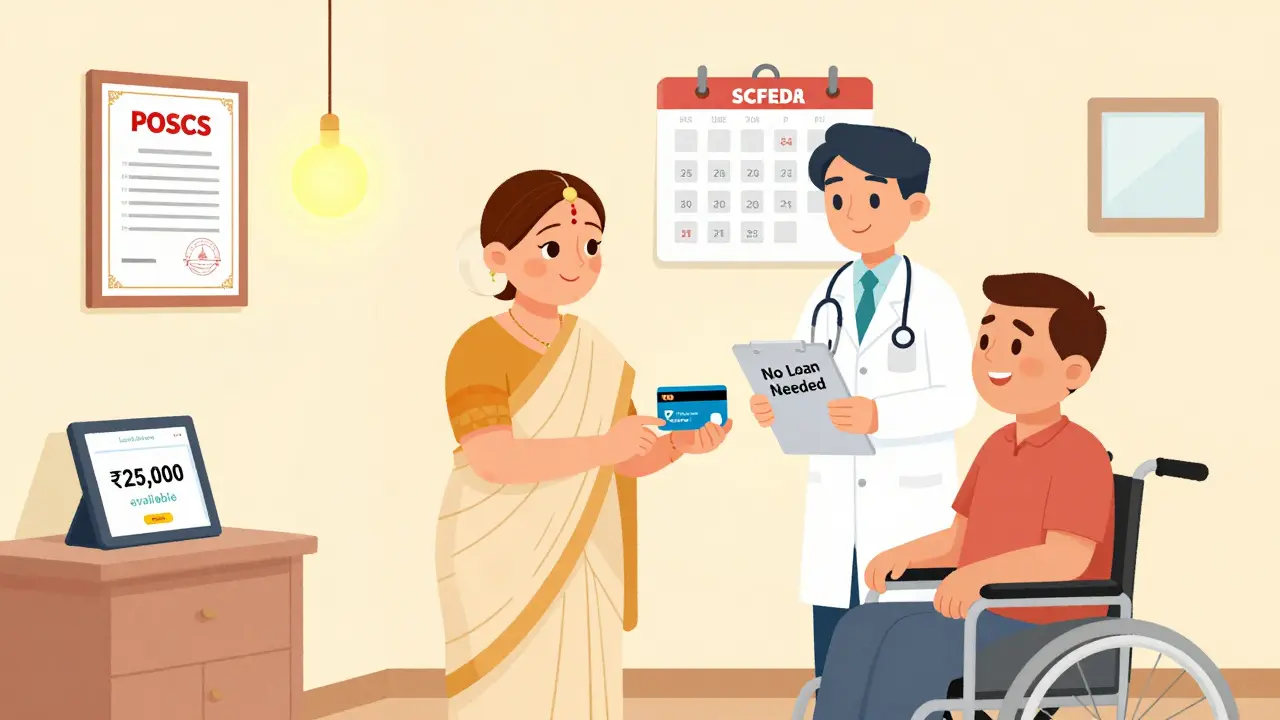
Real-Life Example: Mrs. Meena, 72, from Jaipur
She had ₹5 lakh saved. She put ₹2.5 lakh in POSCSS, ₹1.5 lakh in SBI SCFD (3-year), ₹75,000 in IDFC First savings account, and ₹25,000 in a liquid fund. In 2024, her husband had a stroke. The hospital bill was ₹1.8 lakh. She paid it from her savings account-no delays, no loans. Her POSCSS kept earning 8.2%. Her FDs renewed on time. She didn’t touch her pension or mutual funds. She slept well.
Final Thought: Safety Isn’t Optional
Your safety corpus isn’t about growing rich. It’s about staying calm. It’s about knowing that if tomorrow brings a crisis, you won’t have to beg, borrow, or sell what you’ve spent decades building. In India, where social safety nets are thin, this is your own personal insurance policy. Start small. Start now. Even ₹50,000 in a high-interest account is better than nothing. Because when you’re retired, peace of mind isn’t a luxury. It’s your only currency.
Can I use my PPF account as an emergency fund?
No. PPF has a 15-year lock-in. You can only withdraw partial amounts after 6 years, and only under strict conditions like medical emergencies. Even then, the process takes weeks. It’s designed for long-term retirement savings, not short-term emergencies. Use it for your future, not your today.
Is it safe to put all my emergency fund in one bank?
No. DICGC insurance covers only ₹5 lakh per bank per depositor. If you have ₹6 lakh, split it: ₹5 lakh in one bank, ₹1 lakh in another. This ensures full protection even if a bank fails. Don’t risk losing money because you trusted one institution too much.
Can I use a recurring deposit (RD) for my safety corpus?
Not recommended. RDs require fixed monthly contributions. If you miss a payment, you lose interest and may face penalties. Emergency funds need to be flexible-no obligations, no deadlines. A savings account or FD is better because you control when and how much to withdraw.
What if I need more than ₹5 lakh in emergency funds?
Build it in stages. First, max out your POSCSS (₹30 lakh limit). Then, open SCFDs in multiple banks. You can have FDs in SBI, HDFC, ICICI, and a private bank. Combine with high-interest savings accounts. Spread it across 3-4 institutions to stay under the ₹5 lakh insurance limit per bank. This is standard practice for retirees with larger savings.
Should I keep my emergency fund in rupees only?
Yes. Foreign currency accounts are not practical for emergencies in India. Hospitals, pharmacies, and service providers don’t accept USD or EUR. You’ll need to convert, which takes time and costs fees. Rupees are your only working currency here. Stick to INR.