Physical Share Certificates vs Demat in India: Why Digital Holdings Win
Imagine holding a stack of dusty papers in your safe. Each sheet represents ownership in a company you believe in. Now, imagine clicking a button on your phone to sell those same shares instantly. The first scenario is the old world of physical share certificates. The second is the modern reality of Demat accounts, which are electronic accounts used to hold securities like stocks and bonds in digital form. In India, the debate between these two methods isn't just about convenience; it's about safety, speed, and sanity.
If you are new to the Indian stock market, you might have heard stories from older investors who swear by their paper trails. But here is the hard truth: physical certificates are largely obsolete. They are slow, risky, and prone to fraud. Meanwhile, dematerialized (Demat) holdings have become the standard for a reason. Let’s break down why digital holdings win every time, looking at the mechanics, the risks, and the actual experience of trading in India today.
The Paper Trail: How Physical Share Certificates Worked
To understand why we moved away from paper, we need to look at how physical certificates functioned. A physical share certificate is a printed document issued by a company that proves you own a certain number of its shares. It contains specific details: your name, the number of shares, the unique Folio Number, and signatures from company officials.
In the past, if you wanted to buy shares, you filled out a form, sent it to the company or a broker, and waited weeks for the paper to arrive in the mail. If you wanted to sell, you had to physically hand over the certificate to the buyer or your broker. This process involved manual verification, stamp duty payments, and courier services.
Folio Numbers were unique identifiers assigned to each shareholder holding physical certificates. These numbers were crucial because they linked your physical papers to the company’s register of members. However, this system was incredibly fragile. Lose the certificate? You’re in trouble. Forget the Folio Number? Good luck finding your records. The entire process was bottlenecked by human error and physical logistics.
The Digital Shift: What Is a Demat Account?
A Demat account converts physical securities into electronic format. Think of it like a bank account, but instead of money, you hold stocks, bonds, mutual funds, and government securities. When you buy a share through a Demat account, no paper changes hands. Instead, an entry is updated in your account showing you own one more share. When you sell, that entry is reduced.
This system relies on two central depositories in India: NSDL (National Securities Depository Limited) and CDSL (Central Depository Services Limited). These entities act as the backbone of the digital market. They don’t hold the shares themselves but maintain the records of who owns what. Your Demat account is held with a Depository Participant (DP), which is usually your stockbroker or a bank authorized by NSDL or CDSL.
The shift to Demat wasn’t just a technological upgrade; it was a regulatory necessity. The Securities and Exchange Board of India (SEBI) mandated dematerialization to reduce fraud and increase efficiency. Today, almost all listed companies issue shares only in electronic form. Getting a physical certificate is now an exception, not the rule, and often requires special permission and additional fees.
Speed and Efficiency: The T+1 Settlement Advantage
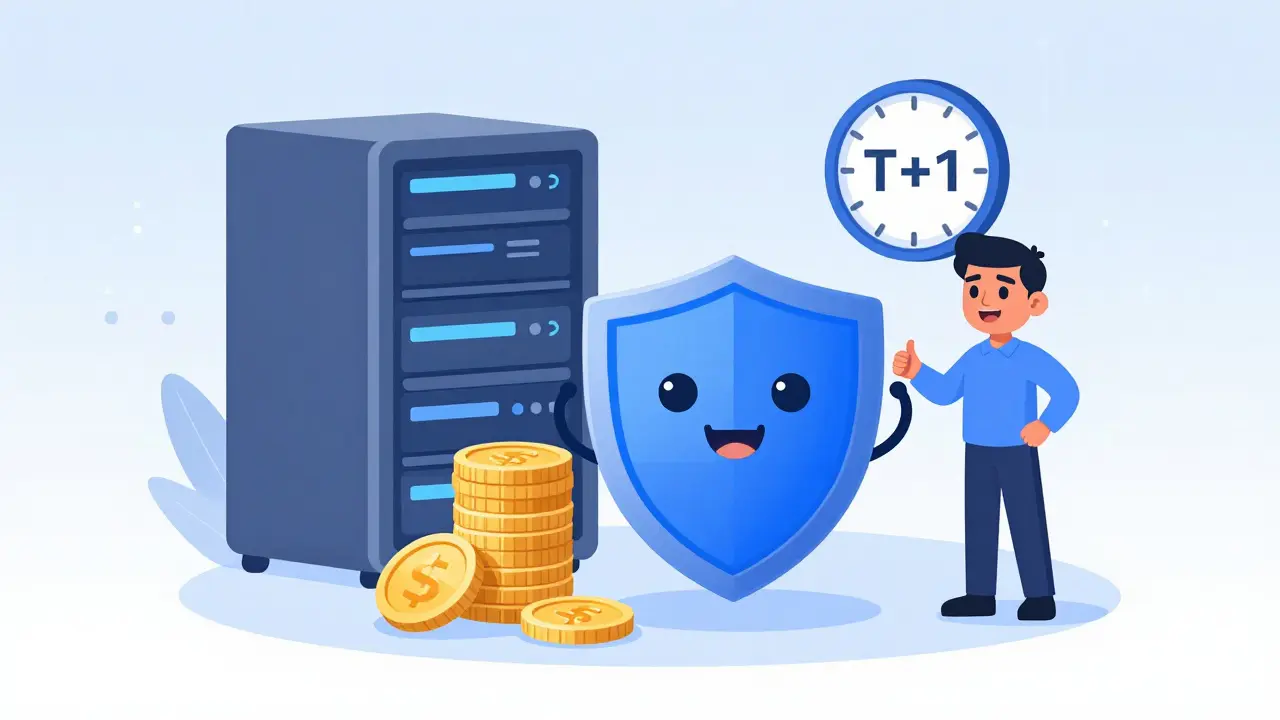
One of the biggest advantages of Demat accounts is speed. In the physical era, selling a stock could take days or even weeks to settle. You had to deliver the certificate, wait for verification, and then receive payment. In the Demat system, settlement happens electronically. As of recent updates, India operates on a T+1 settlement cycle, meaning if you buy a stock on Monday, it appears in your Demat account by Tuesday, and the money is deducted from your bank account simultaneously.
This speed eliminates the risk of "delivery failure." In the past, if a seller didn’t send the physical certificate on time, the transaction would fail, causing losses and legal headaches. With Demat, the transfer is instant and guaranteed by the depository infrastructure. For active traders, this difference is massive. You can react to market movements in real-time without worrying about postal delays.
Safety and Fraud Prevention
Physical certificates are vulnerable to theft, fire, water damage, and loss. I’ve heard stories of investors losing boxes of certificates during house moves or natural disasters. Replacing them is a nightmare involving affidavits, indemnity bonds, and months of waiting. Worse, physical certificates can be forged. Counterfeit documents have been used to duplicate shares and defraud both buyers and companies.
Demat accounts eliminate these risks. Your holdings are stored in secure servers maintained by NSDL or CDSL. Even if your laptop crashes or your phone is stolen, your shares are safe. To access them, you need login credentials and multi-factor authentication. SEBI has strict regulations for DPs to ensure cybersecurity. While no system is 100% immune to hacking, the risk is exponentially lower than leaving valuable papers in a drawer.
Additionally, Demat accounts provide transparency. You can see every transaction, dividend credit, and corporate action update in real-time. There’s no room for ambiguity about how many shares you own. This clarity protects you from fraudulent transfers or unauthorized sales.
Cost Comparison: Hidden Fees vs. Transparent Charges
Many people assume Demat accounts are expensive due to annual maintenance charges (AMC). However, when you factor in the hidden costs of physical certificates, digital wins on cost too. Physical transactions involve stamp duty, courier charges, registration fees, and potential brokerage for handling paperwork. Over time, these small costs add up significantly.
Demat accounts typically charge a flat AMC, which ranges from zero to ₹300 per year depending on the broker. Many brokers waive this fee if you maintain a minimum balance or execute a certain number of trades. Transaction charges are also lower because there’s no physical handling. Plus, you save on printing and storage costs. For long-term investors, the savings are substantial.
| Feature | Physical Share Certificates | Demat Accounts |
|---|---|---|
| Settlement Time | Days to Weeks | T+1 (Next Business Day) |
| Safety | Low (Risk of Loss/Theft/Fraud) | High (Secure Digital Storage) |
| Transaction Cost | High (Courier, Stamp Duty, Handling) | Low (Minimal Brokerage & AMC) |
| Convenience | Poor (Manual Process) | Excellent (Online Trading) |
| Dividend Collection | Check via Mail (Slow) | Direct Bank Transfer (Fast) |
| Portability | None (Tied to Location) | Global Access (Any Device) |
Corporate Actions and Dividends Made Easy
When a company announces dividends, bonuses, or rights issues, physical shareholders face a hassle. They must submit forms, provide proof of ownership, and wait for checks to arrive. Delays are common, and lost checks mean chasing the company for reissues.
In a Demat account, corporate actions are automated. Dividends are credited directly to your linked bank account. Bonus shares appear in your Demat account automatically. If there’s a stock split or rights issue, you get notified digitally, and you can exercise your options online. This automation saves time and ensures you never miss out on benefits. For example, if Reliance Industries declares a dividend, millions of Demat holders receive it seamlessly without lifting a finger.

Choosing the Right Depository Participant (DP)
Since you’ll likely use a Demat account, choosing the right DP matters. Not all brokers are equal. Look for factors like:
- Reputation: Stick with well-known brokers regulated by SEBI.
- Technology: Ensure their app and website are user-friendly and reliable.
- Charges: Compare AMCs, brokerage fees, and transaction charges.
- Customer Support: Test their responsiveness before signing up.
Popular DPs include Zerodha, Upstox, Angel One, and ICICI Direct. Each has strengths. Zerodha is known for low costs and great tech, while traditional banks offer integrated banking-Demat solutions. Consider your trading style. Active traders might prefer low-cost platforms, while passive investors might value bundled services.
Common Misconceptions About Demat Accounts
Some investors still hesitate to switch to Demat due to myths. Let’s debunk them:
"I lose control of my shares." False. You retain full ownership. The DP is just a custodian. You can transfer shares to another Demat account anytime.
"It’s too complicated." Opening a Demat account takes minutes online. KYC (Know Your Customer) norms are streamlined with Aadhaar and PAN integration.
"Digital means insecure." As discussed, digital security far exceeds physical security. Two-factor authentication and encrypted servers protect your assets.
Final Thoughts: Embracing the Digital Future
The choice between physical share certificates and Demat accounts isn’t really a choice anymore. Physical certificates are relics of a slower, riskier past. Demat accounts offer speed, safety, and simplicity. Whether you’re a beginner buying your first share or a seasoned investor managing a portfolio, going digital is the smart move. It aligns with how the rest of the world invests and ensures you’re protected against the pitfalls of paper-based systems.
Start by opening a Demat account with a reputable DP. Link your bank account. Learn the basics of trading apps. Once you experience the ease of buying and selling with a click, you’ll wonder why anyone ever bothered with paper.
Can I convert my physical share certificates to Demat?
Yes, you can convert physical shares to Demat through a process called rematerialization. You need to submit the physical certificates to your Depository Participant (DP) along with a conversion form. The DP verifies the documents with the company and credits the shares to your Demat account. This process may take a few weeks and involves some fees.
Is it mandatory to have a Demat account to trade in India?
For trading in equity shares on stock exchanges like NSE and BSE, yes, a Demat account is mandatory. SEBI requires all participants to hold securities in dematerialized form. However, for some debt instruments or mutual funds, you might be able to invest without a Demat account, though it’s less common now.
What is the difference between NSDL and CDSL?
NSDL (National Securities Depository Limited) and CDSL (Central Depository Services Limited) are the two central depositories in India. Both perform the same function: maintaining electronic records of securities. The main difference is the network of DPs associated with each. Most brokers support both, so the choice often depends on your broker’s preference. Functionally, there is no significant difference for the end-user.
How much does it cost to open a Demat account?
Many brokers offer free Demat account openings, especially if you sign up online. Some may charge a one-time setup fee ranging from ₹0 to ₹500. Annual Maintenance Charges (AMC) vary, typically between ₹0 and ₹300 per year. Always check the fee structure before signing up, as hidden costs can add up.
What happens if my Demat account provider goes bankrupt?
Your shares are safe. They are held in the central depositories (NSDL/CDSL), not by the broker. If your DP faces financial trouble, you can transfer your Demat account to another DP. The process is straightforward and ensures continuity of your investments. SEBI regulations protect investors in such scenarios.