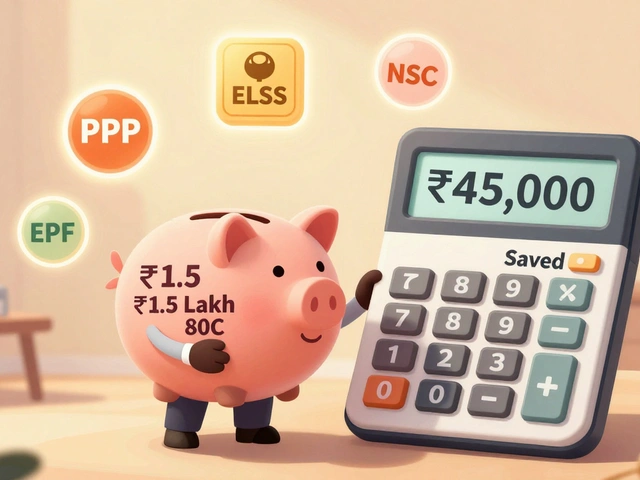
Best Tax-Saving Schemes in India for 2025: Complete Comparison and Analysis
Standing at the counter of your bank or logging into your financial app, you face a familiar dilemma. You have money to save, but you also want to keep more of it after the Income Tax Department takes its share. The year 2025 brings a crucial decision point for Indian taxpayers. With the new tax regime becoming the default choice for most salaried employees, the old rules about deductions feel like they are fading away. But here is the twist: if you stick with the Old Tax Regime, certain powerful tools still exist to legally reduce your tax bill significantly.
The landscape has shifted. It is no longer just about stuffing receipts for insurance premiums. It is about balancing liquidity, returns, and tax efficiency. We need to look closely at what actually works right now. Are you better off locking your money away for fifteen years, or do you want flexibility? Let’s break down the heavy hitters available under Section 80C a provision in the Indian Income Tax Act that allows individuals to claim deductions on specific investments up to Rs. 1.5 lakh, along with other critical sections that define your financial strategy this year.
Understanding the New vs. Old Regime Reality
Before picking a scheme, you must decide which side of the fence you stand on. The government made the New Tax Regime the default tax structure introduced in Budget 2023, offering lower slab rates but removing most exemptions and deductions the default option. If you fall into this category, almost all the traditional tax-saving instruments become irrelevant for deduction purposes. You pay less tax upfront based on revised slabs, but you lose the ability to offset income via investments.
However, many people still choose the Old Tax Regime the previous tax system allowing various exemptions and deductions under sections like 80C, 80D, and HRA. Why? Because if you have high expenditures on home loans, health insurance, or retirement savings, the math often favors keeping these benefits. For those choosing the Old Regime, the ceiling for deductions under Section 80C remains fixed at Rs. 1.5 lakh per financial year. This limit applies regardless of how much you invest; you cannot claim more than this amount even if you put in Rs. 5 lakh.
The Heavyweight Champions of Section 80C
When we talk about reducing taxable income, three giants dominate the conversation. Each serves a different purpose in your life, not just your tax return.
- Equity Linked Savings Scheme (ELSS): This is often the favorite for aggressive savers. Unlike other options, ELSS funds offer the shortest lock-in period of just three years. You get exposure to the stock market, which historically provides higher returns over long durations compared to fixed deposits. However, remember that market risk is real. Your capital is not guaranteed.
- Public Provident Fund (PPF): If safety is your priority, PPF is unbeatable. Backed by the government, it carries zero risk. The interest rate changes quarterly, hovering around 7% currently. The catch is the massive 15-year lock-in period. You can make partial withdrawals after five years, but the core money stays locked until maturity.
- National Pension System (NPS): While partially covered under 80C, NPS offers an extra advantage under Section 80CCD(1B). You can invest an additional Rs. 50,000 beyond the 80C limit specifically for retirement. This makes it a unique tool for boosting your post-retirement corpus while getting immediate tax relief.
Beyond 80C: Other Critical Deductions
Focusing solely on Section 80C leaves money on the table. Smart taxpayers layer multiple sections to maximize savings.
- Health Insurance (Section 80D): Premiums paid for medical insurance for yourself, your spouse, children, and parents qualify for deduction. For senior citizens, the limit goes up to Rs. 50,000. Preventive health check-ups are included in this limit.
- Home Loan Interest (Section 24): If you own a house with a mortgage, you can deduct interest payments up to Rs. 2 lakh per year. This is separate from the principal repayment deduction under 80C.
- Sukanya Samriddhi Yojana: Parents with a daughter below the age of 10 can open this account. It offers high interest rates similar to PPF and allows full withdrawal when the girl turns 21. It is both a tax saver and a future education fund.

Comparing Returns and Risks
To make an informed choice, you need to look beyond the tax benefit. What happens to your money after the tax is saved?
| Scheme | Lock-in Period | Risk Level | Expected Return | Tax Benefit Limit |
|---|---|---|---|---|
| ELSS | 3 Years | High | 12-15% (Historical) | Rs. 1.5 Lakh |
| PPF | 15 Years | None | ~7.1% | Rs. 1.5 Lakh |
| NPS | Until Age 60 | Moderate | 9-11% | Rs. 1.5 Lakh + Rs. 50k Extra |
| Life Insurance (Endowment) | Policy Tenure | Low | 4-6% | Rs. 1.5 Lakh |
| Tax-Free Bonds | 10 Years | Low | 5-6% | Interest is Tax-Free |
Notice the difference between ELSS and PPF. One gives you access to your money in half the time but demands you tolerate market volatility. The other guarantees safety but ties up your cash for a decade and a half. If you are young and can afford risk, ELSS usually wins on wealth creation. If you are nearing retirement or prefer certainty, PPF is the safer harbor.
Common Mistakes to Avoid
Many people approach tax planning incorrectly. They wait until March to rush into investments just to hit the 80C limit. This leads to poor decision-making. Instead, treat tax saving as a habit, not a yearly chore. Start investing early in the financial year so your money works for you longer.
Another error is ignoring liquidity needs. Don't park emergency funds in a 15-year PPF account just for the tax break. Keep liquid assets for unexpected expenses and use tax-saving instruments for surplus income only. Also, verify if your employer has already contributed to your NPS or if you are eligible for any company-specific benefits that might overlap with personal deductions.

Strategic Allocation for Different Profiles
Your age and income level dictate your strategy. A fresh graduate earning Rs. 8 lakhs a year might find the New Tax Regime beneficial due to lower slabs and lack of complex deductions. An individual earning Rs. 25 lakhs with a home loan and children will likely save more under the Old Regime by utilizing Sections 80C, 80D, and 24 simultaneously.
If you are in the 30% tax bracket, every rupee deducted saves you 30 paise in tax. Therefore, maximizing the Rs. 1.5 lakh limit becomes critical. Consider splitting this amount: put Rs. 50,000 in ELSS for growth, Rs. 50,000 in PPF for stability, and use the remaining Rs. 50,000 for child education plans or recurring deposits that qualify under 80C.
Final Thoughts on Compliance
Always maintain proof of investment. Whether it is the acknowledgment receipt from your mutual fund house or the annual statement from your insurance provider, keep digital copies safe. During filing, ensure you report these correctly in the appropriate schedule of your ITR form. Failing to disclose investments properly can lead to notices from the IT department, turning a simple tax save into a stressful legal hassle.
Can I claim tax benefits under both New and Old Regimes?
No, you must choose one regime for the entire financial year. You cannot mix and match deductions from the Old Regime with the lower slab rates of the New Regime.
Is the interest earned on PPF taxable?
No, the interest earned on Public Provident Fund is completely tax-free under the EEE (Exempt-Exempt-Exempt) status. Neither the contribution nor the interest nor the maturity amount is taxed.
What happens if I withdraw money from ELSS before 3 years?
You cannot withdraw units from an ELSS fund before the mandatory 3-year lock-in period expires. Early redemption is not permitted by SEBI regulations.
Does buying a life insurance policy guarantee tax savings?
Only if the sum assured is at least ten times the annual premium. If the premium exceeds 10% of the basic sum assured, the policy does not qualify for deduction under Section 80C.
How does the NPS additional deduction work?
Under Section 80CCD(1B), you can claim an additional deduction of up to Rs. 50,000 for contributions to the National Pension System, over and above the Rs. 1.5 lakh limit allowed under Section 80C.