EPF and Section 80C: How to Maximize Tax Savings on Your Provident Fund in India
Imagine you get a salary slip. You see money deducted for your Employee Provident Fund (EPF). It feels like a loss of cash right now. But here is the twist: that same deduction saves you money later by lowering your income tax. If you are an employee in India, understanding how EPF fits into Section 80C of the Income Tax Act is not just smart-it’s essential for keeping more of your hard-earned money.
Many workers treat their PF balance as a forgotten account. They contribute monthly without knowing the exact rules for claiming deductions or withdrawing funds. This article breaks down exactly how much you can deduct, what counts towards your limit, and how to plan your contributions so you don’t pay unnecessary taxes.
What Is the Employee Provident Fund?
The Employee Provident Fund is a government-backed retirement scheme managed by the Employees' Provident Fund Organisation (EPFO). It is mandatory for employees working in organizations with 20 or more staff members. Both you and your employer contribute to this fund every month.
Here is how it works in simple terms:
- Your Contribution: You pay 12% of your basic salary plus dearness allowance. This amount goes into your PF account.
- Employer’s Contribution: Your employer also pays 12%. However, this 12% is split. About 8.33% goes into your PF account (earning interest), and the rest goes into other schemes like the Employee Pension Scheme (EPS) and administrative charges.
The key takeaway? The money you contribute from your paycheck is yours. It accumulates with compound interest until you retire or leave your job. For the year 2025-26, the EPFO announced an interest rate of 8.25% per annum. That is significantly higher than most bank fixed deposits, making it a powerful tool for long-term wealth creation.
Understanding Section 80C Deduction Limits
This is where the tax benefit comes in. Under Section 80C, you can claim a tax deduction on the principal amount you contribute to your EPF. But there is a ceiling.
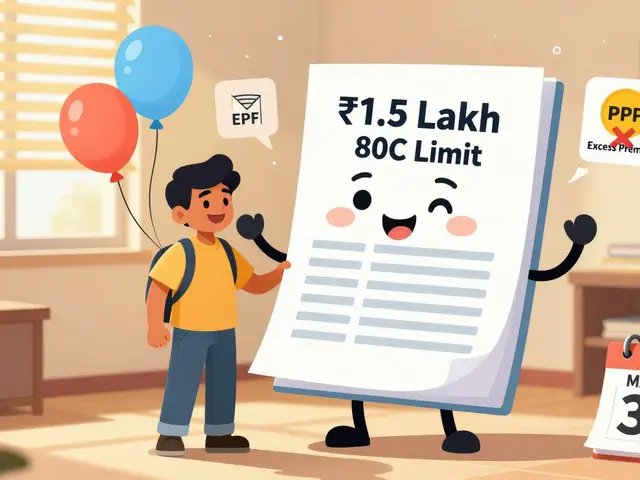
The maximum deduction allowed under Section 80C is ₹1.5 lakh per financial year. This limit applies to all investments made under this section combined. This includes:
- Employee Provident Fund (EPF)
- Public Provident Fund (PPF)
- Life Insurance Premiums
- Equity Linked Savings Schemes (ELSS)
- Tax-saving Fixed Deposits
- National Savings Certificate (NSC)
If you contribute ₹1.5 lakh to your EPF alone, you have exhausted your entire Section 80C limit. You cannot claim any additional deduction for PPF or insurance premiums that year. However, if you contribute only ₹50,000 to EPF, you still have ₹1 lakh left to invest in other 80C instruments to maximize your tax savings.
New vs. Old Tax Regime: Which One Should You Choose?
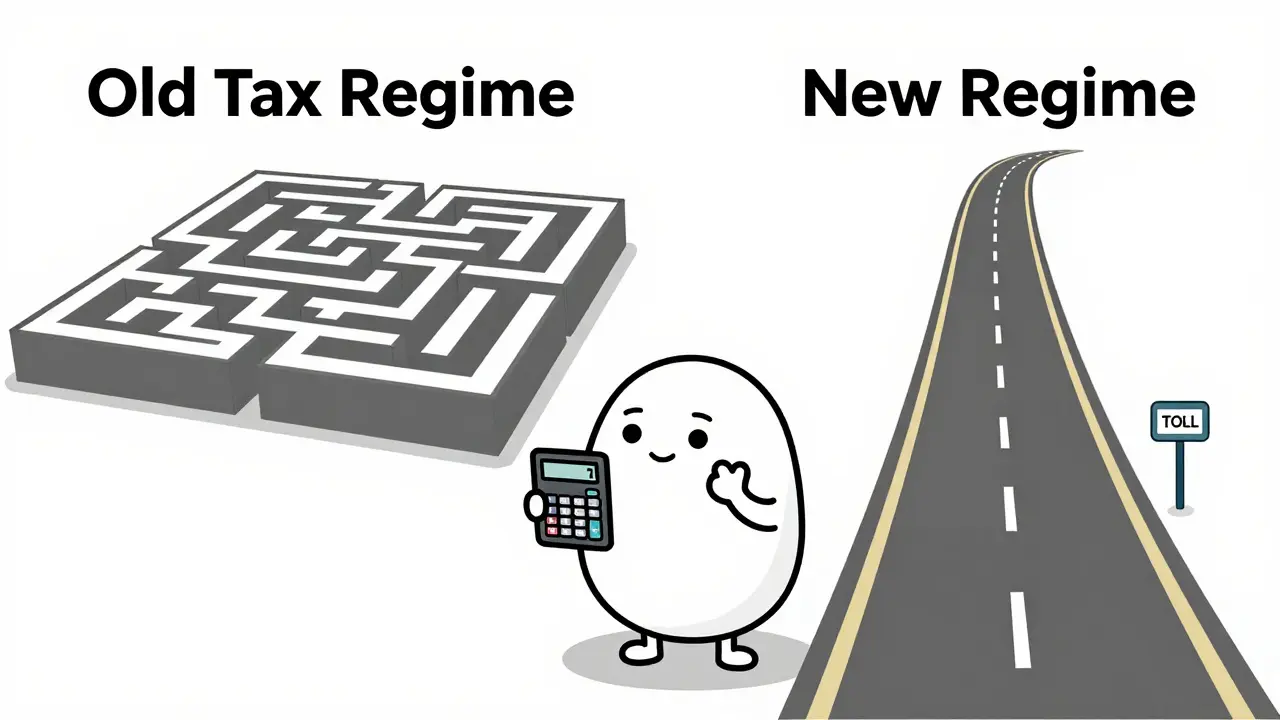
In recent budget updates, the Indian government introduced a New Tax Regime with lower slab rates but fewer exemptions. This has changed how people view Section 80C.
| Feature | Old Tax Regime | New Tax Regime |
|---|---|---|
| Section 80C Benefit | Yes, up to ₹1.5 lakh | No |
| Standard Deduction | ₹50,000 | ₹75,000 (increased in 2024 budget) |
| EPF Employer Contribution | Tax-free | Tax-free |
| Suitability | High earners with many investments | Those who prefer simplicity and lower slabs |
If you choose the New Tax Regime, you lose the ability to claim Section 80C deductions. However, you benefit from lower tax rates and a higher standard deduction. Many salaried individuals are switching to the new regime because the math works out better when they don’t have large enough investments to fully utilize the ₹1.5 lakh limit.
To decide, calculate your tax liability under both regimes. If your total eligible 80C investments are close to ₹1.5 lakh, the old regime might save you more. If your investments are minimal, the new regime likely offers a lower tax bill.

Is There a Limit on How Much EPF Interest Is Tax-Free?
Yes, and this is a crucial detail often missed. While your contributions are deductible under Section 80C, the interest earned on your EPF balance is tax-free only up to a certain limit.
According to Section 10(11) of the Income Tax Act, interest earned on EPF is exempt from tax if your annual salary does not exceed ₹5 lakh. If your salary exceeds ₹5 lakh, the interest earned is tax-free only up to 10% per annum. Any interest above 10% is taxable as "Income from Other Sources."
Since the current EPF interest rate is 8.25%, most employees do not face this issue yet. However, if the EPFO increases the interest rate to 11% or 12% in the future, high-salary earners need to be aware that the excess interest will be added to their taxable income.
How to Claim EPF Deduction in ITR
Claiming your EPF deduction is straightforward if you file your Income Tax Return (ITR) correctly. Here is the step-by-step process:
- Gather Documents: Ensure you have your Form 16 from your employer. It lists the total EPF contributions made during the financial year.
- Select ITR Form: Most salaried individuals use ITR-1 (Sahaj) or ITR-2. ITR-1 is sufficient if you have income from salary, one house property, and other sources like interest.
- Fill in Details: Go to the "Chapter VI-A Deductions" section. Enter the amount contributed to EPF under Section 80C.
- Verify Calculation: The system will automatically calculate your gross total income minus deductions to arrive at your taxable income.
- Submit: Complete verification via Aadhaar OTP or net banking.
Note: Your employer usually deducts tax at source (TDS) based on the estimated deductions. If you claimed 80C deductions while filing your return, you might receive a refund if your actual tax liability was lower than the TDS deducted.
Common Mistakes to Avoid with EPF and Tax Planning
Even experienced taxpayers make errors. Here are three common pitfalls:
- Ignoring the ₹1.5 Lakh Cap: Some people think they can deduct unlimited EPF contributions. Remember, only the first ₹1.5 lakh counts toward Section 80C. Contributions beyond this limit do not offer additional tax benefits under this section.
- Forgetting Voluntary PF (VPF): You can voluntarily contribute more than 12% of your basic salary. This extra amount (VPF) also qualifies for Section 80C deduction, up to the overall ₹1.5 lakh limit. It earns the same interest rate as regular PF, making it a great way to boost retirement savings while saving tax.
- Mixing Up Employer and Employee Contributions: Only your contribution is deductible under Section 80C. Your employer’s contribution is not part of your 80C calculation. However, the employer’s contribution is generally tax-free for you unless it exceeds 10% of your basic + DA (for those earning over ₹5 lakh).
Strategic Tips to Maximize Benefits
If you want to optimize your tax and retirement planning, consider these strategies:
1. Use VPF to Fill the Gap
If you haven’t used up your full ₹1.5 lakh Section 80C limit through insurance or ELSS, divert the remaining amount into Voluntary PF. Since VPF earns the same high interest rate as EPF, it’s a safer and potentially higher-return option compared to some tax-saving FDs.
2. Check Your Salary Structure
Your PF contribution is based on your "basic salary plus dearness allowance." Some companies structure salaries with a low basic component to reduce PF liability. While this increases your take-home pay now, it reduces your retirement corpus and tax deductions. Negotiate a higher basic component if possible, especially if you plan to stay in the organization long-term.
3. Monitor Interest Rate Changes
The EPFO announces interest rates annually. Keep an eye on news around September or October each year. Higher interest rates mean faster growth of your corpus. If rates drop below inflation, consider supplementing PF with other retirement instruments like NPS (National Pension System), which offers an additional deduction under Section 80CCD(1B).
Frequently Asked Questions
Can I claim EPF deduction if I am self-employed?
No, the Employee Provident Fund is specifically for salaried employees. Self-employed individuals can open a Public Provident Fund (PPF) account or subscribe to the Atal Pension Yojana (APY) to get similar tax benefits under Section 80C.
What happens if my EPF balance exceeds ₹5 lakh?
There is no upper limit on the EPF balance itself. However, for withdrawal purposes, amounts exceeding ₹5 lakh may require PAN linkage to avoid TDS. Also, as mentioned earlier, interest earned on balances linked to salaries above ₹5 lakh is tax-free only up to 10% per annum.
Is the employer's EPF contribution taxable?
Generally, no. The employer’s contribution up to 10% of your basic salary plus dearness allowance is tax-free. If the contribution exceeds 10%, the excess amount is treated as perquisite income and is taxable in your hands. This rule applies primarily to employees whose annual salary exceeds ₹5 lakh.
Can I withdraw EPF before retirement?
Yes, partial withdrawals are allowed for specific reasons like marriage, education of children, medical emergencies, or home purchase/construction. Full withdrawal is permitted after 5 years of continuous service upon resignation. Withdrawals before 5 years may attract TDS and taxation depending on the circumstances.
Does EPF count towards the ₹1.5 lakh limit even if I choose the New Tax Regime?
Technically, yes, the contribution is still made, but you cannot claim the tax deduction under Section 80C if you opt for the New Tax Regime. The money still grows in your PF account with tax-free interest (subject to the 10% cap for high earners), but it doesn't reduce your current year's taxable income.