Home Loan Tax Benefits in India: Deductions on Interest and Principal
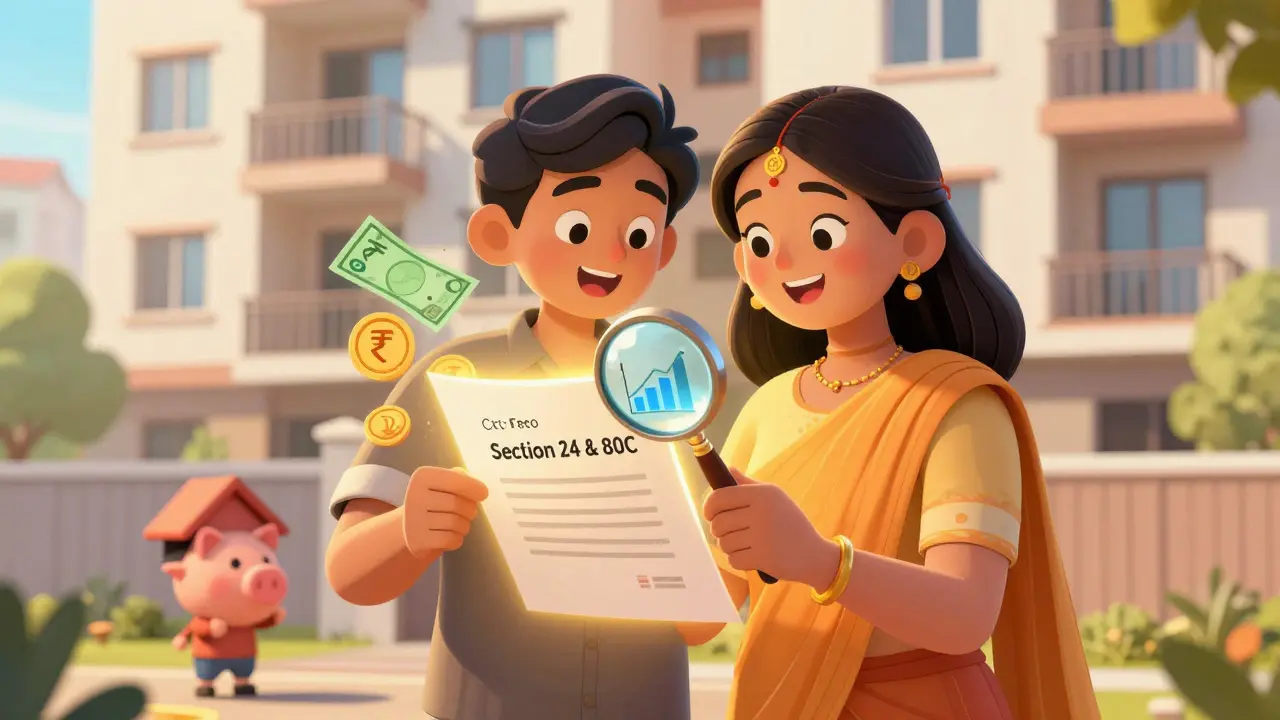
Buying a home in India isn’t just about finding the right location or negotiating the price. It’s also about understanding how the government lets you keep more of your money through tax deductions. If you’ve taken a home loan, you’re already eligible for serious tax savings - but only if you know where to look. Many people miss out on thousands of rupees every year because they don’t realize how Section 80C and Section 24 work together.
What You Can Deduct: Interest and Principal
When you pay your home loan EMI, it’s split into two parts: interest and principal. The government treats them differently for tax purposes. The interest portion is covered under Section 24, and the principal repayment falls under Section 80C.
Under Section 24, you can claim up to ₹2,00,000 as a deduction on the interest paid in a financial year. This applies whether your home is self-occupied or rented out. If you’re renting it out, you can claim the full interest amount without any cap - but you’ll also have to declare the rental income as taxable.
For the principal repayment, Section 80C lets you deduct up to ₹1,50,000 from your total taxable income. This limit isn’t just for home loans. It’s shared with other investments like PPF, ELSS mutual funds, life insurance premiums, and tuition fees. So if you’ve already invested ₹1,00,000 in PPF, you can only claim ₹50,000 as principal repayment deduction under your home loan.
First-Time Homebuyers Get Extra Help
If you’re buying your first home and the property value is under ₹45 lakh, you might qualify for an additional deduction under Section 80EEA. This was introduced in 2019 and still applies in 2026. You can claim up to ₹1,50,000 extra on home loan interest - but only if you haven’t owned any other residential property before.
This benefit is available only if the loan was sanctioned between April 1, 2019, and March 31, 2026. The loan amount must be under ₹35 lakh. So if you took a ₹30 lakh loan in 2025 for a ₹40 lakh flat, you’re eligible. But if your loan was approved in 2027, you’re out of luck.
Under Construction Homes: Wait, But Track It
If you bought a house under construction, you can’t claim any deductions until you get the possession certificate. But here’s the trick: you can still track your interest payments during the construction phase. Once you take possession, you can claim all the interest paid over the previous five years in five equal installments.
For example, if you paid ₹8,00,000 in interest while your flat was being built, you can claim ₹1,60,000 per year for five years starting from the year you moved in. This is a hidden advantage many people overlook. Keep your bank statements - they’re your proof.
Joint Loans, Joint Benefits
Many couples take home loans together. If both names are on the loan and the property, each co-borrower can claim deductions separately. That means the ₹2,00,000 interest deduction under Section 24 can be split between two people. Same with the ₹1,50,000 under Section 80C.
So if you and your spouse both pay EMI equally, you can each claim ₹1,00,000 in interest deduction and ₹75,000 in principal deduction. That’s a combined tax saving of ₹3,50,000 in deductions - which could mean ₹1 lakh+ in tax saved, depending on your tax bracket.
But here’s the catch: you must be co-owners of the property. If only one person is on the title, only that person can claim the deduction - even if the other person pays the EMI.

What Doesn’t Count
Not every payment related to your home qualifies for tax benefits. You can’t claim deductions for:
- Stamp duty and registration fees (unless claimed under Section 80C - and even then, only if paid in the same financial year as the loan disbursement)
- Pre-EMI interest (unless you’re claiming it after possession, in five equal parts)
- Home improvement loans unless they’re part of the original home loan
- EMI payments made before the loan is officially disbursed
Also, if you sell your home within five years of taking possession, any tax benefits you claimed earlier get added back to your income in the year of sale. That’s called tax reversal. So don’t plan to flip the property too soon.
Documents You Need to Keep
The Income Tax Department doesn’t ask for documents upfront - but they will if they send a notice. So keep these ready:
- Home loan sanction letter
- EMI payment receipts or bank statements showing principal and interest breakup
- Possession letter from the builder
- Property registration documents
- Form 16 from your employer (if you’re salaried)
Most banks now provide a detailed annual statement showing the exact interest and principal paid. Download it every year. Don’t wait until March.
How Much Can You Actually Save?
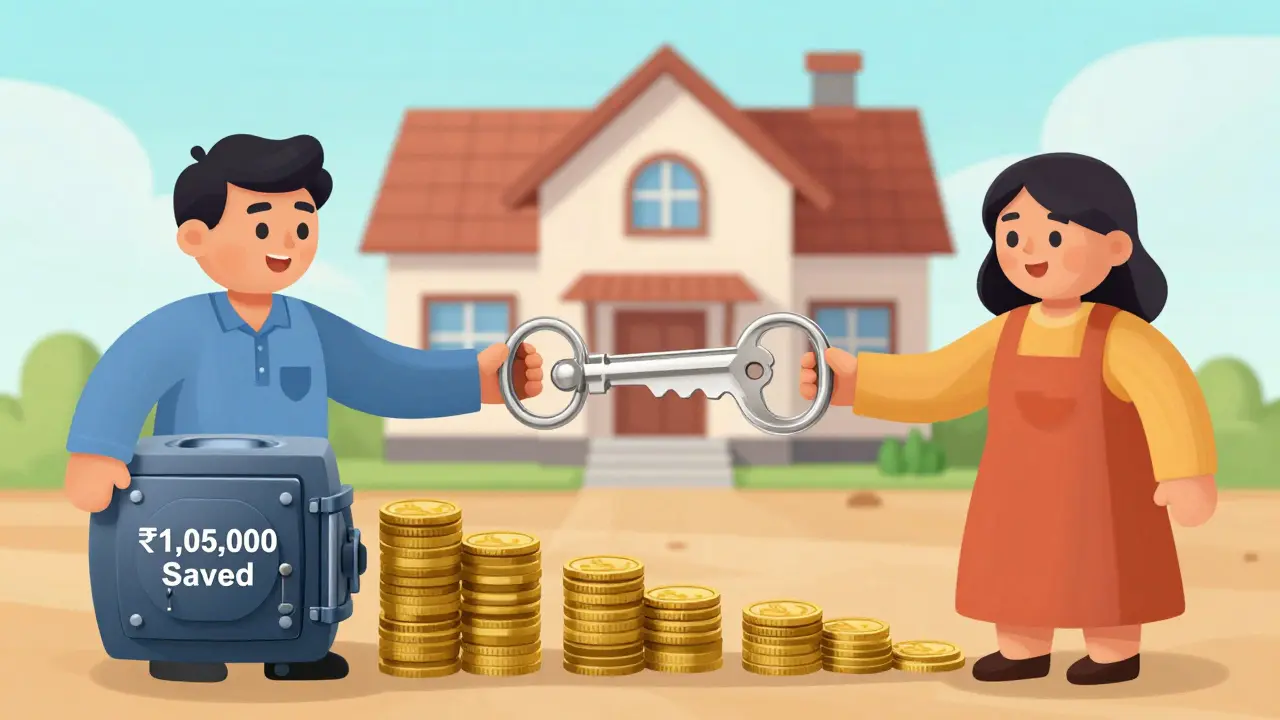
Let’s say you’re in the 30% tax bracket and you’re claiming the full ₹2,00,000 interest deduction and ₹1,50,000 principal deduction. That’s ₹3,50,000 in deductions.
30% of ₹3,50,000 = ₹1,05,000 in tax saved per year.
If you’re in the 20% bracket, you save ₹70,000. Even in the 5% bracket, you’re saving ₹17,500 - which could cover your property tax for two years.
And if you’re eligible for Section 80EEA’s extra ₹1,50,000 interest deduction? That’s another ₹45,000 saved in the 30% bracket. Total savings? Over ₹1.5 lakh a year.
Common Mistakes to Avoid
- Claiming interest on a loan taken from friends or relatives - only bank or NBFC loans qualify
- Assuming you can claim deductions for a second home without declaring rental income
- Not updating your employer with your home loan details - this means you pay more TDS than needed
- Waiting until the last week of March to collect documents
- Forgetting that the ₹1,50,000 under Section 80C is shared with other investments
One of the biggest errors? People think they need to file ITR-2 to claim these benefits. You don’t. Even if you’re filing ITR-1 (Sahaj), you can claim home loan deductions - as long as you report the income and deductions correctly.
What’s New in 2026?
There are no major changes to home loan tax rules in 2026. The existing caps under Sections 80C and 24 remain unchanged. The Section 80EEA benefit still applies until March 31, 2026 - so if you’re planning to buy, do it before April.
Some states offer additional stamp duty waivers or subsidies for first-time buyers, but those aren’t federal tax benefits. Always check with your state’s revenue department if you’re eligible for local incentives.
There’s no talk of a new tax regime change affecting home loans in 2026. The old regime still gives better benefits for most homebuyers. If you’re in the new tax regime (with lower rates but no deductions), you won’t get any home loan tax benefits. So choose your regime wisely when filing your returns.
Bottom Line
Home loan tax benefits in India aren’t just a perk - they’re a major financial advantage. For most middle-income buyers, they reduce the real cost of owning a home by 15-25%. The key is knowing what you’re eligible for and claiming it correctly.
Don’t treat your home loan like a regular debt. Treat it like a tax-saving instrument. Track your payments. Save your documents. Understand the rules. And don’t assume your bank or employer will do it for you.
Every rupee you save on taxes is a rupee you can reinvest - whether it’s in your child’s education, your retirement fund, or your next property.
Can I claim home loan tax benefits if I’m self-employed?
Yes. Self-employed individuals can claim deductions under Section 80C for principal repayment and Section 24 for interest paid, just like salaried people. You’ll need to report these in your ITR-3 or ITR-4. Keep all loan documents and EMI payment proofs ready. The rules are the same - only your tax filing form changes.
Can I claim deductions for two home loans?
You can have multiple home loans, but the deductions are limited. For your first home, you can claim up to ₹2,00,000 interest under Section 24 and ₹1,50,000 principal under Section 80C. For the second home, you can claim the full interest paid (no cap), but you must declare rental income. You cannot claim any principal repayment deduction on the second home under Section 80C unless you’re co-borrowing with someone else who hasn’t used their limit.
What if I prepaid my home loan early?
Prepayment counts as principal repayment. So if you paid ₹5 lakh extra toward principal in a year, you can claim up to ₹1,50,000 of it under Section 80C - but only if you haven’t hit your limit with other investments. The interest portion of your EMI is still eligible for Section 24 deduction, even if you paid off the loan early. Just get a certificate from your lender showing the interest paid during the year.
Can I claim tax benefits if I bought a plot and plan to build later?
No. Tax deductions for home loans apply only when the loan is for purchasing or constructing a residential property. Buying land alone doesn’t qualify. You must start construction and get possession of the house before claiming any deductions. Loan interest during the land purchase phase is not eligible.
Do NRIs get home loan tax benefits in India?
Yes, but only if they have taxable income in India. If an NRI owns a property in India and pays EMIs from overseas funds, they can claim deductions under Sections 80C and 24 - but only against income earned in India, like rental income or capital gains. They cannot claim these deductions against foreign income. The rules are the same, but the tax base is limited to Indian-sourced income.