PPF Partial Withdrawal Rules in India: Limits, Timelines, and Strategies
You have been diligently paying into your Public Provident Fund (PPF) account for years. You treat it as a safe haven for your long-term wealth, enjoying the triple tax advantage of EET is a tax regime where contributions are exempt from tax, earnings are exempt from tax, and withdrawals are exempt from tax. But then life happens. Maybe you need to fund your child’s higher education, pay for a medical emergency, or consolidate high-interest debt. The money is there, locked away until maturity. Can you touch it? Yes, but with strict conditions.
The government designed the Public Provident Fund is a long-term savings scheme backed by the Government of India with a lock-in period of 15 years to encourage disciplined saving for retirement. Consequently, accessing those funds before the 15-year mark is not as simple as withdrawing cash from a savings account. Understanding the exact mechanics of partial withdrawals can save you from application rejections and unnecessary financial stress.
When Can You Start Withdrawing?
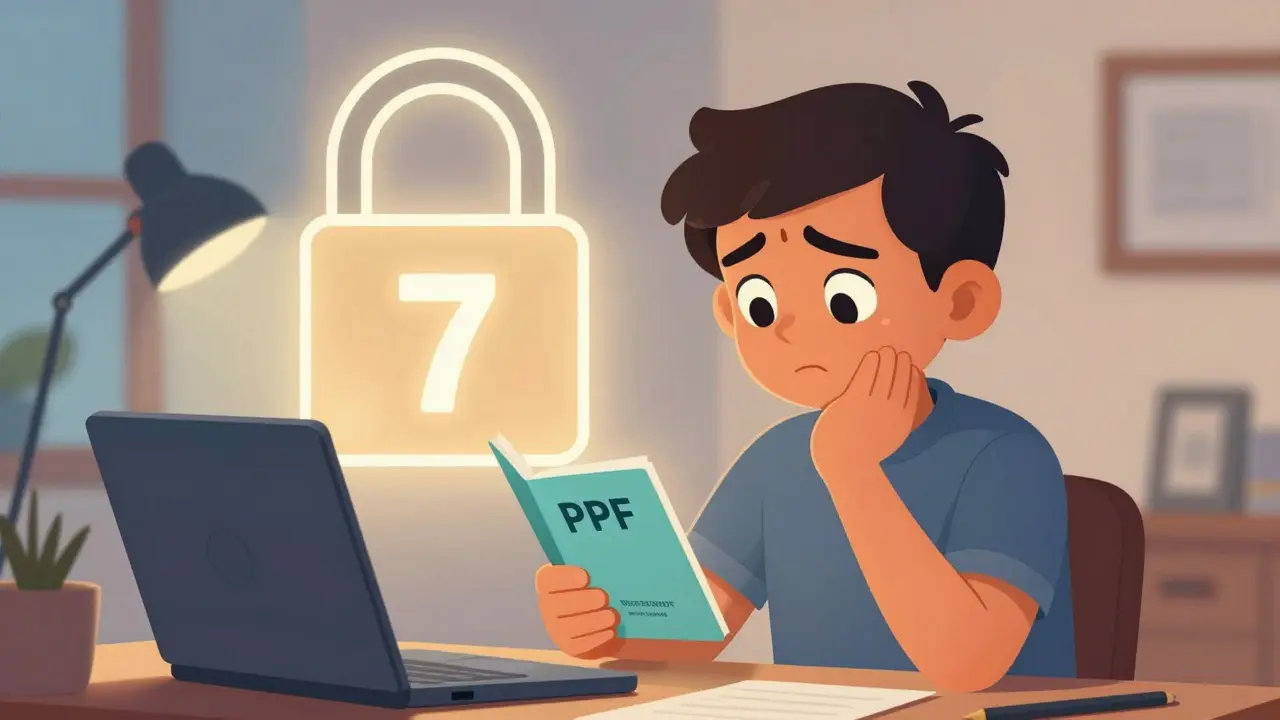
The most critical rule to remember is timing. You cannot withdraw money from your PPF account during the first seven years. This is a hard lock-in period. The clock starts ticking from the beginning of the financial year (April 1) in which you opened the account.
For example, if you opened your PPF account in June 2020, your first eligible financial year for partial withdrawal begins on April 1, 2027. You must wait until the start of the 8th financial year. If you try to submit an application before this date, the bank or post office will reject it outright. There are no exceptions for emergencies during these first seven years. Your only options during this initial phase are taking a loan against the PPF balance or closing the account prematurely due to specific reasons like permanent disability or death of the holder.
How Much Can You Withdraw?
Once you cross the seven-year hurdle, you are allowed to make one partial withdrawal per financial year. However, you cannot take out whatever amount you want. The limit is calculated based on your account balance.
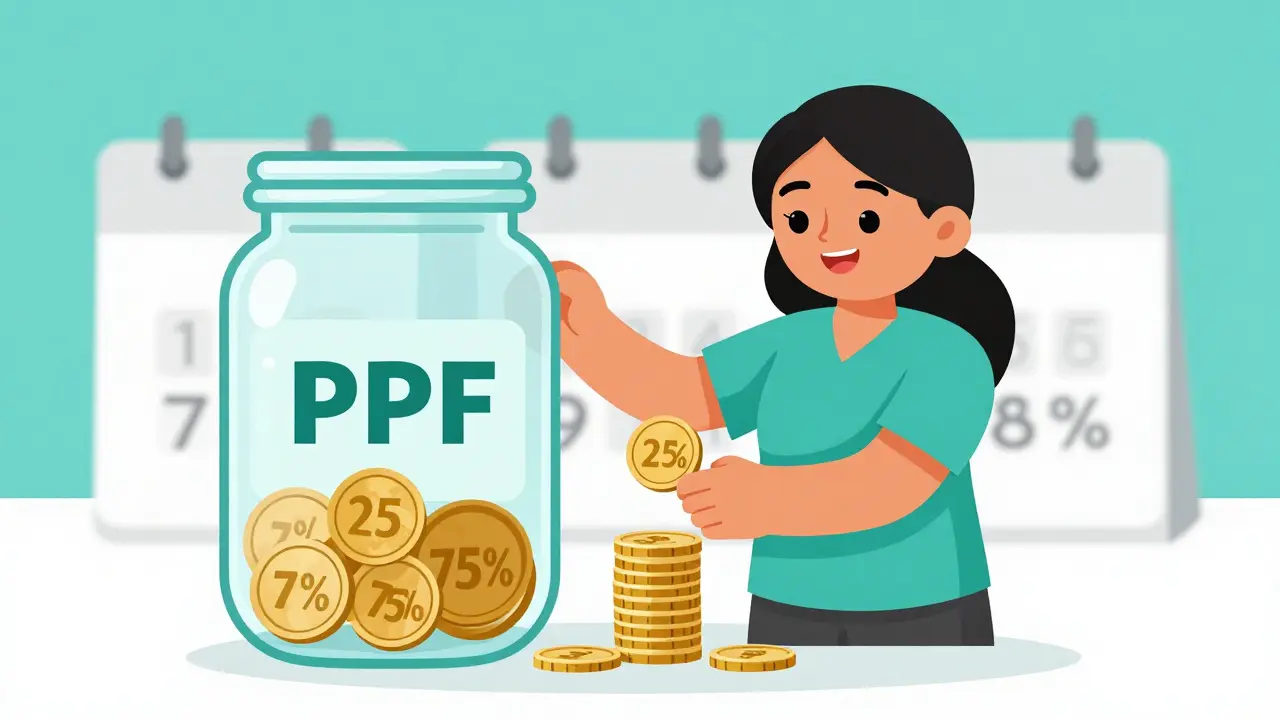
You can withdraw up to 25% of the balance at the end of the immediately preceding financial year. Alternatively, you can choose 25% of the balance at the end of the second preceding financial year. Most people opt for the immediately preceding year because interest accumulates annually, meaning that balance is usually higher.
| Financial Year | Balance at End of FY | Eligible Withdrawal Amount (25%) |
|---|---|---|
| FY 2023-24 | ₹1,00,000 | - |
| FY 2024-25 | ₹1,15,000 | ₹28,750 (based on FY 2023-24 balance) |
| FY 2025-26 | ₹1,32,000 | ₹28,750 (based on FY 2024-25 balance) |
In the table above, notice that even though the balance grew in FY 2025-26, the withdrawal limit is still based on the previous year's closing balance. This means your available liquidity is always lagging by one year. If you need a large sum urgently, you might be disappointed by the cap. Also, keep in mind that this 25% limit applies to the total balance, including the principal and accumulated interest.
The Application Process and Timeline
Getting the money out requires paperwork. You cannot do this via mobile banking apps in most cases; you typically need to visit the branch where you hold the account or use the online portal if your bank supports digital PPF management.
- Fill Form C: This is the standard form for partial withdrawal. You can download it from the Income Tax Department website or pick it up at your bank branch.
- Provide Details: You need to specify the amount you wish to withdraw, the reason for withdrawal (though the reason is often optional, stating it helps), and the bank account details where the funds should be transferred.
- Attach Documents: Usually, you need a copy of your PPF passbook or statement showing the current balance. Some banks may require KYC documents if they haven't been updated recently.
- Submit and Wait: Once submitted, the processing time varies. Banks typically process these requests within 15 to 30 days. Post offices may take longer, sometimes up to 45 days. During this period, the withdrawn amount continues to earn interest until the date of actual credit.
If you miss the submission window or provide incorrect details, the process restarts. Ensure your bank account linked to the PPF is active and has valid IFSC codes to avoid delays.
Tax Implications: Is It Still Tax-Free?
One of the biggest advantages of PPF is its tax-free status. When you make a partial withdrawal after the mandatory lock-in period, the entire amount-including the interest earned-is completely tax-free. There is no TDS (Tax Deducted at Source) deducted at the source.
This stands in stark contrast to other instruments like Fixed Deposits or NPS (National Pension System), where premature withdrawals might attract taxes. For PPF, the government allows you to access your corpus without penalizing you with a tax bill. However, this benefit applies only if you follow the rules. Premature closure of the account before the end of the term (except for specific reasons like disability) attracts tax on the interest accrued.
Strategies to Maximize Liquidity Without Breaking Rules
If you find the 25% limit too restrictive, you aren't stuck. There are alternative ways to access funds tied to your PPF without technically "withdrawing" them.
Loan Against PPF Balance
Between the 3rd and the 6th year of your PPF tenure, you can avail of a loan. The loan amount can be up to 25% of the balance at the end of the second preceding financial year. This is crucial because it bridges the gap when you are locked out of partial withdrawals. The interest rate on this loan is generally 2% higher than the prevailing PPF interest rate. While this seems expensive, it is often cheaper than personal loans or credit card interest rates.
Extending the Tenure
When your 15-year term ends, you can extend the account in blocks of five years. If you choose to continue contributing, you maintain the tax benefits. If you choose not to contribute further (lump sum mode), you can still make partial withdrawals every year. In this extended phase, there is no restriction on the number of withdrawals, but the 25% limit per year still applies. This strategy allows you to keep earning tax-free interest while having annual access to a quarter of your corpus.
Consolidating Debt
Before withdrawing from PPF to pay off high-interest debt, calculate the cost. PPF currently offers around 7.1% interest (subject to quarterly revision). If your credit card debt is charging 36% or a personal loan is at 12%, using PPF funds to clear that debt makes mathematical sense. You lose the compound growth on the withdrawn amount, but you gain significantly more by stopping the high-interest bleed. Just ensure you replace the withdrawn amount in future years to stay on track for your retirement goals.

Common Mistakes to Avoid
- Withdrawing Too Early: Attempting to withdraw before the 8th financial year results in automatic rejection. Plan your cash flow accordingly.
- Miscalculating the Base Year: Always check the balance at the end of the *previous* financial year, not the current running balance. This is a common error that leads to over-requesting amounts.
- Ignoring Opportunity Cost: Every rupee withdrawn stops compounding. Over 10 years, ₹1 lakh withdrawn today could have grown to nearly ₹2 lakhs. Only withdraw what is absolutely necessary.
- Multiple Applications: Remember, only one partial withdrawal is allowed per financial year. Splitting your request into two smaller transactions will result in the second one being rejected.
Final Thoughts on Managing PPF Liquidity
Your PPF account is a powerful tool for retirement, but it is not an emergency fund. Its rigidity is its strength, forcing you to save. By understanding the partial withdrawal rules, you can plan for major life events without derailing your long-term financial health. Use the loan facility in the early years if needed, and leverage the tax-free partial withdrawals later. Always weigh the immediate need against the long-term loss of compound interest. Smart planning ensures your PPF works for you, not against you.
Can I withdraw my entire PPF balance before 15 years?
No, you cannot withdraw the entire balance before 15 years unless you meet specific criteria such as permanent disability, terminal illness, or non-resident status change. Otherwise, premature closure attracts tax on the interest earned.
Is there a penalty for partial withdrawal?
There is no monetary penalty or fine for partial withdrawal after the 7th year. However, the opportunity cost is significant as the withdrawn amount stops earning compound interest.
How many times can I withdraw from PPF in a year?
You are allowed only one partial withdrawal per financial year (April to March).
Does the interest rate change if I withdraw partially?
No, the interest rate remains the same for the remaining balance. Interest is compounded annually regardless of partial withdrawals.
Can I nominate someone else to receive the withdrawal?
Partial withdrawals must be credited to the account holder's own bank account. Nominees only receive funds upon the death of the account holder.