Sukanya Samriddhi Yojana (SSY) in India: Tax-Free Savings for a Girl Child
When you have a daughter in India, planning for her future isn’t just about saving money-it’s about securing her independence. The Sukanya Samriddhi Yojana (SSY) was created for exactly that purpose. Launched in 2015 as part of the Beti Bachao, Beti Padhao campaign, this government-backed savings scheme lets parents build a tax-free fund for their daughter’s education, marriage, or any other life milestone. And unlike most investment options, it combines safety, high returns, and full tax benefits under Section 80C.
How SSY Works: Simple, Safe, and Structured
The SSY account can be opened by a parent or legal guardian for a girl child under the age of 10. Only one account per girl is allowed, and a family can open up to two accounts-one for each daughter. In rare cases, if twins are born as the second child, a third account is permitted.
You can open the account at any post office or authorized bank like SBI, HDFC, ICICI, or Punjab National Bank. All you need is the girl’s birth certificate, your ID proof, and a small initial deposit of ₹250. After that, you must deposit at least ₹250 every year to keep the account active. The maximum you can deposit in a single financial year is ₹1.5 lakh.
The account runs for 21 years from the date of opening, or until the girl turns 21, whichever comes later. But here’s the catch: you only need to make deposits for the first 15 years. After that, the money keeps earning interest until maturity, even if you stop contributing.
Why SSY Offers Better Returns Than Fixed Deposits
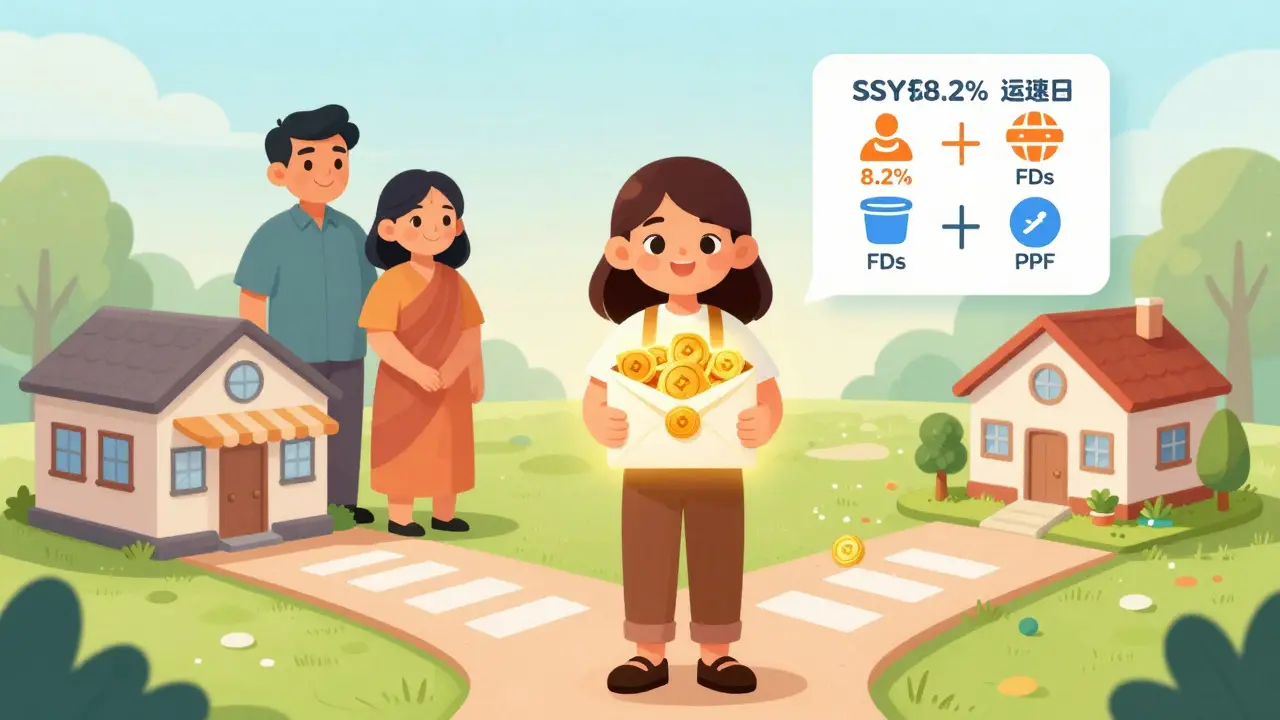
Many parents compare SSY with bank fixed deposits (FDs). The difference is stark. As of January 2026, the SSY interest rate is 8.2% per annum, compounded annually. That’s nearly double the average FD rate of 4.5% to 5.5% offered by most banks.
The interest rate is set by the government every quarter and is always higher than the 10-year government bond yield. This means even when markets dip, SSY stays stable. In 2023, the rate was 8.2%, and it stayed the same in 2024 and 2025. That consistency is rare in today’s volatile financial world.
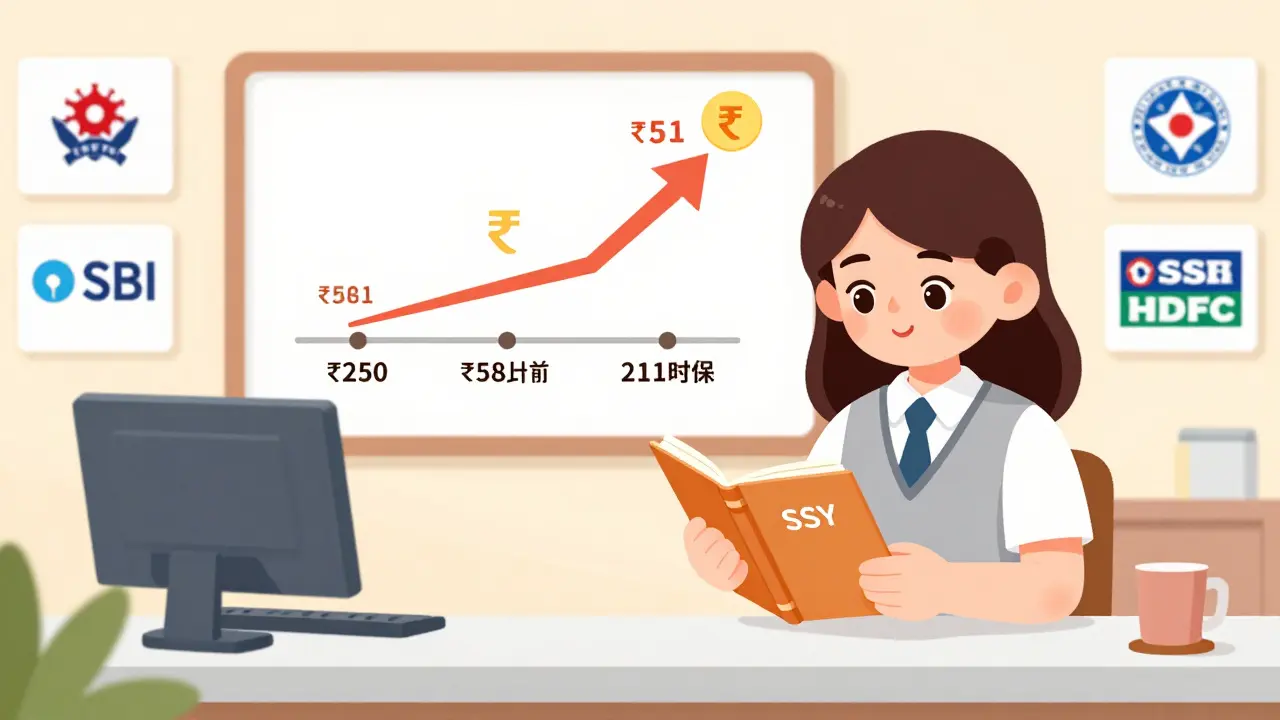
Let’s say you deposit ₹1.5 lakh every year for 15 years. By the time your daughter turns 21, your total investment of ₹22.5 lakh will grow to over ₹58 lakh-without you lifting a finger after year 15. That’s because of compounding. No other savings instrument in India offers this kind of guaranteed growth with zero risk.
Tax Benefits: Triple Advantage Under Section 80C
SSY isn’t just about earning interest-it’s about keeping more of your money. It’s one of the few investments that give you a triple tax advantage:
- Contributions are eligible for deduction under Section 80C of the Income Tax Act. You can claim up to ₹1.5 lakh per year against your taxable income.
- Interest earned is completely tax-free. No TDS, no tax filing required.
- Maturity amount is also tax-free. You get the full payout without any tax bite.
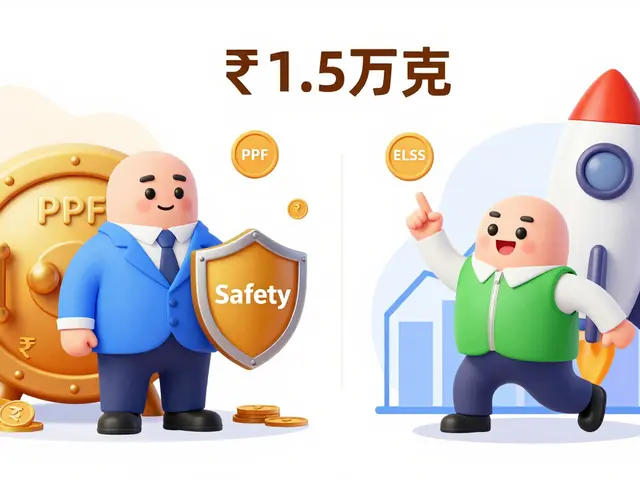
This makes SSY more powerful than even PPF (Public Provident Fund), which only offers the first two benefits. With PPF, you get tax-free interest and deduction under 80C, but the interest rate is lower (currently 7.1%). SSY beats it on both returns and tax treatment.
And unlike mutual funds or ULIPs, there’s no capital gains tax. No complexity. No fund manager fees. Just pure, government-backed growth.
When Can You Withdraw Money? Flexibility Without Risk
You can’t just pull money out anytime. But the scheme does allow partial withdrawals under specific conditions.
After your daughter turns 18, you can withdraw up to 50% of the balance for higher education. You’ll need to submit proof like an admission letter or fee receipt. The withdrawal can be made in installments over a few years, but only for approved educational purposes-engineering, medicine, management, or any recognized course.
At age 21, the account matures. The full amount, including interest, is paid out in one lump sum. If the girl gets married before turning 21, you can close the account three months before the wedding date, provided you submit proof of marriage.
There’s no option to take a loan against the SSY account. That’s intentional. The government designed it to be a locked-in, long-term savings tool. No temptation to dip into it for emergencies or shopping sprees.
SSY vs Other 80C Options: What’s the Real Winner?
There are over a dozen instruments eligible for Section 80C deductions: life insurance premiums, ELSS funds, NSC, FDs, PPF, and more. But here’s how SSY stacks up:
| Option | Interest/Return Rate | Tax-Free Growth? | Lock-in Period | Max Annual Deposit |
|---|---|---|---|---|
| Sukanya Samriddhi Yojana (SSY) | 8.2% | Yes | 21 years | ₹1.5 lakh |
| Public Provident Fund (PPF) | 7.1% | Yes | 15 years | ₹1.5 lakh |
| ELSS Mutual Funds | 10-12% (market-linked) | No | 3 years | ₹1.5 lakh |
| 5-Year Bank FD | 5.5% | No | 5 years | No limit |
| National Savings Certificate (NSC) | 7.7% | No | 5 years | ₹1.5 lakh |
ELSS funds may promise higher returns, but they’re tied to the stock market. If the market crashes, your daughter’s future fund could shrink. SSY doesn’t have that risk. It’s as safe as a government bond, with better returns than most fixed-income options.
And while PPF is also tax-free and safe, SSY beats it by over 1% in interest-and has a longer term, meaning more compounding. For a girl child’s future, SSY is the clear winner.
Who Should Not Open an SSY Account?
SSY is perfect for most families. But it’s not for everyone.
- If your daughter is over 10, you can’t open an account. No exceptions.
- If you’re not an Indian resident, you’re not eligible. NRIs can’t open SSY accounts, even if their daughter is an Indian citizen.
- If you need liquidity-like you might need the money in 5 years for a house or medical emergency-SSY isn’t for you. The lock-in is too long.
- If you’re investing for a son, this scheme doesn’t apply. It’s gender-specific by design.
Also, don’t open an SSY account just to save tax. That’s a mistake. The real value is in the long-term growth. If you’re only doing it for the 80C deduction, you’ll miss the bigger picture: building a secure, independent future for your daughter.
What Happens If the Girl Passes Away?
This is a hard question, but it’s important. If the girl child dies before the account matures, the account is closed immediately. The entire balance-principal and interest-is paid to the guardian or legal heir. There’s no penalty, no delay. The government recognizes the tragedy and acts quickly.
How to Open an SSY Account: Step-by-Step
Opening an SSY account is straightforward. Here’s how:
- Visit any authorized bank or post office. Bring your Aadhaar card, your daughter’s birth certificate, and her photo ID (if she has one).
- Fill out Form 1 (SSY account opening form). You’ll need to declare that you’re the parent or legal guardian.
- Make the first deposit-minimum ₹250. You can pay by cash, cheque, or digital transfer.
- Receive your passbook. It will show all deposits, interest earned, and the current balance.
- Set up automatic transfers if your bank supports it. That way, you never miss a year’s deposit.
Most banks now offer online SSY account opening. You can upload documents and complete the process in under 15 minutes.
Common Mistakes Parents Make
Even smart parents mess up with SSY. Here are the top three:
- Waiting too long to start. Every year you delay reduces the final amount by lakhs. Opening at age 5 instead of age 9 can add over ₹15 lakh to the final payout.
- Not depositing the full ₹1.5 lakh every year. Many think ₹250 is enough. But to maximize returns, you should aim for the maximum each year.
- Using it as a general savings account. Don’t withdraw early. Don’t use it for your own expenses. This money is for your daughter’s future-not yours.
What’s Next After SSY Matures?
When your daughter turns 21, she gets full control of the account. The money is paid directly to her. She can use it for education, starting a business, buying a home, or even investing further.
Some parents choose to transfer the amount into a joint account with their daughter or help her open a PPF account of her own. Others encourage her to invest in mutual funds or real estate. The choice is hers.
That’s the real power of SSY: it doesn’t just save money. It builds confidence, independence, and financial literacy in a young woman.
Can I open an SSY account for my adopted daughter?
Yes, if the adoption is legally recognized under Indian law, you can open an SSY account for your adopted daughter. You’ll need to provide the adoption certificate along with her birth certificate.
Can I transfer my SSY account from a post office to a bank?
Yes, you can transfer an SSY account from a post office to an authorized bank or vice versa. You’ll need to fill out a transfer request form and provide your passbook, ID proof, and account details. The process takes about 15-20 working days.
What happens if I miss a deposit one year?
If you miss a deposit, the account becomes inactive. To reactivate it, you must pay the missed years’ minimum deposit (₹250 per year) plus a ₹50 penalty per year. Interest will still be calculated on the actual deposits made.
Is SSY better than a child insurance plan?
Yes, for pure savings. Child insurance plans often come with high fees, low returns, and forced life coverage you may not need. SSY gives you higher returns, full tax benefits, and no insurance component. It’s a cleaner, simpler tool for building a corpus.
Can I claim SSY benefits if I’m an NRI?
No. SSY is only available to Indian residents. If you become an NRI after opening the account, you can keep it active until maturity, but you cannot make further deposits. Interest will continue to accrue.