Declare Rent Income: How to Report Rental Earnings in India
When you rent out a property in India, you’re legally required to declare rent income. It’s not optional. The Income Tax Department tracks this through Form 26AS, bank statements, and tenant TDS filings. If you skip it, you risk notices, penalties, or worse—back taxes with interest. This isn’t about hiding money; it’s about playing by the rules so you keep more of what you earn. Declare rent income, the legal obligation to report money earned from leasing residential or commercial property. Also known as income from house property, it’s one of the five heads of income under the Income Tax Act. Many people think if they don’t get a formal rent receipt, they don’t have to report it. That’s wrong. Even cash rent, payments through UPI, or rent from family members (if not genuinely exempt) must be declared.
Section 24, the tax provision that lets you claim deductions on rental income, is your best friend here. You can reduce your taxable rent by up to 30% for maintenance and repairs, no proof needed. Plus, you can deduct the full interest paid on a home loan for that property—no cap if it’s let out. But if you own more than one property, only one can be claimed as self-occupied. The others? They’re automatically treated as rented, even if empty. Rental income tax India, the system that taxes money earned from leasing property, doesn’t care if you’re not living there. It cares if you’re collecting rent. If you’re renting out a flat in Prayagraj while living in Delhi, you still owe tax on that income. And yes, your tenant might have already deducted TDS at 5% if your annual rent crosses ₹2.4 lakh. That’s recorded under your PAN. The system already knows.
People often confuse rent with capital gains. Selling a property? That’s different. Renting it out? That’s regular income. You don’t need to wait for the financial year to end to start tracking. Keep monthly records: who paid, when, how much, and what deductions you’re claiming. Even if you use a broker, keep copies of agreements. The IT department doesn’t ask for rent receipts every year—but if they audit you, they’ll want them. And if you’re filing ITR-1, you can’t declare rental income. You’ll need ITR-2. No shortcuts.
There’s a myth that if your rent is below ₹2.5 lakh, you’re safe. Not true. You still need to declare it. The ₹2.5 lakh threshold only applies to TDS deduction by the tenant. Your tax liability depends on your total income, not just rent. A teacher earning ₹6 lakh salary and ₹2 lakh rent? That’s ₹8 lakh taxable. A retired person with ₹3 lakh rent and no other income? Still pays tax—unless they qualify for senior citizen exemptions.
Below, you’ll find real examples of how others in India have handled rent income—from landlords in Prayagraj who claim interest deductions on home loans, to those who split rent with co-owners, to people who mistakenly thought renting to family was tax-free. These aren’t theory pieces. They’re practical, tested guides based on actual filings and IT department rulings. Whether you’re new to renting out property or have been doing it for years, there’s something here that will save you money—or keep you out of trouble.
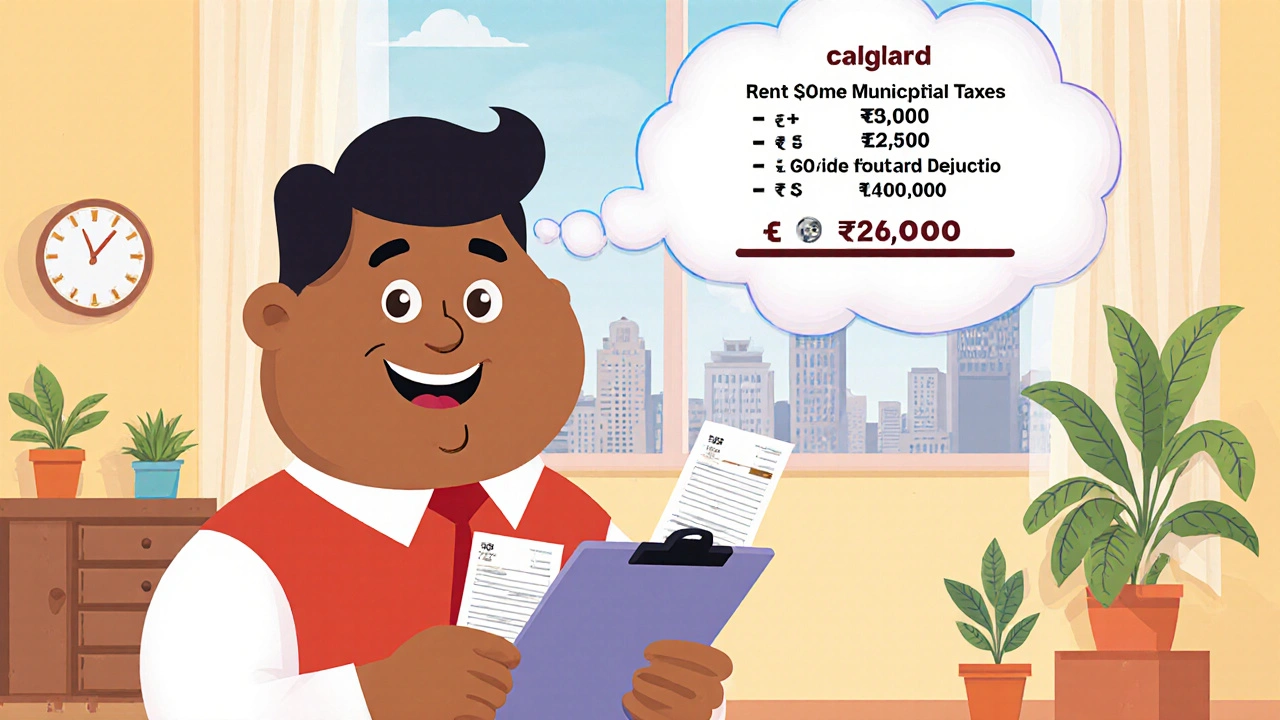
Learn how to correctly declare rental income in India and claim all eligible tax deductions to lower your tax bill. Avoid common mistakes and stay compliant with current rules.
Continue Reading