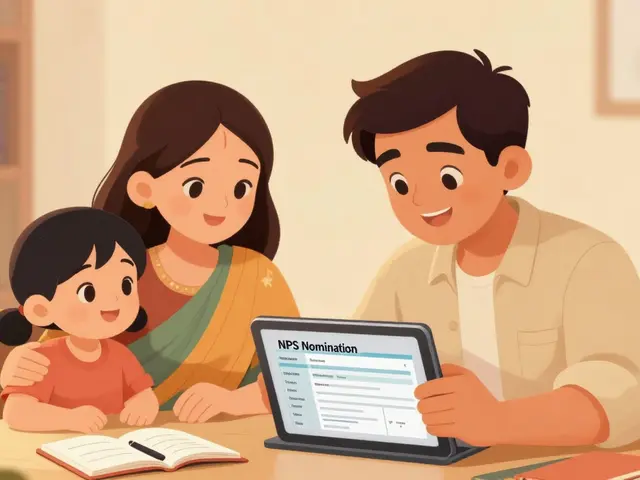
e-NPS in India: How to Open and Manage Your NPS Account Online
Starting your retirement plan in India doesn’t mean waiting until you’re 50. With the National Pension System (NPS), you can begin as early as 18 and build a secure income for your later years-all online. The e-NPS portal makes it simple: no paperwork, no long queues, no middlemen. If you’re working in India-whether you’re in Delhi, Bengaluru, or a small town-you can open and manage your NPS account in under 15 minutes. And it’s not just for salaried employees. Freelancers, gig workers, and even homemakers can join. The government backs it, the returns are tax-efficient, and your money grows over time without being locked away forever.
What is e-NPS and Why Does It Matter?
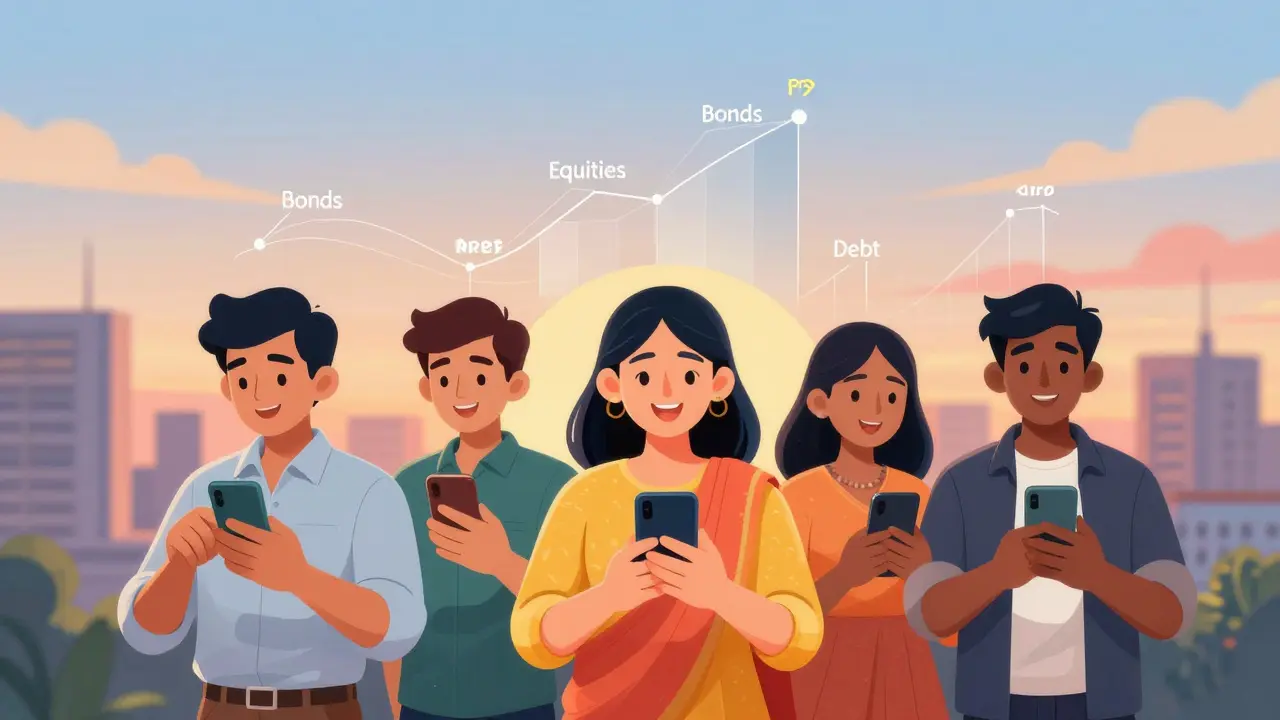
e-NPS stands for electronic National Pension System. It’s the digital version of India’s government-run retirement scheme. Unlike traditional pension plans that pay out a fixed amount after retirement, NPS lets you invest your money across different asset classes: government bonds, corporate debt, and even a small portion in equities. The idea is simple: the earlier you start, the more your money compounds. Someone who starts at 25 and invests ₹500 a month could end up with over ₹1.2 crore by 60, assuming an average annual return of 9%.
What makes NPS special? Three things: low cost, transparency, and tax benefits. The annual fund management charge is just 0.0009% of your balance-far lower than mutual funds. You can track every rupee you invest through the NPS Trust portal. And under Section 80CCD(1), you get a deduction of up to ₹1.5 lakh from your taxable income. Plus, an extra ₹50,000 under Section 80CCD(1B) if you invest in NPS alone. That’s a total of ₹2 lakh in tax savings per year.
Who Can Open an e-NPS Account?
Any Indian citizen between 18 and 70 years old can open an e-NPS account. That includes NRIs, but only if they have a valid Indian bank account and PAN card. You don’t need to be employed by the government or a big company. If you’re self-employed, running a small business, or even working part-time, you’re eligible. Minors can’t open accounts directly, but parents can open one in the child’s name and manage it until they turn 18.
There’s no upper limit on how much you can invest. But the tax benefits cap at ₹2 lakh per year. After that, you can still contribute, but you won’t get additional tax breaks. The minimum contribution per year is ₹1,000, and you need to make at least one contribution annually to keep the account active. If you skip a year, your account gets frozen-and unfreezing it costs ₹500.
How to Open an e-NPS Account Online
Opening your NPS account online takes less time than ordering food delivery. Here’s how:
- Go to the official e-NPS website: https://enps.nsdl.com
- Click on “Register as a Subscriber”
- Choose “Individual” as the subscriber type
- Enter your PAN number and mobile number
- You’ll get an OTP. Enter it and create a password
- Fill in your personal details: name, date of birth, address, email
- Select your preferred Point of Presence (PoP)-this is your service provider. Most people pick NSDL or CAMS because they’re reliable and have easy apps
- Upload a scanned copy of your ID proof (Aadhaar or passport) and address proof
- Choose your investment scheme: Active Choice (you decide the asset mix) or Auto Choice (the system shifts your money from equities to safer assets as you age)
- Submit and pay the ₹200 registration fee via UPI, net banking, or debit/credit card
Within 24 hours, you’ll get your PRAN (Permanent Retirement Account Number) via SMS and email. This 12-digit number is your key to everything-contributions, withdrawals, switching fund managers. Keep it safe.
Managing Your NPS Account: Contributions, Switching, and Tracking
Once your account is active, managing it is just as easy. You can log in anytime using your PRAN and password. From the dashboard, you can:
- Make contributions anytime-daily, monthly, or in lump sums
- Switch between fund managers (like HDFC, ICICI, or SBI) if you’re unhappy with returns
- Change your asset allocation (Active Choice) using the “Scheme Preference” tab
- View your transaction history and fund performance
- Download your annual statement
For most people, Auto Choice works best. It automatically reduces your equity exposure by 10% every five years after age 35. By 60, your portfolio is 50% debt and 50% equity. If you’re more aggressive and understand market risk, Active Choice lets you hold up to 75% in equities until age 50. But remember: higher risk means higher volatility. Don’t panic if your balance dips during a market crash. NPS is a 40-year game.
You can link your NPS account to your bank account for auto-debit. Set up a monthly transfer of ₹1,000 or ₹5,000. Even small amounts add up. If you miss a payment, you’ll get a reminder. But don’t wait too long-your account freezes after 12 months of inactivity.
Withdrawals and Exit Rules: What Happens at 60?
At age 60, you can exit NPS. But you can’t take all your money as cash. By law, you must use at least 40% of your corpus to buy an annuity-a monthly pension from an insurance company. The rest (60%) is yours to withdraw as a lump sum. That 60% is tax-free if you’ve contributed for at least 10 years. The annuity payments are taxable as income, but the tax rate is usually low since retirees have little other income.
You can delay withdrawal until 70 if you want more growth. After 70, you must exit. If you die before 60, your nominee gets the entire corpus tax-free. If you want to exit early-for medical emergencies or buying a home-you can withdraw up to 25% of your contributions after 3 years. But this is a one-time option, and you can’t do it again.
Common Mistakes to Avoid
Many people open an NPS account and then forget about it. That’s a mistake. Here’s what not to do:
- Don’t ignore your PRAN. If you lose it, getting it back is a hassle
- Don’t choose the wrong PoP. Some providers have clunky apps. Stick with NSDL or CAMS
- Don’t overinvest in equities without understanding risk. Even if you’re young, don’t put 100% in stocks
- Don’t skip contributions. Even ₹200 a month keeps your account alive and growing
- Don’t confuse NPS with EPF. NPS is voluntary. EPF is mandatory for salaried workers
Also, avoid switching fund managers too often. Performance changes slowly. Look at returns over 3-5 years, not quarterly. And never use NPS as a short-term investment. It’s built for decades, not months.
How NPS Compares to Other Retirement Options
People often compare NPS with PPF, mutual funds, or fixed deposits. Here’s how it stacks up:
| Feature | NPS | PPF | Equity Mutual Funds | Fixed Deposits |
|---|---|---|---|---|
| Minimum Investment | ₹500/year | ₹500/year | ₹500/month | ₹1,000 |
| Lock-in Period | Until 60 | 15 years | None | None |
| Max Tax Deduction | ₹2 lakh/year | ₹1.5 lakh/year | ₹1.5 lakh/year | None |
| Average Return (past 10 yrs) | 8-10% | 7-7.5% | 10-12% | 6-7% |
| Lump Sum Withdrawal | 60% tax-free | 100% tax-free | 100% taxable | 100% taxable |
| Government Backing | Yes | Yes | No | No |
NPS isn’t the highest-returning option, but it’s the only one that combines tax savings, government backing, and forced discipline. If you want to retire with dignity and not depend on your kids, NPS is the most balanced tool you have.
What Happens If You Move Abroad?
If you become an NRI and move overseas, your NPS account stays active. You can still contribute from abroad using your Indian bank account. But you can’t withdraw until 60, even if you’re living in Canada or Singapore. Once you turn 60, you can choose to receive your pension in India or have it transferred to a foreign account. The annuity payout will be in INR, so currency risk applies. Many NRIs keep their NPS open because it’s one of the few retirement tools that actually works in India’s system.
Next Steps: Start Small, Stay Consistent
You don’t need ₹10,000 a month to start. Start with ₹500. Set up auto-debit. Log in once every six months to check your balance. In five years, you’ll have over ₹30,000 saved. In 20 years, it’ll be over ₹2.5 lakh. That’s not enough to retire on, but it’s a solid foundation. Combine it with a mutual fund or two, and you’re building real wealth.
Retirement isn’t something you plan for when you’re 55. It’s something you build every day. e-NPS makes it easy. No excuses.
Can I open an NPS account without a PAN card?
No, a PAN card is mandatory to open an NPS account. It’s required for tax purposes and to verify your identity. If you don’t have one, apply for it first through the NSDL or UTIITSL website. The process takes 7-10 days.
Is NPS better than EPF?
It depends. EPF is mandatory for salaried employees and offers guaranteed returns of 8.15% (2025-26). NPS is voluntary and offers higher potential returns (8-10%) but with market risk. If you’re employed, contribute to EPF first. If you have extra money, add to NPS for extra tax savings and better long-term growth.
Can I have both NPS and a private pension plan?
Yes. NPS is not exclusive. You can have a private annuity, ULIP, or mutual fund retirement plan alongside NPS. But remember: the ₹2 lakh tax deduction limit applies to all your investments under Sections 80C and 80CCD combined. So if you’ve maxed out your EPF and mutual fund contributions, NPS is your last tax-saving option.
What happens to my NPS if I die before 60?
Your nominee receives the entire corpus tax-free. You can name up to three nominees when you open the account. Make sure your nominee details are updated. If you don’t have a nominee, the amount goes to your legal heir, but the process takes longer.
Can I change my nominee after opening the account?
Yes. Log in to your e-NPS account, go to the “Nominee Details” section, and update the information. You’ll need to upload a signed form and ID proof of the new nominee. The change is processed within 3-5 working days.
Is NPS safe from fraud or hacking?
Yes. The NPS system is managed by the Pension Fund Regulatory and Development Authority (PFRDA), a government body. All transactions are encrypted, and your PRAN is never shared with third parties. The only risk is if you share your login details. Never give your password or OTP to anyone-even if they claim to be from NPS.