Index Rebalancing in India: How NIFTY and Sector Indices Change
Have you ever noticed that your favorite large-cap stock suddenly drops out of the NIFTY 50, one of India's most watched benchmarks? It’s not always because the company is failing. Often, it’s just time for an index rebalancing.
If you trade or invest in Indian equities, understanding how these indices are maintained is crucial. It affects liquidity, fund flows, and even the valuation of specific stocks. This guide breaks down exactly what happens during these periodic reviews, why they matter to your portfolio, and how the National Stock Exchange (NSE) decides which companies stay and which go.
What Is Index Rebalancing?
Think of a stock index like a curated playlist. You want the best tracks, but tastes change, new artists emerge, and some old favorites lose their shine. To keep the playlist relevant, you have to update it periodically. That’s what index rebalancing is.
In the context of the Indian stock market, rebalancing refers to the process of adding or removing constituent stocks from an index based on predefined criteria. The goal is to ensure the index accurately reflects the current state of the economy or a specific sector.
The primary driver for this change is usually free float market capitalization. Unlike total market cap, which counts all shares, free float only counts shares available for public trading. If a promoter holds 90% of a company, those shares aren't part of the 'float.' As share prices move and companies issue new shares or buy back existing ones, this free float value changes. When it shifts significantly enough, the index composition must be adjusted to maintain accuracy.
The Mechanics: Who Decides and When?
You might wonder who has the power to kick a blue-chip company out of the NIFTY 50. It’s not a random committee of traders. The decision-making body is the Index Committee, appointed by the NSE.
This committee meets regularly-typically twice a year for semi-annual reviews-and ad-hoc meetings if there are major corporate actions like mergers or acquisitions. They follow strict methodology documents published by the NSE.
- Semi-Annual Reviews: These happen around June and December. They are comprehensive, looking at all constituents against current eligibility criteria.
- Quarterly Reviews: Some indices undergo lighter checks every three months to handle immediate changes in free float.
- Ad-Hoc Changes: If a company gets delisted, faces severe regulatory issues, or undergoes a massive merger, changes can happen instantly.
The committee doesn’t just look at numbers. They also consider qualitative factors like governance standards, liquidity, and listing history. A company might have a high market cap but poor transparency; such firms might be excluded despite meeting the numerical thresholds.
How NIFTY 50 Constituent Changes Work
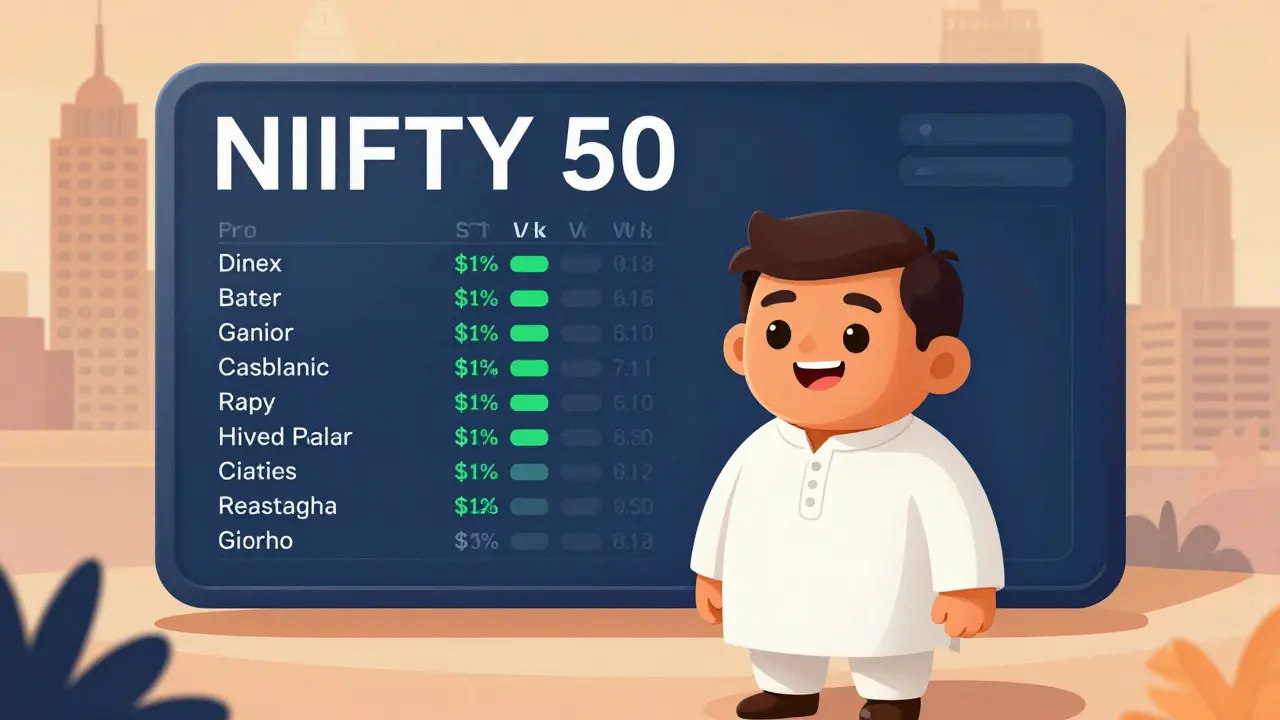
The NIFTY 50 is the heartbeat of the Indian equity market. It tracks the top 50 companies listed on the NSE by free float market capitalization. But being in the top 50 isn’t permanent.
Here is the typical journey for a stock entering or exiting the index:
- Eligibility Check: Companies must meet basic criteria: listed on NSE for at least six months, average daily turnover above a certain threshold, and no severe regulatory flags.
- Free Float Calculation: The NSE calculates the free float market cap for all eligible companies. Promoter holdings, government stakes (above 50%), and locked-in shares are excluded.
- Ranking: Companies are ranked. The top 50 make the cut. However, there’s a buffer zone. Usually, the top 40 are safe, while positions 41-60 are under scrutiny.
- Committee Decision: The Index Committee reviews the list. They may decide to retain a slightly lower-ranked company if its removal would cause excessive volatility or if it represents a critical sector.
When a change is announced, it’s big news. Institutional investors, particularly passive funds and ETFs tracking the NIFTY 50, must adjust their portfolios immediately. This creates a surge in buying pressure for incoming stocks and selling pressure for outgoing ones.

Impact on Sector Indices: NIFTY Bank, IT, and Pharma
While the NIFTY 50 gives a broad view, sector indices tell a more specific story. Indices like NIFTY Bank, NIFTY IT, and NIFTY Pharma operate similarly but with tighter constraints.
Take NIFTY Bank, for example. It includes the largest banking and financial services companies. Because the banking sector is highly regulated and consolidated, rebalancing here often reflects structural shifts in the industry. If a private bank grows rapidly and surpasses a smaller public sector bank in free float, it will enter the index.
In contrast, the NIFTY IT index has seen significant churn due to global economic cycles. During tech booms, mid-cap IT firms might surge into the top ranks, displacing older giants. When the cycle turns, those same firms might drop out. This dynamic makes sector indices more volatile than the broader market index.
| Index Name | Number of Constituents | Review Frequency | Key Selection Metric |
|---|---|---|---|
| NIFTY 50 | 50 | Semi-Annual | Free Float Market Cap |
| NIFTY Bank | 12 | Semi-Annual | Free Float Market Cap + Banking Sector Focus |
| NIFTY IT | 10 | Semi-Annual | Free Float Market Cap + IT Revenue Threshold |
| NIFTY Next 50 | 50 | Semi-Annual | Free Float Market Cap (Ranks 51-100) |
Why Rebalancing Matters for Your Portfolio
You might think, "I don't track indices, so why should I care?" Here’s the reality: index rebalancing moves money. Billions of rupees shift hands within days of an announcement.
For Passive Investors: If you hold an index mutual fund or ETF, your portfolio automatically changes. You might find yourself owning a stock you didn’t intend to buy, or losing one you liked. Understanding the rebalancing schedule helps you anticipate these shifts.
For Active Traders: Rebalancing events create predictable volatility. Stocks added to the NIFTY 50 often see a price bump due to forced buying by passive funds. Conversely, stocks removed may face short-term selling pressure. Savvy traders use this information to position themselves ahead of the effective date.
For Fundamental Investors: Inclusion in a major index is a stamp of approval. It signals liquidity, stability, and institutional interest. Exclusion can sometimes signal underlying issues, though not always. Always check the reason behind the move.
Common Pitfalls and Misconceptions
Even experienced investors get tripped up by index mechanics. Let’s clear up some common myths.
Myth 1: Higher Price Means Better Chance of Inclusion. Reality: No. It’s about market capitalization (Price × Shares Outstanding), not the share price alone. A company with a ₹100 share price and 1 billion shares is larger than one with a ₹1000 share price and 1 million shares.
Myth 2: Once In, Always In. Reality: False. The NIFTY 50 is not a lifetime club. Companies like Kingfisher Airlines or Satyam Computer Services were once constituents before crashing out due to bankruptcy or fraud. Regular reviews ensure only healthy companies remain.
Myth 3: Rebalancing Happens Overnight. Reality: The process takes weeks. The committee announces the intent, then sets an effective date. Markets react gradually as institutions plan their trades.
Looking Ahead: Trends in Index Methodology
The world of indexing is evolving. The NSE and other exchanges are increasingly incorporating Environmental, Social, and Governance (ESG) criteria into their methodologies. We’re seeing the rise of ESG-focused indices that filter constituents based on sustainability scores.
Additionally, there’s a growing emphasis on reducing concentration risk. If one company dominates an index too heavily, it skews performance. New methodologies aim to cap individual weights, ensuring a more diversified representation of the market.
As retail participation in the Indian stock market hits record highs, understanding these foundational mechanics becomes less optional and more essential. Whether you’re a long-term investor or a day trader, knowing how the game board is set up gives you a significant edge.
How often does the NIFTY 50 get rebalanced?
The NIFTY 50 undergoes a comprehensive semi-annual review, typically in June and December. There may also be quarterly reviews for minor adjustments or ad-hoc changes due to corporate actions.
What is free float market capitalization?
Free float market cap is the total value of shares available for public trading. It excludes shares held by promoters, governments, or other locked-in entities. This metric is used because it better reflects the actual liquidity and tradability of a stock.
Does getting included in the NIFTY 50 guarantee a stock price increase?
Not guaranteed, but it often leads to short-term price appreciation. Passive funds and ETFs must buy the stock to match the index, creating immediate demand. However, long-term performance depends on the company's fundamentals.
Who decides which stocks are added or removed from indices?
The Index Committee, appointed by the National Stock Exchange (NSE), makes these decisions. They follow strict methodology guidelines and consider both quantitative metrics and qualitative factors like governance and liquidity.
Can a stock be removed from the NIFTY 50 even if it is profitable?
Yes. Profitability is not the sole criterion. If a company’s free float market cap drops below the threshold, or if it fails to meet liquidity or regulatory standards, it can be removed regardless of its profit status.