Risk-O-Meter in Indian Mutual Funds: How SEBI’s Risk Labels Help You Choose
When you invest in a mutual fund in India, you’re not just picking a name that sounds promising. You’re betting your money on a mix of stocks, bonds, or other assets - and those assets come with risk. But how do you know if a fund is too risky for you? That’s where the Risk-O-Meter comes in.
What Is the Risk-O-Meter?
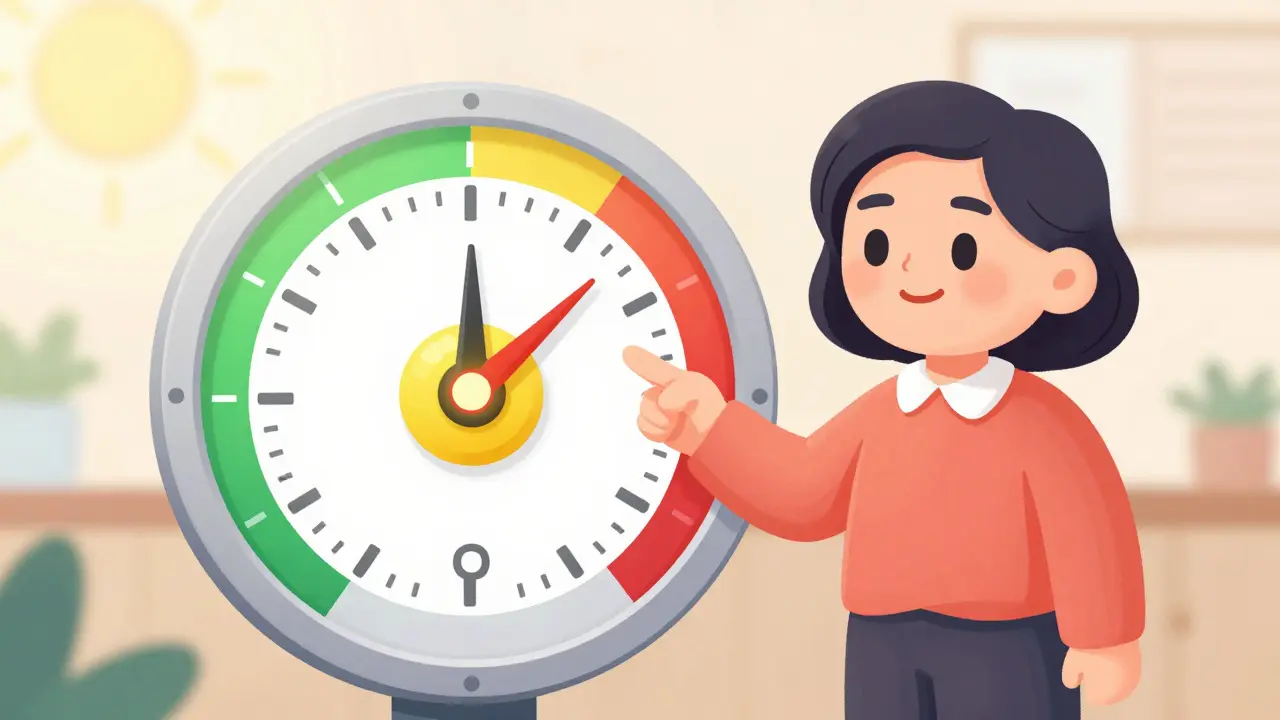
The Risk-O-Meter is a color-coded system introduced by SEBI (Securities and Exchange Board of India) in 2020. It’s designed to give every mutual fund investor a clear, simple picture of how risky a fund is. Think of it like a weather forecast for your money: sunny, partly cloudy, or stormy.
Before this system, fund houses used vague terms like "low risk," "moderate risk," or "high risk." But those labels meant different things across different companies. One fund’s "moderate" could be another’s "high." The Risk-O-Meter fixed that. Now, every fund in India must display its risk level using the same scale - and it’s updated every month.
The Five Risk Levels
The Risk-O-Meter breaks down risk into five clear categories, each with a color and a name:
- Low (Green) - Mostly debt funds, government securities, or ultra-short-term instruments. If you’re saving for a trip next year, this is your zone.
- Low to Moderate (Light Green) - Hybrid funds with a heavy debt bias, like 70% debt and 30% equity. Good for cautious investors who still want a little growth.
- Moderate (Yellow) - Balanced funds, equity-oriented hybrid funds, or mid-cap funds. You’ll see volatility, but it’s manageable if you’re investing for 5+ years.
- Moderate to High (Orange) - Large-cap equity funds, multi-cap funds, or sectoral funds with some diversification. These can swing 15-25% in a year. You need nerves and a long timeline.
- High (Red) - Small-cap funds, thematic funds, or international funds. These can drop 30% or more in a bad market. Only for investors with a 7+ year horizon and high risk tolerance.
Each fund’s Risk-O-Meter rating is based on three factors: volatility (how much the fund’s value jumps up and down), credit risk (if it holds bonds, how likely are issuers to default), and liquidity risk (can the fund sell assets quickly if lots of people want cash out?).
How It Works Behind the Scenes
SEBI doesn’t just guess these ratings. Fund houses calculate them using a formula that looks at the fund’s past performance over the last three years. The system uses statistical models to measure how often the fund’s returns swing - and by how much. It also checks the quality of the bonds it holds and how easily those bonds can be sold.
For example, a small-cap fund that lost 28% in 2022 and gained 41% in 2023 will likely land in the Red zone. A debt fund holding only AAA-rated government bonds? That’s Green. The calculation is automated and reviewed by SEBI every month.
And here’s the kicker: the Risk-O-Meter rating changes every month. If a fund starts holding riskier assets, its color changes. If it shifts to safer holdings, it might drop from Orange to Yellow. This keeps the label real-time - not stuck in the past.
Why This Matters for You
Let’s say you’re a 45-year-old teacher planning to retire at 60. You want growth, but you can’t afford to lose 20% of your savings two years before retirement. Without the Risk-O-Meter, you might pick a fund because it had "good returns last year." But now, you can look at the label and see: "High" risk. That’s a red flag.
Or imagine you’re a 28-year-old software engineer with no debt, saving for a house in 8 years. You can afford to ride out a market crash. The Risk-O-Meter tells you which funds are truly High risk - and which ones are just labeled "equity" but are actually moderate. You can skip the flashy names and pick the one that matches your timeline.
Before the Risk-O-Meter, 62% of retail investors in India misjudged their fund’s risk, according to a SEBI survey in 2021. After the system rolled out, that number dropped to 21% by 2024. That’s not a small win.
How to Use It When Choosing a Fund
Here’s how to use the Risk-O-Meter like a pro:
- Know your timeline. Are you investing for 1 year? 3 years? 10 years? Shorter timelines need lower risk.
- Know your comfort zone. Can you sleep if your fund drops 15% in a month? If not, avoid Orange and Red.
- Check the label before clicking "Invest." Don’t rely on the fund name. "Growth Fund" doesn’t mean "safe." Look for the color.
- Compare similar funds. Two large-cap funds? One is Yellow, one is Orange. Why? Check their holdings. The Orange one might have more mid-caps or foreign exposure.
- Don’t ignore the update date. The label changes monthly. A fund that was Yellow last month might be Orange now. Always check the latest version.
Common Mistakes to Avoid
Even with the Risk-O-Meter, people still mess up. Here are the top three mistakes:
- Chasing past returns. A fund with 25% returns last year might now be Red. Past performance doesn’t predict future risk.
- Assuming "equity" means "high risk." Some large-cap equity funds are Yellow. Others are Orange. The label tells you the real story.
- Ignoring changes. If you bought a fund two years ago and never checked, its risk level might have climbed. Revisit your portfolio every six months.
What’s Not Covered
The Risk-O-Meter doesn’t tell you everything. It doesn’t tell you about:
- Expense ratios - how much the fund charges you
- Fund manager experience
- Portfolio concentration - if 80% of the fund is in one stock
- Tax efficiency
So use the Risk-O-Meter as your first filter - not your only tool. Pair it with low expense ratios, diversified holdings, and a track record of consistent management.
Real-World Example
Take the ICICI Prudential Small Cap Fund. In January 2026, its Risk-O-Meter was Red. That means it’s volatile. But look at its holdings: 90% in small caps, 12% in just three companies. That’s why it’s Red. Now compare it to the HDFC Balanced Advantage Fund. It’s Orange. Why? Because it shifts between equity and debt based on market conditions. It’s not as wild as the small-cap fund, but it’s still risky. Two different reasons for the same color.
Without the Risk-O-Meter, you’d think both are "high risk" and leave it at that. With it, you can dig deeper - and make smarter choices.
Final Tip: Use It as a Conversation Starter
If you’re working with a financial advisor, ask them: "What’s the current Risk-O-Meter rating on this fund? And why did it change?" A good advisor will know. A bad one will dodge the question.
The Risk-O-Meter isn’t magic. But it’s the clearest, most honest tool Indian investors have ever had. It cuts through the noise. It stops you from being fooled by flashy names. And it puts power back in your hands.
Is the Risk-O-Meter mandatory for all mutual funds in India?
Yes. Since 2020, SEBI has made it mandatory for all mutual fund houses in India to display the Risk-O-Meter on their websites, app interfaces, and offer documents. No fund can be sold without showing its current color rating.
Can a fund’s Risk-O-Meter rating change suddenly?
Yes. If a fund changes its portfolio - like shifting from large-cap stocks to small-cap, or adding high-yield bonds - the risk level can jump. The rating is recalculated every month, so changes can happen quickly. Always check the latest label before investing.
Does a Red Risk-O-Meter mean I’ll lose money?
No. A Red rating means the fund is highly volatile - it can swing up or down sharply. It doesn’t mean you’ll lose money. Many Red-rated funds deliver strong returns over time. But they require patience and a long investment horizon - usually 7 years or more.
Are debt funds always low risk?
Not always. While most debt funds are Green or Light Green, some - like those holding corporate bonds from weak companies or long-duration bonds - can be Yellow or even Orange. The Risk-O-Meter looks at credit risk and interest rate sensitivity, not just the type of asset.
How often should I check my fund’s Risk-O-Meter?
Check it every six months, or whenever you review your portfolio. If your life situation changes - like approaching retirement or needing cash soon - reevaluate your fund’s risk level immediately. Don’t wait for the annual statement.