Property Documentation Checklist in India: Essential Papers for Safe Investment
If you're thinking about buying property in India, you're not just buying land or a building-you're buying a legal claim. And without the right papers, that claim can vanish overnight. I’ve seen people lose lakhs because they skipped one document. It’s not about being paranoid. It’s about knowing what actually matters.
Why Property Documents Matter More Than the Price
In India, a property’s value isn’t just in its location or size. It’s in its paperwork. A house in a prime area with unclear titles can be worth nothing if someone else claims ownership. Or worse, the government can seize it for unpaid taxes or illegal construction.
There’s no such thing as a ‘simple’ property deal here. Even if the seller seems trustworthy, you can’t rely on handshakes. The law doesn’t care about your trust. It cares about records. And those records? They’re scattered across offices, banks, and local authorities.
Let’s cut through the noise. Here’s what you actually need to check before you hand over any money.
1. Title Deed: The Foundation of Ownership
The title deed is the most important document. It proves who legally owns the property. In India, this is usually a Registered Sale Deed (RSD), signed before a Sub-Registrar and stamped with government fees.
Don’t accept an unregistered agreement to sell. That’s not ownership. That’s a promise. And promises can be broken.
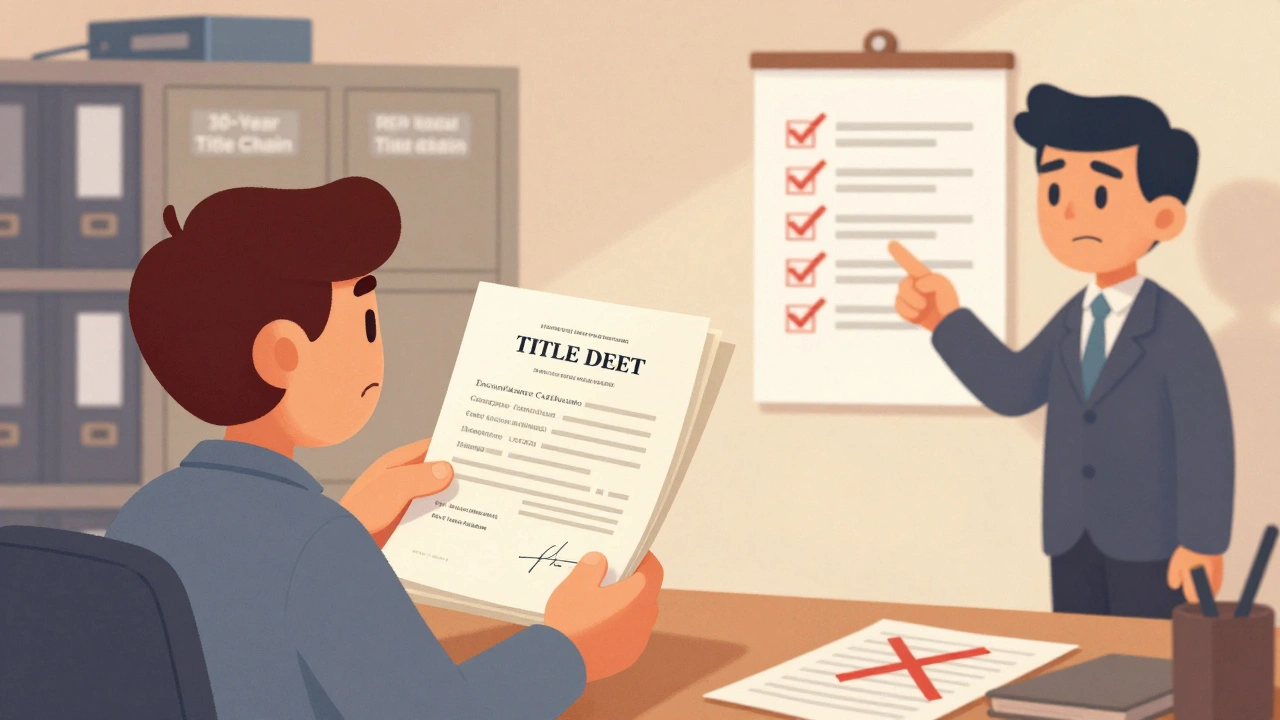
Check the chain of title-go back at least 30 years. Look for all previous sale deeds, inheritance papers, or gift deeds. If the property changed hands five times in 20 years, you need to verify each transfer. Missing one? That’s a red flag.
Also, confirm the seller is the actual owner listed on the deed. Cross-check their ID-Aadhaar, PAN, passport-with the name on the deed. Name mismatches? Walk away.
2. Encumbrance Certificate (EC): No Hidden Liens
An Encumbrance Certificate shows if the property has any legal claims against it. Think loans, mortgages, court cases, or unpaid taxes.
You need an EC covering at least the last 13 years. Get it from the Sub-Registrar’s office where the property is registered. Online ECs are available in most states via the e-Stamping portal, but always verify with the original office.
If the EC says ‘encumbered,’ ask why. Was there a home loan? That’s fine-if it’s cleared. Get a No Objection Certificate (NOC) from the bank. If there’s a court case? Don’t proceed. Even if the seller says it’s ‘almost resolved,’ walk away. Legal battles can drag on for years.
3. Approved Building Plan and Completion Certificate
Did the builder follow the rules? That’s not optional. In cities like Bangalore, Mumbai, or Hyderabad, unauthorized construction is common. If the building doesn’t match the approved plan, the municipality can demolish it.
Ask for:
- Commencement Certificate (issued before construction started)
- Building Plan Approval (from the local municipal body)
- Completion Certificate (issued after construction ended)
- Occupancy Certificate (OC)-this is non-negotiable. Without it, you can’t legally live in or rent out the property.
Verify these documents with the local urban development authority. Don’t trust photocopies. Ask for the original file number and cross-check online if possible.
4. Property Tax Receipts and No Dues Certificate
Property taxes are paid yearly. But many sellers delay payment-or never pay at all. If you buy a property with unpaid taxes, you inherit the debt.
Get the last five years of property tax receipts. Then, ask for a No Dues Certificate from the municipal corporation. This confirms all dues are cleared.
In rural areas, check with the Tehsildar’s office. In urban areas, use the city’s online portal. Mumbai’s MCGM, Delhi’s MCD, Chennai’s BMC-all have digital systems. Print the receipt. Keep it.
5. Khata Certificate and Extract: For Bangalore and Karnataka
If you’re buying in Karnataka, especially Bengaluru, the Khata is critical. It’s not ownership proof, but it’s how the city identifies you as the taxpayer.
You need two things:
- Khata Certificate: Shows the property is registered under the owner’s name in the city’s tax records.
- Khata Extract: Contains details like area, built-up space, tax paid, and property classification (residential/commercial).
A Khata doesn’t mean the title is clear. But without it, you can’t get a loan, connect utilities, or sell later. If the Khata is in someone else’s name, get it transferred before closing.
6. Conversion Certificate and Layout Approval (For Plots)
Buying raw land? Then you need two extra documents.
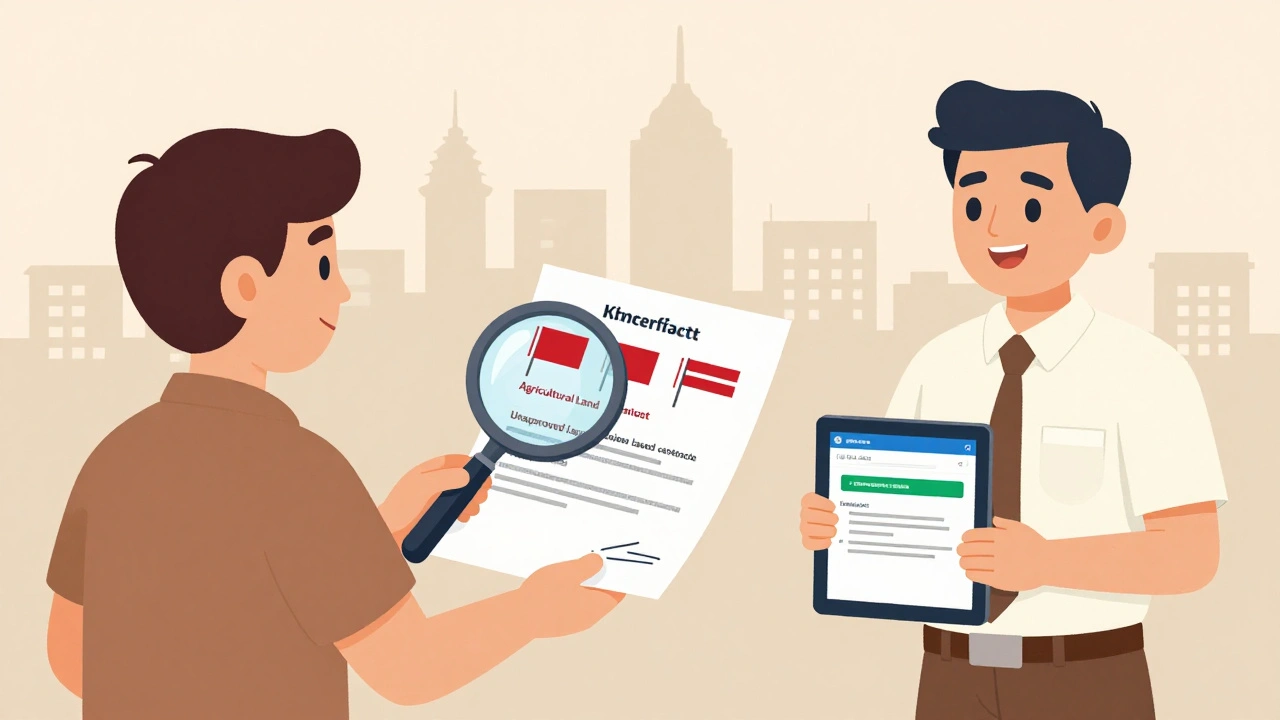
- Conversion Certificate: If the land was originally agricultural, it must be legally converted to residential or commercial use. This is issued by the Deputy Commissioner’s office. Without it, you can’t build.
- Layout Approval: For plotted developments, the entire layout must be approved by the local planning authority (like BDA in Bengaluru or DDA in Delhi). Ask for the approval order number and verify it online.
Many developers sell plots without these. They promise to get them later. That’s a trap. You’ll be stuck with unusable land.
7. NOC from Society or Association
If you’re buying an apartment in a housing society, you need a No Objection Certificate from the managing committee. This confirms:
- The seller is a member in good standing
- No pending maintenance dues
- The sale is allowed under society bylaws
Some societies charge a transfer fee. Ask for the receipt. Also, check the society’s registration under the Karnataka Societies Registration Act or equivalent state law. Unregistered societies? Avoid them.
8. Power of Attorney: Handle With Extreme Care
Some sellers use a Power of Attorney (POA) to sell property. This is risky. A POA can be revoked. It’s not a transfer of ownership.
Only accept POA if:
- It’s registered with the Sub-Registrar
- It explicitly grants the right to sell
- The original owner is alive and confirms the sale in writing
And even then, insist on a final Sale Deed. Don’t rely on POA alone. Courts in India have ruled that POA cannot transfer title.

9. Stamp Duty and Registration Receipts
Every property sale must be stamped and registered. The buyer pays stamp duty (5-7% of market value, varies by state). The registration fee is 1%.
Ask for the original receipt. If the seller says they paid but can’t show it, that’s a problem. You need to see the stamped sale deed with the official registry seal and signature.
Check the property’s circle rate (guideline value) on the state’s stamp duty portal. If the sale price is below the circle rate, the government can reassess and demand more tax later.
10. RERA Registration Number (For New Projects)
If you’re buying from a developer, the project must be registered under RERA (Real Estate (Regulation and Development) Act, 2016). Every state has its own RERA portal.
Find the project’s RERA number. Type it into the portal. Check:
- Project status: Approved, under construction, or completed?
- Builder’s past projects: Any delays or complaints?
- Timeline for possession: Is it realistic?
Unregistered projects? Avoid them. RERA exists to protect buyers. If the developer won’t show you the registration, they’re hiding something.
What to Do If Something’s Missing
Don’t panic. But don’t proceed either.
If the seller can’t produce a key document:
- Ask for a written explanation-signed and stamped.
- Get a legal opinion from a property lawyer. Don’t trust a real estate agent’s word.
- Check with the local registrar or municipal office. Many records are public.
- If it’s a legal issue like a court case or pending mutation, walk away.
There’s always another property. But there’s only one chance to get this right.
Final Checklist: Print and Verify
Before signing anything, make sure you have:
- Registered Sale Deed with chain of title
- Encumbrance Certificate (last 13 years)
- Building Plan Approval and Occupancy Certificate
- Latest property tax receipts and No Dues Certificate
- Khata Certificate & Extract (if in Karnataka)
- Conversion Certificate and Layout Approval (for plots)
- NOC from housing society (if applicable)
- Registered Power of Attorney (only if unavoidable)
- Stamp Duty and Registration Receipts
- RERA Registration Number (for new projects)
Keep digital and physical copies. Store them in a fireproof box. And never hand over full payment until every document is verified and signed.
Common Mistakes to Avoid
- Trusting oral promises. Always get it in writing.
- Buying based on a builder’s brochure. Brochures aren’t legal.
- Using an unlicensed agent. Check their registration with the state’s Real Estate Regulatory Authority.
- Skipping the lawyer. A good property lawyer costs ₹10,000-₹25,000. That’s cheaper than losing ₹50 lakhs.
- Assuming a property is ‘safe’ because it’s old. Old doesn’t mean legal.
Real estate in India isn’t about finding the cheapest deal. It’s about finding the cleanest title. The rest follows.
Can I buy property in India without a PAN card?
No. A PAN card is mandatory for property registration in India. The government links all property transactions to PAN to track taxes. If you don’t have one, apply immediately-it takes 7-15 days. Foreign buyers can use their passport and visa details, but still need to link to a PAN for the transaction.
Is an e-stamped agreement valid for property purchase?
An e-stamped agreement to sell is not enough. It’s only a promise. For legal ownership, you need a Registered Sale Deed, signed in front of a Sub-Registrar, with proper stamp duty paid and registration completed. E-stamping is just the first step.
What happens if the seller is a minor or mentally unfit?
The sale is void. Indian law doesn’t allow minors or persons of unsound mind to sell property. The Sub-Registrar will reject registration if the seller’s mental capacity is in doubt. Always verify the seller’s age and mental fitness through official ID and, if needed, a medical certificate.
Can I buy property in India as a non-resident Indian (NRI)?
Yes, NRIs can buy residential and commercial property in India without special permission. But they cannot buy agricultural land, plantations, or farmhouses. All payments must come from an NRE or NRO account, and the property must be registered in the buyer’s name. Tax rules apply differently, so consult a CA.
How long does property verification take in India?
A basic verification-title, EC, tax receipts-takes 7-10 days if you’re organized. But if you need to dig into old records, get approvals, or resolve disputes, it can take 3-6 weeks. Don’t rush. The longer you take to verify, the safer your investment becomes.