Famous Sarees in Prayagraj: Traditional Weaves and Local Styles
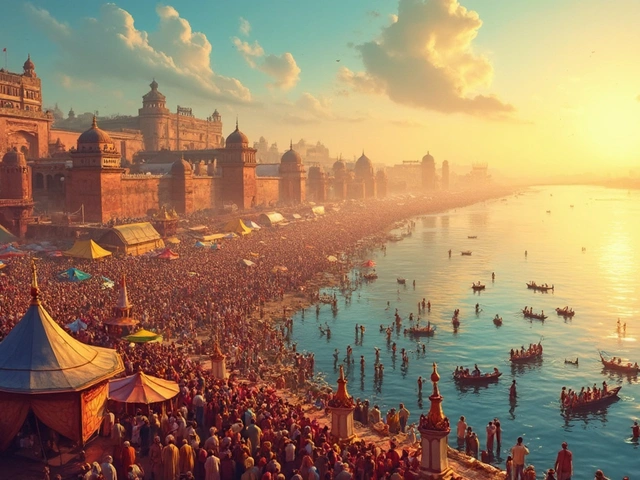
When you think of famous sarees in Prayagraj, handwoven silk textiles deeply tied to the city’s heritage and religious festivals. Also known as Banarasi sarees, these are more than clothing—they’re woven stories passed down through generations. Prayagraj sits at the heart of Uttar Pradesh’s textile belt, where centuries-old looms still hum with the same rhythm they did under the Mughals. These sarees aren’t just bought—they’re inherited, worn at weddings, offered in temples, and draped during the Kumbh Mela, when millions gather at the Triveni Sangam.
The most iconic are the Banarasi sarees, luxurious silks from nearby Varanasi, but widely traded and worn in Prayagraj for their heavy zari work and intricate floral motifs. Locals don’t just wear them—they know the difference between a real zari thread and imitation, and can tell a handloom piece from a machine-made one by the slight irregularities in the weave. You’ll see women in the old city markets of Chowk, Civil Lines, and MGRoad draped in these, especially during Diwali, Durga Puja, or when visiting the Hanuman temples. The silk comes from Karnataka or Tamil Nadu, but the weaving, the dyeing, the final finishing—all happen in clusters around Prayagraj’s textile hubs.
Then there are the cotton and mulmul sarees, lighter and perfect for the city’s hot summers. These are often dyed with natural indigo or pomegranate rind, and stitched with simple but elegant borders. Many families in Prayagraj still have a trunk of these at home, passed from mother to daughter. You won’t find them on Amazon or Flipkart—they’re sold in small shops near the Sangam, in family-run weavers’ cooperatives, or at the monthly haat bazaars. These sarees don’t have brand names, but they carry the name of the weaver’s village: Chunar, Koraon, or Phulpur.
What makes these sarees special isn’t just the thread or the gold. It’s how they connect to the city’s rhythm. At the Kumbh Mela, thousands of women wear them to offer prayers. At weddings, the bride’s saree is often chosen months in advance, with elders consulting astrologers for the right color and pattern. Even today, a girl’s first saree is a rite of passage—bought with savings, stitched with care, and worn for the first time at her engagement.
There’s no single place that sells all of them, but if you walk through the lanes near Allahabad Fort or the old market near Naini Bridge, you’ll find stalls with samples laid out on wooden tables, each one telling a story. Some are decades old. Others are being woven right now, under open skies, by women whose mothers and grandmothers did the same.
Below, you’ll find posts that dig into the history, the makers, the rituals, and the places where you can find these sarees in Prayagraj—not as souvenirs, but as living tradition.
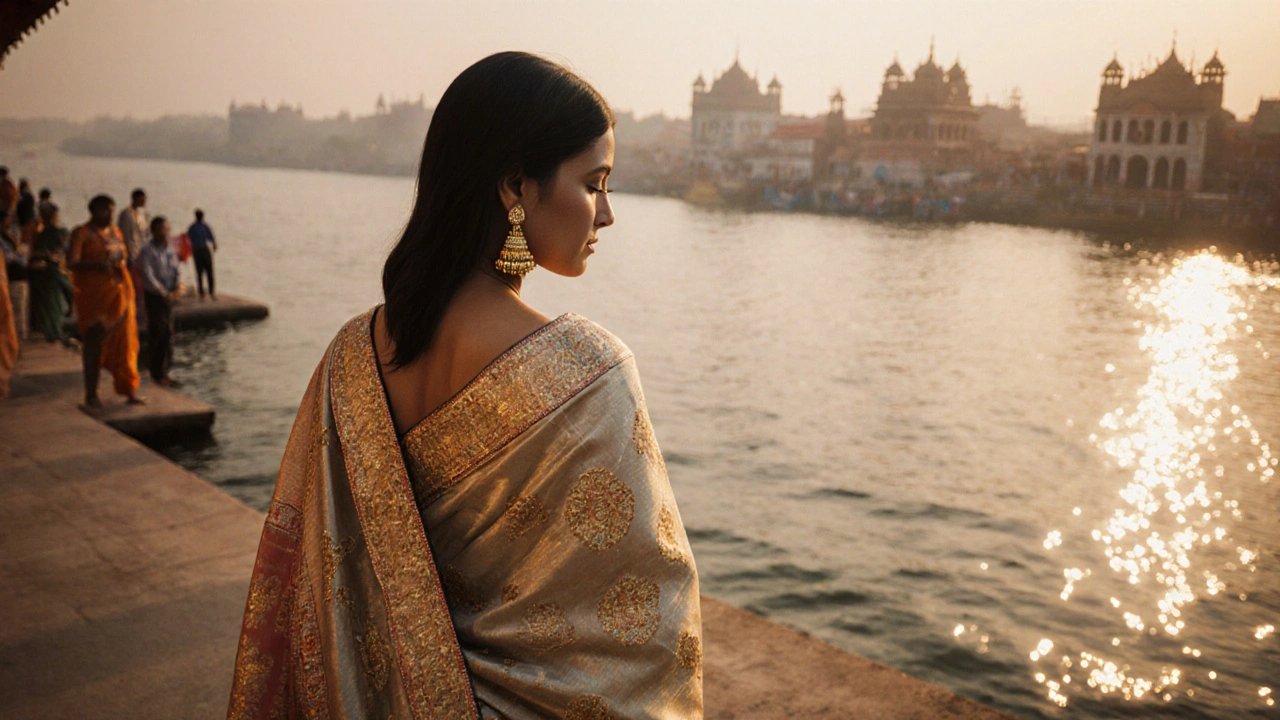
The Banarasi silk saree is the most famous saree in Prayagraj, woven with intricate zari work and deep cultural roots. Learn why it's worn at weddings, temples, and daily rituals-and how to spot an authentic piece.
Continue Reading