Homebuyer Tax Savings in India: How to Cut Your Tax Bill Legally
When you buy a home in India, you’re not just investing in bricks and mortar—you’re also unlocking powerful homebuyer tax savings, tax deductions available to property buyers under Indian income tax laws. These aren’t myths or loopholes. They’re legal, government-backed ways to reduce your taxable income by up to ₹1.5 lakh every year through Section 80C, a provision in the Income Tax Act that allows deductions for specific investments and expenses. Whether you’re buying your first flat in Prayagraj or investing in a second home in Pune, these rules apply to you.
Most homebuyers don’t realize that buying property alone doesn’t automatically give you tax breaks. You need to pair your purchase with the right financial tools. For example, investing in tax-saving FDs, fixed deposits with a 5-year lock-in that qualify for Section 80C deductions is safe and simple. Or you can go for ELSS funds, equity-linked savings schemes that offer higher growth potential with a 3-year lock-in. Both reduce your taxable income, but ELSS funds can grow faster over time. If you’re waiting for possession and facing delays, remember: RERA compensation, interest paid by builders for delayed possession under the Real Estate Regulation Act is taxable, so track it carefully. You can’t claim it as a deduction, but you also can’t ignore it when filing returns.
What most people miss is that tax savings aren’t just about the home loan interest under Section 24. That’s only part of the story. The bigger win comes from what you do before or alongside your purchase. Paying for stamp duty and registration? That’s deductible under Section 80C too. Using your bonus to buy an ELSS fund? That’s another ₹1.5 lakh off your tax bill. And if you’re renting while waiting to move in, you can still claim HRA—no conflict there. The key is planning ahead, not scrambling at year-end.
Don’t get fooled by agents pushing you into expensive insurance or vague ‘tax-saving’ schemes. Stick to the clear, proven options: ELSS, tax-saving FDs, PPF, NPS, and even life insurance premiums if you already need coverage. Avoid mixing up deductions—Section 80C is for investments, Section 24 is for home loan interest, and Section 80EEA is for first-time buyers in affordable housing. Each has its own rules, limits, and timelines.
Here’s what you’ll find below: real, detailed guides on how to pick the best ELSS funds for your tax goals, how tax-saving FDs compare to other options, what documents you need to claim deductions without getting rejected, and how delays in possession can actually work in your favor—if you know the law. No fluff. No theory. Just what works for homebuyers like you in India right now.
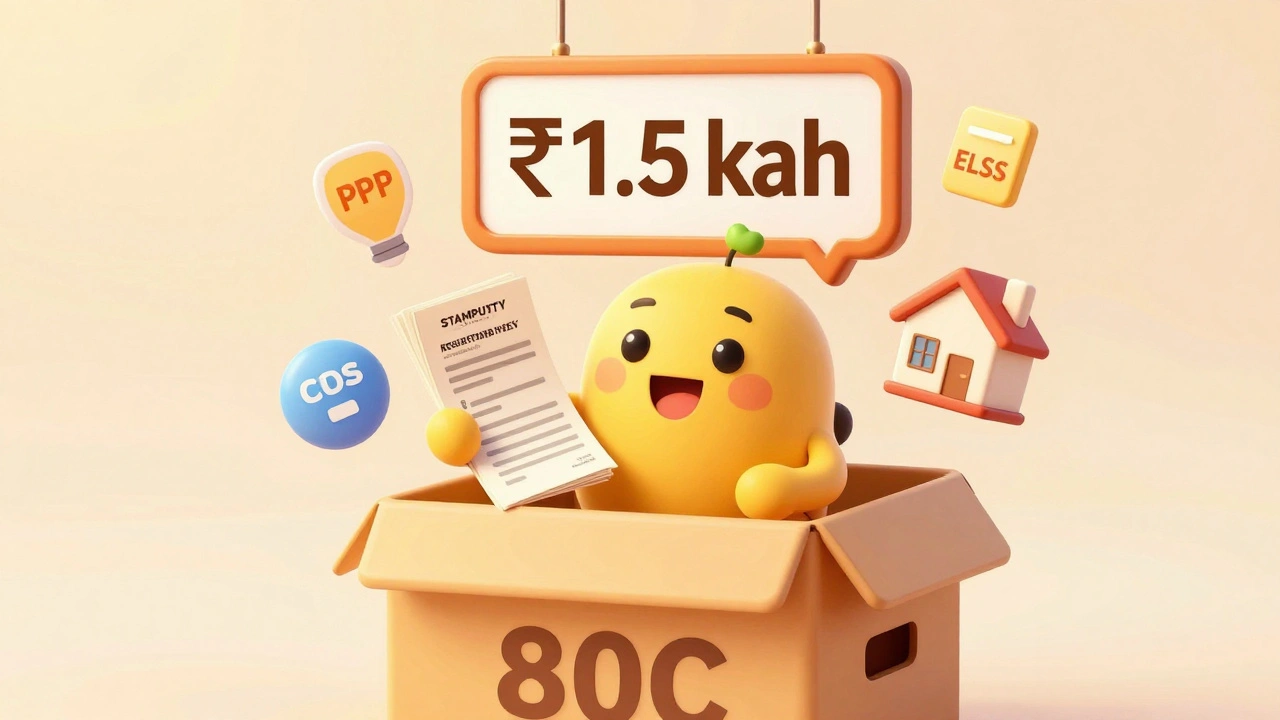
Learn how homebuyers in India can claim tax deductions under Section 80C for home loan principal, stamp duty, and registration fees - and avoid common mistakes that cost thousands in lost savings.
Continue Reading