
Understanding Expense Ratio Caps in India: A Guide to SEBI Regulations
Quick Takeaways: What You Need to Know
- The Total Expense Ratio (TER) is capped based on the size of the fund's assets (AUM).
- Larger funds generally have lower percentage caps, meaning as a fund grows, it should theoretically become cheaper for the investor.
- SEBI prohibits fund houses from using the "saved" fee margin to reward promoters or reward specific distributors.
- Direct plans always have a lower expense ratio than regular plans because they remove distributor commissions.
What Exactly is the Expense Ratio Cap?
Before we get into the rules, let's be clear about what we are talking about. An expense ratio is the annual fee a mutual fund company charges to manage your money. It covers everything from the fund manager's salary and office rent to marketing and audit fees. When SEBI talks about "caps," they are referring to the Total Expense Ratio or TER, which is the absolute ceiling on what a fund can charge.
Why does this matter? Because these fees are deducted daily from the Net Asset Value (NAV). You don't get a monthly bill for these charges; they are silently sliced off the top. A difference of 0.5% might seem trivial today, but on a corpus of ₹10 lakh over 15 years, that gap can grow into several lakhs of rupees in lost compounding. This is why Expense Ratio Caps are the most critical protection investors have against greedy pricing.
How SEBI Calculates the Limits
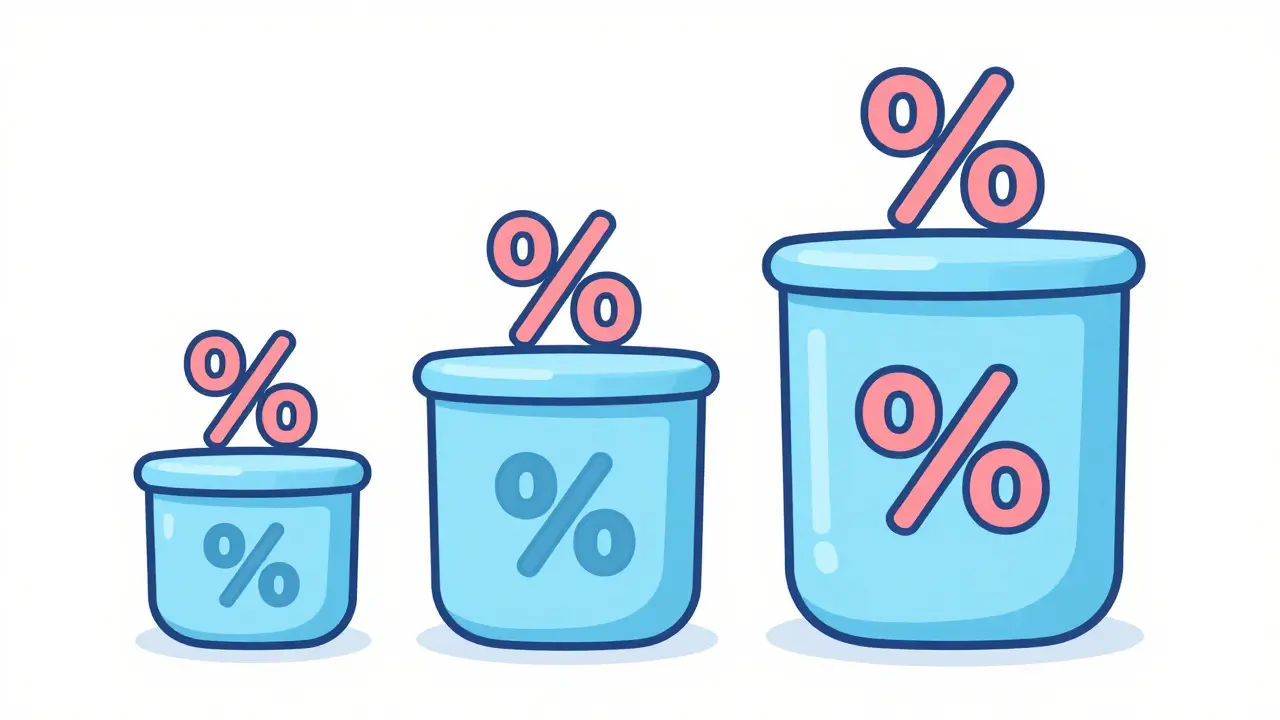
SEBI doesn't use a one-size-fits-all number. Instead, they use a sliding scale based on the Assets Under Management or AUM. The logic is simple: economy of scale. Managing a fund with ₹1,000 crore requires more resources than managing one with ₹100 crore, but it doesn't require ten times the effort. Therefore, as a fund gets bigger, the percentage it's allowed to charge must drop.
| AUM Slab (Average of last quarter) | Maximum Permissible TER (%) |
|---|---|
| First ₹500 Crores | Up to 2.25% |
| ₹500 Crores to ₹2,500 Crores | Gradual decrease (e.g., 2.00% - 1.50%) |
| ₹2,500 Crores to ₹5,000 Crores | Further reduction (e.g., 1.25% - 1.05%) |
| Above ₹5,000 Crores | Minimum floor (usually around 0.75% to 1.05%) |
If a fund manager manages a massive fund with an AUM of ₹20,000 crore, they cannot simply charge 2.25% just because they are famous. They must adhere to the lower slab. If they exceed this, they are in direct violation of regulatory norms and face heavy penalties.
Direct Plans vs. Regular Plans: The Cost Gap
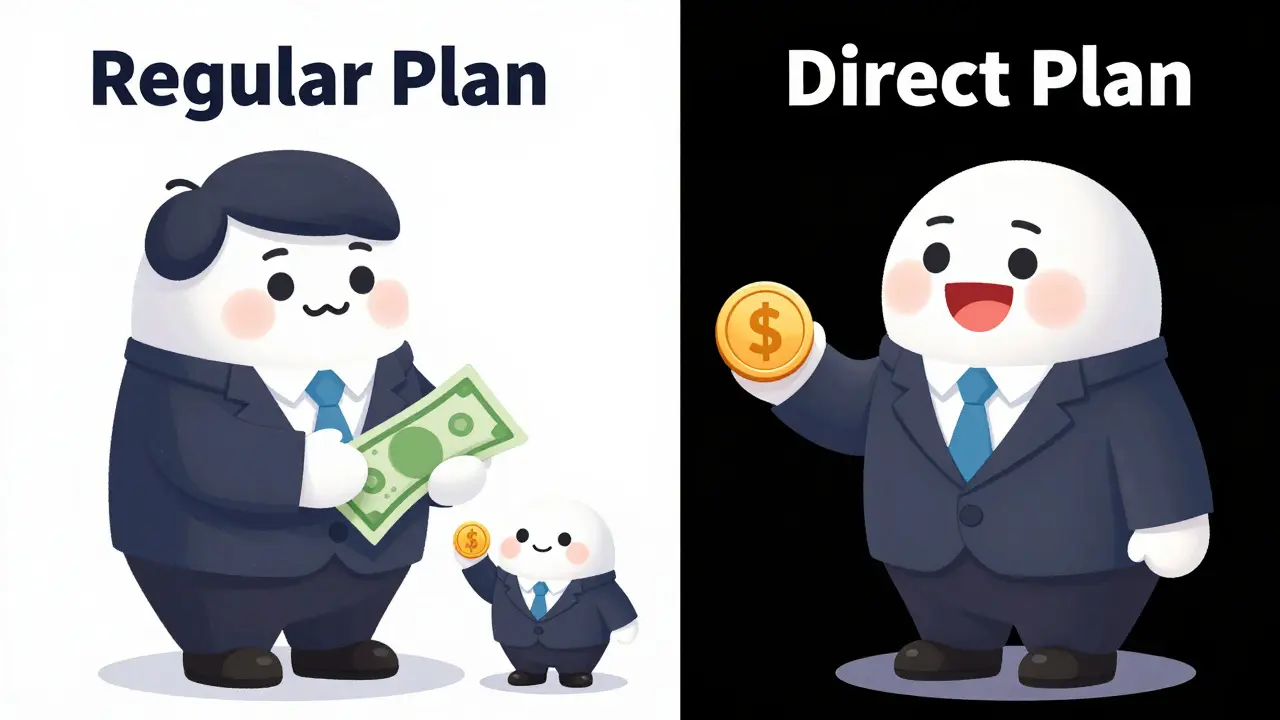
One of the most impactful shifts in the Indian landscape was the introduction of Direct Plans. In a regular plan, the fund house pays a commission to the broker or agent who sold you the fund. This commission is baked into the expense ratio. In a direct plan, there is no broker, so that commission is removed.
SEBI requires that the expense ratio for direct plans be lower than that of regular plans. For example, if a regular plan has a TER of 2%, the direct plan might only be 1.1%. This isn't just a "discount"; it's a structural requirement. Over a 20-year horizon, switching from a regular to a direct plan can increase your final corpus by 10-15% simply by avoiding the middleman. If you are tech-savvy enough to use an app, there is almost no reason to pay the "regular" price.
The 'Hidden' Danger of Expense Ratio Creep
You might be wondering, "If there's a cap, why do I still see my ratios changing?" This happens because of the AUM slabs. When a fund grows and moves from the "First ₹500 Crore" slab into the next one, the cap drops. While this sounds good, some fund houses try to keep the ratio as close to the ceiling as possible.
Another thing to watch is how fund houses categorize their funds. A Passive Fund, such as an Index Fund or an ETF, typically has a much lower cap than an active fund. This is because the manager isn't "picking" stocks; they are just tracking a benchmark like the Nifty 50. If you see an Index Fund charging 1% or more, they are likely pushing the boundaries of the cap, and you should look for a cheaper alternative.
What Happens to the 'Unused' Cap?
In the past, some fund houses would hit the cap and then use the remaining funds to provide "incentives" to distributors or promoters. SEBI shut this down. The current regulations mandate that any savings resulting from the lower TER slabs must benefit the investor.
Essentially, if the cost of running the fund drops, the NAV should reflect that gain. You won't see a check arrive in the mail, but your daily returns will be slightly higher because less money is being leaked out as a fee. This aligns the interests of the fund house with the investor: the bigger the fund grows, the more efficient it must become.
Practical Strategy for Investors
How do you actually use this information to make more money? First, stop looking at the "past returns" in isolation. A fund that returned 15% with a 2% expense ratio is actually worse than a fund that returned 14% with a 0.5% expense ratio if the underlying assets are similar.
- Check the TER on the Factsheet: Every month, fund houses publish a factsheet. Look for the "Portfolio Expense Ratio."
- Compare Direct vs. Regular: If the gap is more than 0.5%, the regular plan is significantly eroding your wealth.
- Watch for Passive Options: If you believe the market is efficient, move to ETFs where the caps are naturally lower due to the nature of the product.
- Avoid 'Closet Indexing': Some active funds charge high fees (near the cap) but actually just copy the index. This is the worst of both worlds: high cost, average returns.
Common Misconceptions about Fees
Many people believe that a high expense ratio equals high quality. They think, "If I'm paying 2%, I must be getting a superstar manager." In reality, there is no correlation between a high fee and higher returns. In many cases, the most expensive funds underperform the cheapest index funds over long periods.
Another myth is that the expense ratio is the only cost. It isn't. You still have to deal with Exit Loads-the fee you pay if you withdraw money too early-and STT (Securities Transaction Tax). The TER cap only controls the management fee, not the transactional costs of the market.
Does a lower expense ratio always mean a better fund?
Not necessarily. While a lower fee is better for the same level of performance, you shouldn't pick a fund only because it's cheap. A fund with a 1% fee that consistently beats the market by 5% is better than a fund with a 0.2% fee that underperforms the market. The goal is to find the lowest fee for the specific strategy (Active vs Passive) you want.
How often does SEBI review these caps?
SEBI reviews these regulations periodically based on consultations with the Association of Mutual Funds in India (AMFI) and investor feedback. They typically adjust the slabs to keep pace with inflation and the evolving cost of technology in fund management.
Can a fund house charge more than the SEBI cap?
No. The TER cap is a hard limit. If a fund house exceeds the permissible limit, they are required to refund the excess amount to the scheme's accounts, and they may face regulatory action or fines from SEBI.
Why are direct plans cheaper?
Direct plans bypass intermediaries like brokers or distributors. Since the fund house doesn't have to pay a commission to these agents, that cost is removed from the expense ratio, allowing the investor to keep a larger portion of the returns.
Where can I find the exact expense ratio of my fund?
The most accurate place is the monthly fund factsheet provided by the Asset Management Company (AMC) or on the official website of the fund house. You can also find this on third-party investment platforms under the "Fund Details" or "Fees" section.
Next Steps for Your Portfolio
If you have been investing for years without checking your fees, now is the time. Start by auditing your current holdings. If you find yourself in "Regular" plans, calculate the difference in returns you would have had in a "Direct" plan. If the gap is significant, consider switching. However, be mindful of Capital Gains Tax; switching from one plan to another is technically a sale and a purchase, which might trigger taxes depending on your holding period. For most, the long-term fee savings far outweigh the one-time tax hit.