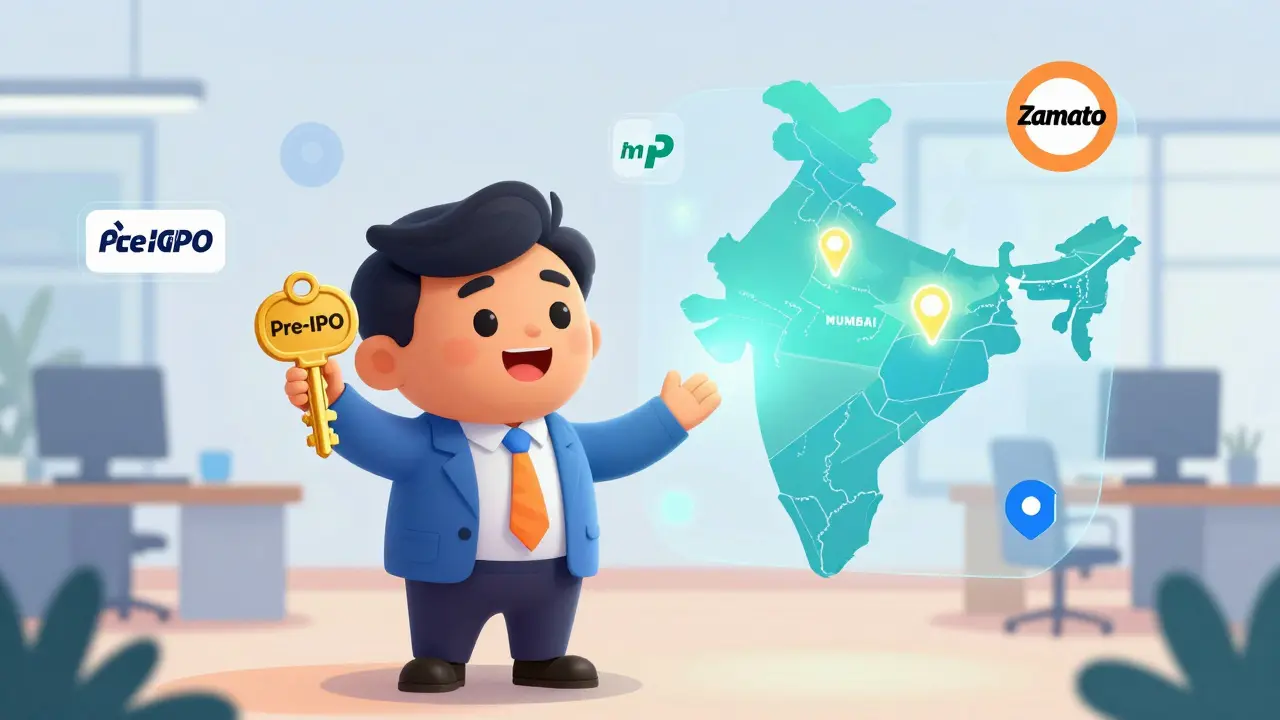
Unlisted Shares in India: How Pre-IPO Investments Work and Key Risks
You’ve heard the stories. Your friend bought shares in a private tech startup five years ago, waited for the IPO, and now sits on a paper fortune worth ten times their initial investment. It sounds like a shortcut to wealth, doesn’t it? But here’s the catch: for every success story, there are dozens of silent failures where capital got locked up for years with little to no return. Investing in unlisted shares is not just buying stocks; it’s betting on a company’s future before the public gets a chance to vote with its wallet.
In India, this market has exploded in popularity. With high-profile companies like Flipkart, Ola Electric, and Zomato offering stakes to retail investors before listing, the barrier to entry seems lower than ever. But lower barriers don’t mean lower risks. In fact, they often hide them better. Before you transfer that money, you need to understand exactly how these deals work, who regulates them, and what could go wrong when the exit strategy fails.
What Are Unlisted Shares?
To understand the opportunity, you first need to define the asset. Unlisted shares are equity stakes in a company that is not traded on any recognized stock exchange like the National Stock Exchange (NSE) or Bombay Stock Exchange (BSE). These companies are private entities. They haven’t gone public yet. When you buy these shares, you are becoming a minority shareholder in a private firm.
This is distinct from buying mutual funds or listed equities. When you buy a share of Reliance Industries on the NSE, you can sell it instantly during market hours at a transparent price. With unlisted shares, there is no continuous market. There is no ticker symbol. There is no real-time price discovery. You are buying an illiquid asset based on projections, not proven public performance.
The primary goal of investing in these shares is usually one thing: capital appreciation upon Initial Public Offering (IPO). The idea is simple. Buy low when the company is private. Sell high when it lists on the stock exchange and the market prices it aggressively. This period between your purchase and the eventual listing is known as the pre-IPO phase.
How Do Pre-IPO Investments Actually Work?
The process isn’t as straightforward as clicking "buy" on a trading app. Since these shares aren’t publicly traded, the transaction happens over-the-counter (OTC), meaning directly between the buyer and the seller, or through a broker acting as an intermediary.
Here is the typical workflow:
- Sourcing the Deal: Companies looking for capital before an IPO will approach venture capitalists, angel investors, and sometimes specialized brokers. Retail investors usually access these deals through licensed intermediaries or platforms that aggregate secondary market sales.
- Due Diligence: Unlike listed companies, private firms have less mandatory disclosure. You rely on the information provided by the company or the broker. This includes financial statements, business models, and growth projections.
- Pricing: The price is negotiated. It’s often based on the last funding round’s valuation but adjusted for demand. If everyone wants into a hot AI startup, the price per share goes up, even if the fundamentals haven’t changed much.
- Payment and Transfer: Once agreed, you pay the amount. The shares are then transferred to your demat account. Note that the transfer can take weeks or even months depending on the company’s administrative speed.
A key player in this ecosystem is the broker. In India, reputable brokers facilitate these transactions by ensuring the paperwork is correct and the shares are genuine. However, the broker does not guarantee the return on investment. They are merely the conduit.
The Regulatory Landscape: Is It Safe?
This is the million-dollar question. Many people assume that because it’s not on the stock exchange, it’s a wild west. That’s partially true, but not entirely. The Securities and Exchange Board of India (SEBI) plays a crucial role here.
SEBI regulates the issuance of securities. While it doesn’t micromanage every private sale, it has strict rules about who can issue shares and how. For instance, companies must comply with the Companies Act, 2013, regarding share transfers and allotments. More importantly, SEBI monitors the IPO process itself. When a company finally lists, it must disclose all major shareholders, including those who bought in privately.
However, the gray area lies in the secondary market-where existing shareholders sell to new ones. SEBI has been tightening rules here to prevent fraud. Scams involving fake unlisted shares have led to stricter KYC (Know Your Customer) norms and requirements for brokers to be registered with stock exchanges.
If you buy through a registered broker or a compliant platform, you have a layer of protection. If you deal with someone via WhatsApp promising "guaranteed 10x returns," you are likely walking into a scam. Always verify the broker’s registration status with SEBI’s website.
Key Risks You Must Understand
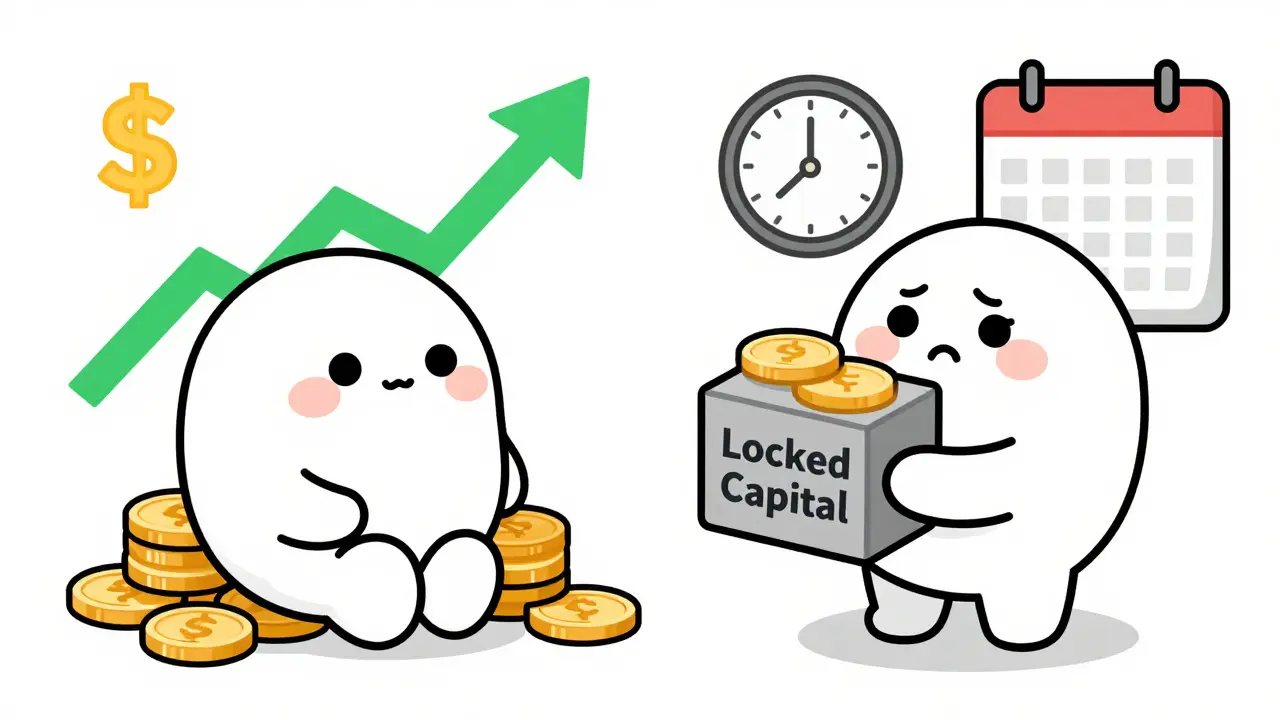
Risk is the price of admission for high rewards. In unlisted shares, the risks are structural and significant. Here are the four biggest dangers:
| Risk Type | Description | Impact Level |
|---|---|---|
| Liquidity Risk | You cannot sell easily. If the IPO is delayed or canceled, your money is stuck. | High |
| Valuation Risk | You might overpay. Private valuations can be inflated compared to public market reality. | Medium-High |
| Information Asymmetry | Limited access to detailed financials compared to listed companies. | Medium |
| Regulatory/Compliance Risk | Changes in laws or tax rules can affect profitability or exit options. | Low-Medium |
Liquidity Risk is the most immediate threat. Listed stocks can be sold in seconds. Unlisted shares might be held for 3 to 7 years. During this time, you cannot access that capital. If you need money for an emergency, you can’t just liquidate your stake. You’d have to find another private buyer, which is difficult and often results in selling at a discount.
Valuation Risk is subtle but deadly. Just because a company raised money at a $1 billion valuation doesn’t mean it’s worth $1 billion in the public market. We’ve seen companies list below their last private funding round value. This is called "listing at a loss." If you buy in at the peak hype, you could lose 20-30% of your capital immediately upon listing.
Tax Implications and Capital Gains
Profit isn’t profit until taxes are paid. Understanding the tax structure is vital for calculating your actual returns. In India, gains from unlisted shares are treated differently than listed ones.
If you hold the unlisted shares for more than 24 months, the profit is considered Long-Term Capital Gain (LTCG). Currently, LTCG on unlisted assets is taxed at 20% with indexation benefits. Indexation allows you to adjust the purchase cost for inflation, which can significantly reduce your tax bill. This is a major advantage over listed equities, where LTCG above ₹1 lakh is taxed at 10% without indexation.
If you sell within 24 months, it’s Short-Term Capital Gain (STCG) and added to your income slab, potentially pushing you into a higher tax bracket.
Also, remember TDS (Tax Deducted at Source). Some platforms may deduct TDS at the time of sale, though this practice varies. Always consult a Chartered Accountant (CA) before making large investments to ensure you’re structuring your portfolio efficiently.
Who Should Invest in Unlisted Shares?
This isn’t for everyone. If you’re saving for a house down payment in two years, stay away. Unlisted shares require a long-term horizon and a high risk tolerance.
Ideal investors include:
- Wealthy Individuals: Those with surplus capital they can afford to lock up for 5+ years.
- Diversified Portfolios: Investors who already have stable returns from fixed deposits, bonds, or blue-chip stocks and want a small "satellite" portion for high-growth potential.
- Industry Experts: People who work in the sector (e.g., fintech, healthcare) and can independently assess the company’s viability beyond the pitch deck.
If you are relying on this money for retirement or daily expenses, the volatility and illiquidity make it a poor choice.

Due Diligence Checklist
Before signing any agreement, run this checklist. Don’t skip steps.
- Verify the Company: Check its history on the Ministry of Corporate Affairs (MCA) portal. Look for director changes, penalties, or legal disputes.
- Analyze Financial Health: Request audited financial statements for the last 3 years. Look for consistent revenue growth and manageable debt levels.
- Assess the Management Team: Who is running the ship? Do they have a track record of successful exits? A great idea with a weak team often fails.
- Understand the Exit Timeline: Ask explicitly: When is the planned IPO? What are the milestones required before filing with SEBI?
- Check Broker Credentials: Ensure the intermediary is SEBI-registered. Avoid direct peer-to-peer transfers without escrow services.
Alternatives to Consider
If the risks of unlisted shares feel too high, there are safer ways to gain exposure to growth companies.
Mutual Funds: Equity mutual funds, especially mid-cap and small-cap funds, invest in growing companies. Professional fund managers handle the due diligence. You get liquidity (you can withdraw anytime) and diversification (your money is spread across many companies).
Initial Public Offerings (IPOs): Applying for IPOs in the primary market is regulated and transparent. While you don’t get the "early bird" pricing of unlisted shares, you also avoid the illiquidity trap. You can sell the shares as soon as they list.
Fully Managed Accounts: Some wealth management firms offer access to private equity funds. These pool money from many investors to buy stakes in multiple startups. This reduces single-company risk but comes with high management fees.
Conclusion: Proceed with Caution
Unlisted shares offer a glimpse into the future of India’s economy. They allow retail investors to participate in the journey of companies that might become household names. But participation comes with a premium price: risk. The lack of liquidity, the opacity of information, and the volatility of private valuations mean that this should never be your core investment strategy.
Treat unlisted shares as a speculative satellite holding, not a foundation. Do your homework. Verify every claim. And never invest money you can’t afford to lose-or wait for. The market rewards patience, but only if the underlying asset delivers.
Are unlisted shares legal in India?
Yes, trading in unlisted shares is legal in India, provided it complies with the Companies Act, 2013, and SEBI regulations. Transactions must be conducted through proper channels, such as registered brokers or authorized platforms, and all necessary documentation like share transfer deeds must be executed correctly.
What is the minimum investment amount for unlisted shares?
There is no standard minimum set by law, but in practice, minimum investments often range from ₹50,000 to ₹1,00,000 depending on the company and the broker. Some high-profile startups may require higher minimums, while others might offer fractional shares through specific platforms.
Can I lose all my money in unlisted shares?
Yes, it is possible. If the company goes bankrupt, fails to secure further funding, or cancels its IPO plans, the value of your shares could drop to zero. Unlike bank deposits, there is no insurance or guarantee on private equity investments.
How do I check if a company is going to list soon?
Companies file a Draft Red Herring Prospectus (DRHP) with SEBI when they plan to list. You can check SEBI’s website or financial news portals for DRHP filings. However, filing a DRHP does not guarantee a listing; the company can still withdraw the application.
Is it better to buy unlisted shares or apply for the IPO?
It depends on your risk appetite and timeline. Unlisted shares offer the potential for higher returns if you buy early enough, but come with high illiquidity and risk. IPOs offer more transparency, regulatory protection, and immediate liquidity upon listing, but the entry price might be higher than early private rounds.
Do I need a demat account to hold unlisted shares?
Yes, you need a demat account to hold unlisted shares electronically. The shares will be credited to your demat account after the transfer process is completed. Ensure your depository participant (DP) supports the holding of unlisted securities.
What happens if the IPO is delayed?
If the IPO is delayed, your capital remains locked in the unlisted shares. You cannot easily sell them because there is no active market. Delays can last for months or years, affecting your liquidity and potentially changing the company’s valuation dynamics.
Are dividends paid on unlisted shares?
Most high-growth startups reinvest profits rather than paying dividends. Therefore, it is unlikely you will receive regular dividend income from unlisted shares. The primary return mechanism is capital appreciation upon exit (IPO or acquisition).