
Direct Mutual Fund Platforms in India: How to Buy Without Distributors
Imagine putting ₹10,000 into a mutual fund every month for the next twenty years. Now imagine doing it twice-once through a distributor who takes a cut, and once directly from the fund house. The difference isn't just a few rupees; it’s potentially lakhs lost to trailing commissions that quietly eat away at your compound interest. That is the harsh reality of regular mutual fund plans in India. But there is a way out, and it doesn’t require you to become a financial wizard. It requires understanding how to use direct mutual fund platforms effectively.
In 2026, the landscape for retail investors has shifted dramatically. You no longer need to call an agent or visit a branch to invest. The digital infrastructure in India has matured to the point where buying direct plans is as easy as ordering food online. However, with dozens of apps and websites claiming to be "direct," confusion remains. Which platform is safe? How do you verify if a plan is truly direct? And what are the hidden pitfalls?
The Core Difference: Why Direct Plans Win on Math
Before jumping into which app to download, let’s look at the mechanics. A mutual fund scheme usually comes in two variants: Regular and Direct. Both schemes hold the exact same portfolio of stocks or bonds. They have the same fund manager. The only difference is the expense ratio.
In a Regular plan, a portion of your money goes to pay distribution costs-commissions for agents, brokers, and intermediaries. These costs can range from 0.5% to 1.5% annually. In a Direct plan, these costs are removed. The expense ratio is lower, meaning more of your money stays invested and compounds over time.
| Plan Type | Expense Ratio (Approx) | Annual Return (Net) | Final Value (20 Years) |
|---|---|---|---|
| Regular Plan | 1.8% | 12.0% | ₹94.5 Lakhs |
| Direct Plan | 0.8% | 13.0% | ₹1.17 Crores |
See that gap? Over two decades, the 1% difference in fees creates a shortfall of over ₹22 Lakhs in the Regular plan. This is not theoretical; this is arithmetic. By choosing direct platforms, you are essentially giving yourself a guaranteed 1% annual raise on your returns without taking extra risk.
Types of Direct Mutual Fund Platforms in India
Not all direct platforms are created equal. In the Indian ecosystem, you will encounter three main types of entities when looking to buy direct mutual funds. Understanding the distinction helps you choose based on your comfort level and needs.
CAMS and KFintech are the backbone of the industry. They are the Registrar and Transfer Agents (RTAs). Think of them as the utility providers. They don’t sell funds directly in a flashy interface, but they power the backend for almost every fund house. Investing through their portals (like camsonline.com or kfindia.com) is the purest form of direct investing. There are zero third-party commissions because you are dealing with the registry itself.
Then you have Fund House Portals. Every major Asset Management Company (AMC)-like HDFC Mutual Fund, SBI Mutual Fund, or Axis Mutual Fund-has its own website and app. If you primarily stick to one brand, going direct to their portal is efficient. You get direct plans, and you often get better customer support since the AMC handles it directly.
Finally, there are SEBI-Registered Investment Advisors (RIAs) and Discount Brokers. Platforms like Groww, Kuvera, ET Money, Zerodha Coin, and INDmoney fall here. They charge a flat fee or a subscription model, or sometimes nothing at all (monetizing via other services), but they strictly offer Direct plans. They aggregate funds from all AMCs into one dashboard, making comparison easier than using individual AMC sites.
Step-by-Step: How to Buy Direct Mutual Funds Online
The process is standardized across most platforms due to regulatory guidelines set by SEBI. Here is how you execute a purchase without a distributor.
- Choose Your Platform: Select a SEBI-registered RIA or go directly to an RTA/Fund House site. Ensure the URL is secure (HTTPS) and check for the SEBI registration number in the footer.
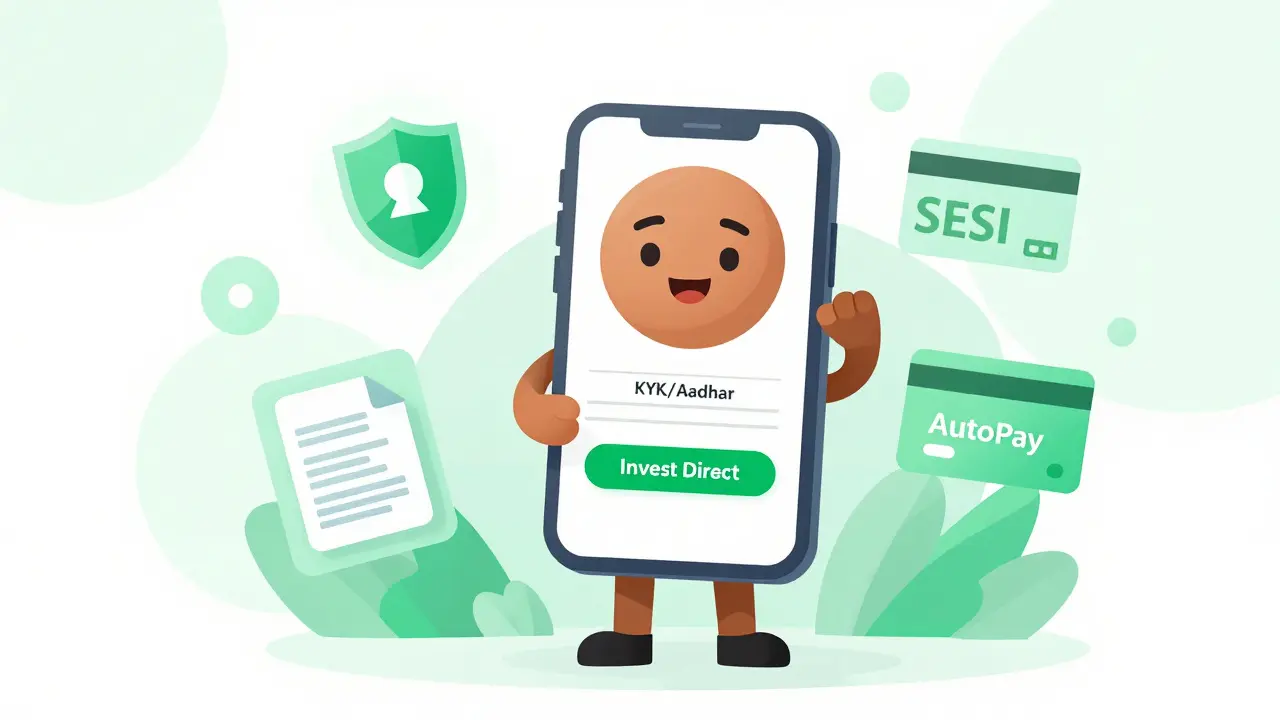
- KYC Registration: This is mandatory. You cannot invest without completing Know Your Customer norms. Most modern platforms allow e-KYC using Aadhaar OTP. You will need your PAN card linked to Aadhaar. If you already completed KYC on one SEBI-registered platform, it is valid across all others, though some may ask for re-verification.
- Link Bank Account: Add your bank account details. For SIPs (Systematic Investment Plans), you must set up a standing instruction or enable AutoPay/NACH mandate. This ensures your investment happens automatically on the chosen date.
- Select the Scheme: Search for the fund. Crucially, look for the word "Direct" in the scheme name. For example, choose "HDFC Mid-Cap Opportunities Fund - Direct Plan - Growth" rather than the "Regular Plan."
- Invest: Enter the amount. Choose between Lump Sum (one-time) or SIP (monthly/quarterly). Confirm the transaction via net banking or UPI. You will receive a confirmation email and folio number shortly.
Verifying Authenticity: Avoiding Hidden Commissions
A common fear among new investors is accidentally buying a Regular plan while thinking it’s Direct. Some unscrupulous apps might disguise fees. How do you protect yourself?
First, check the expense ratio. Compare the expense ratio shown on the platform with the one listed on the official AMC website or the CAMS/KFintech portal. If the platform shows a higher expense ratio, it’s likely a Regular plan or includes hidden charges.
Second, look at the folio statement. After your first investment, download the consolidated account statement (CAS) from CAMS or KFintech. This document lists all your holdings across all fund houses. It clearly labels each holding as "Direct" or "Regular." If it says Regular, stop immediately and switch.
Third, beware of "advisory fees." Some RIAs charge a small advisory fee for direct plans. This is legal and transparent. If you are paying a flat fee, ensure you know what you are getting. If a platform claims to be free but offers "premium reports" or "personalized advice" for a monthly subscription, read the fine print. True direct investing should have minimal to no ongoing cost beyond the fund's internal expense ratio.
Top Platforms Compared in 2026
With so many options, which one should you pick? Here is a breakdown of popular choices based on user experience and reliability.
| Platform | Type | Best For | Cost Model |
|---|---|---|---|
| Groww | Ria/App | Beginners, UI simplicity | Free (Direct Plans) |
| Zerodha Coin | Broker | Existing Zerodha users, long-term holders | Flat ₹200/year per AMC |
| Kuvera | Ria/App | Advanced filters, goal-based planning | Free (Direct Plans) |
| CAMS Online | RTA | Purists, multi-fund house consolidation | Free |
| ET Money | Ria/App | Analytics, tax harvesting tools | Free (Direct Plans) |
If you value simplicity and a clean interface, Groww and Kuvera are strong contenders. They make it incredibly easy to start a SIP with minimal clicks. If you already trade stocks on Zerodha, Coin integrates seamlessly, though the annual fee is a consideration for large portfolios. For those who want to avoid any third-party app entirely, sticking to CAMS or individual AMC websites is the safest, albeit slightly less polished, route.

Common Pitfalls and How to Avoid Them
Even with direct platforms, mistakes happen. Here are the most frequent errors I see investors make.
Chasing Past Performance: Just because a fund topped the charts last year doesn’t mean it will do so this year. Direct platforms give you access to thousands of funds. Don’t pick the top 3 performers blindly. Look at consistency over 5-7 years, fund manager tenure, and downside protection.
Ignoring Exit Loads: While direct plans save on entry costs, exit loads still apply if you redeem too early. Most equity funds have a 1% exit load if you withdraw within 1 year. Always keep a buffer and don’t treat mutual funds like a savings account for emergency cash.
SIP Discipline Failure: Setting up a SIP is easy; maintaining it is hard. Many investors cancel their SIPs after a market dip. Direct platforms send reminders, but you must commit mentally. Automate the payment so you don’t have to think about it.
Tax Implications for Direct Investors
Buying direct does not change your tax liability, but it changes how you report it. In India, capital gains tax depends on the holding period and asset type.
- Equity Funds: Held less than 1 year = Short Term Capital Gains (STCG) taxed at 20%. Held more than 1 year = Long Term Capital Gains (LTCG) taxed at 12.5% on gains above ₹1.25 lakh per year.
- Debt/Hybrid Funds: Tax rules changed recently. Now, debt-oriented funds are generally taxed as per your income slab rate, regardless of holding period, unless they qualify as equity-linked. Check the specific fund category.
Since you are managing your own investments, you are responsible for tracking your cost basis. Use the consolidated statements from CAMS/KFintech to calculate gains accurately during tax filing. Some platforms provide estimated tax reports, but always verify with a CA if your portfolio is complex.
Is it safe to invest in mutual funds through apps like Groww or Kuvera?
Yes, provided they are SEBI-registered Investment Advisors. These platforms do not hold your money. Your investment goes directly to the Asset Management Company (AMC) and is held in your name with the Registrar and Transfer Agent (RTA). The app is merely an interface for transactions. Always verify the SEBI registration number on the app’s website.
Can I transfer my existing Regular plan investments to Direct plans?
You cannot simply "switch" the plan type within the same folio. To move from Regular to Direct, you must redeem (sell) your units from the Regular plan and reinvest the proceeds into the Direct plan of the same scheme. Be mindful of exit loads and capital gains tax implications when selling the old units.
Do I need to complete KYC separately for each platform?
No. KYC is lifetime valid across all SEBI-registered intermediaries. Once you complete KYC on one platform (using Aadhaar/PAN), it is valid for all others. However, some platforms may ask for additional verification steps for security purposes, but you shouldn’t need to submit documents again.
What is the minimum amount required to start a SIP in direct plans?
Most mutual funds allow SIPs starting as low as ₹500 per month. Some even allow ₹100 or ₹1,000 depending on the scheme. There is no upper limit. You can start small and increase the amount as your income grows.
How do I track my investments if I use multiple platforms?
Use the Consolidated Account Statement (CAS) available on CAMS (camsonline.com) and KFintech (kfintech.in). These statements aggregate all your mutual fund holdings across all fund houses and platforms into one view. You can also link your folios to third-party trackers like ET Money or Groww for a unified dashboard.