
Healthcare Costs in Indian Retirement: Planning for Medical Inflation
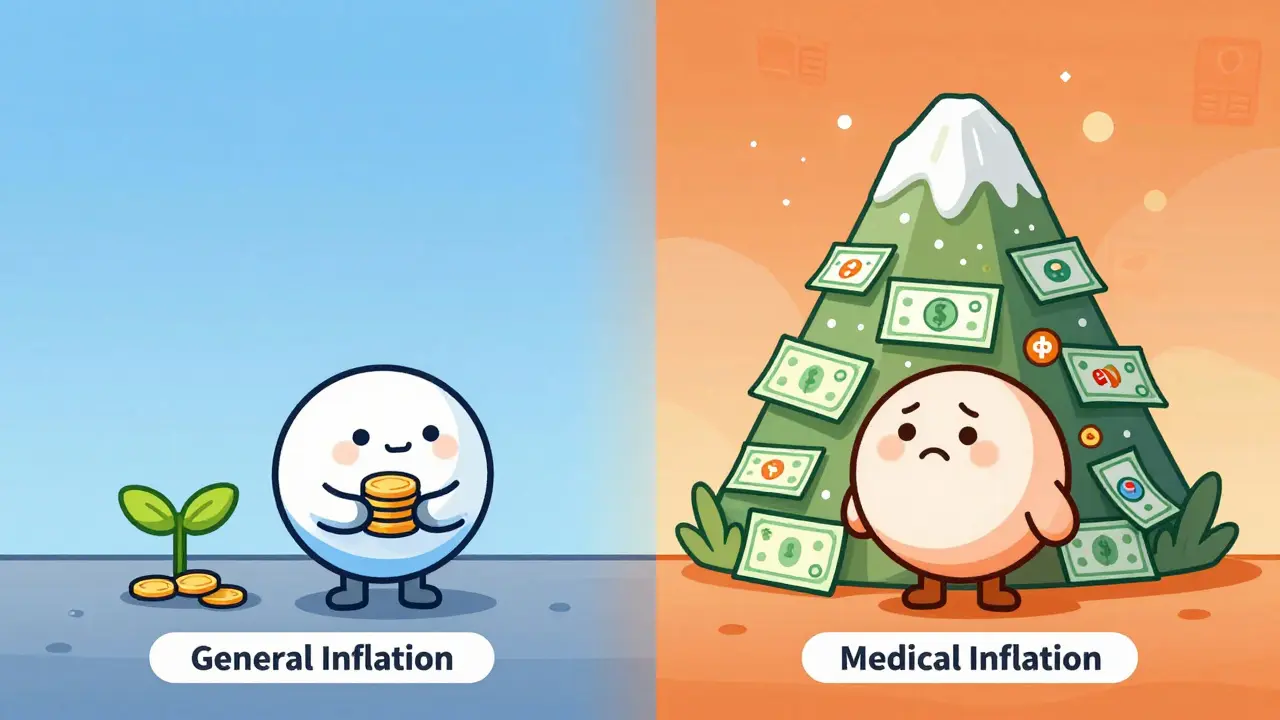
Retirement in India used to mean sitting on the veranda with a cup of tea. Today, it means navigating a complex maze of hospital bills, specialist fees, and skyrocketing insurance premiums. The biggest silent killer of your retirement savings isn't market volatility or poor investment choices-it is medical inflation. While general inflation in India hovers around 5-6%, healthcare costs are rising at nearly double that rate. If you are planning for your golden years, ignoring this gap could leave you underprepared by a significant margin.
The Reality of Medical Inflation in India
To understand why your savings might not stretch as far as you think, we need to look at the numbers. General inflation affects the price of groceries, fuel, and clothing. Medical inflation, however, drives up the cost of surgeries, diagnostics, hospital stays, and medicines. According to data from major insurers like Tata AIG and ICICI Lombard, medical inflation in India has consistently averaged between 10% and 14% over the last decade.
This creates a dangerous divergence. If you plan your retirement corpus based on standard inflation assumptions (say, 6%), you will significantly underestimate your future needs. For example, a heart bypass surgery that costs ₹3 lakhs today could easily cost ₹6 lakhs or more in ten years if medical inflation stays at 12%. This exponential growth means that small delays in planning can result in massive shortfalls later.
| Time Horizon | General Inflation (6%) Cost | Medical Inflation (12%) Cost | Gap in Savings Needed |
|---|---|---|---|
| Today | ₹1,00,000 | ₹1,00,000 | ₹0 |
| 10 Years | ₹1,79,000 | ₹3,10,000 | ₹1,31,000 |
| 20 Years | ₹3,20,000 | ₹9,64,000 | ₹6,44,000 |
This table illustrates why relying on traditional savings methods is risky. The gap widens exponentially over time. Your retirement strategy must account for this specific type of inflation, not just the general rise in prices.
Key Drivers of Rising Healthcare Costs
Why are medical costs rising so fast? It’s not just greed; several structural factors are at play. First, the adoption of advanced technology. Hospitals are investing in robotic surgeries, MRI machines, and AI-driven diagnostics. These technologies improve outcomes but come with high capital and maintenance costs, which are passed on to patients.
Second, there is an increasing prevalence of lifestyle diseases. Conditions like diabetes, hypertension, and cardiovascular issues require long-term management rather than one-time cures. This shifts healthcare from episodic treatment to chronic care, driving up annual expenses. Finally, the shortage of skilled medical professionals in certain specialties leads to higher consultation fees. As demand outstrips supply, prices go up.
Building a Robust Health Insurance Portfolio
Insurance is your first line of defense against medical inflation. However, many retirees make the mistake of buying policies with inadequate coverage. A common pitfall is choosing a base sum insured of ₹5 lakh or ₹10 lakh without considering inflation. By the time you retire, that coverage may only cover minor procedures.
You should aim for a comprehensive policy with a high base sum insured, ideally starting at ₹25 lakh or more if you are young enough to lock in lower premiums. More importantly, look for a Super Top-up plan. A Super Top-up allows you to buy additional coverage at a fraction of the cost compared to increasing the base policy limit. For instance, adding ₹50 lakh of coverage via a top-up might cost less than upgrading your main policy.
Also, pay attention to the 'loading' clause. Many policies offer restoration benefits where the sum insured resets if not used during the year. Ensure your policy includes this feature, as it helps manage costs in case of multiple claims in a single year.
Creating a Dedicated Health Emergency Fund
Insurance covers hospital bills, but it doesn’t cover everything. There are co-payments, deductibles, and treatments that may be excluded due to pre-existing conditions or waiting periods. This is where a dedicated health emergency fund comes in.
Financial experts recommend keeping a separate liquid fund equivalent to 6-12 months of living expenses plus an additional buffer for out-of-pocket medical costs. This fund should be accessible instantly-think fixed deposits with premature withdrawal options or liquid mutual funds. Do not mix this money with your long-term investment portfolio. When a health crisis hits, you need cash now, not returns later.
For seniors, consider allocating a specific portion of your monthly pension or interest income directly into this fund. Automating this transfer ensures you build the buffer gradually without feeling the pinch.
Preventive Care: The Cost-Saving Strategy
While insurance and funds handle the financial shock, preventive care reduces the frequency of those shocks. Regular health check-ups are not just a formality; they are a financial tool. Detecting high cholesterol or early-stage diabetes can prevent expensive complications like kidney failure or stroke down the line.
Incorporate annual full-body check-ups into your budget. Look for packages that include cardiac markers, lipid profiles, and HbA1c tests. Many insurance companies now offer no-claim bonuses or discounts on premiums for maintaining a healthy lifestyle, such as walking a certain number of steps or quitting smoking. Take advantage of these incentives.
Additionally, focus on nutrition and exercise. Simple changes like reducing salt intake, managing stress through yoga, and staying active can significantly lower the risk of chronic diseases. The cost of a gym membership or healthy food is negligible compared to the bill for a month-long hospital stay.

Navigating Pre-Existing Diseases and Waiting Periods
If you already have health issues, buying new insurance can be challenging. Insurers often impose waiting periods of 2-4 years for pre-existing diseases. During this window, you are vulnerable. Here is how to manage this:
- Disclose Everything: Never hide past medical history. Claims rejected due to non-disclosure can wipe out your trust in the system and leave you financially exposed.
- Look for Grandfathered Policies: If you have an old policy, try to retain it. Even if the premium increases, the waiting period for pre-existing conditions may have already lapsed.
- Consider Group Insurance: Some professional bodies or alumni associations offer group health insurance plans with shorter waiting periods or better terms for members.
Patience is key here. Don’t rush into a new policy just because the agent offers a discount. Ensure the terms align with your long-term health trajectory.
Government Schemes and Public Healthcare Options
India has made strides in public healthcare, offering alternatives to expensive private hospitals. Schemes like Ayushman Bharat provide coverage for secondary and tertiary care hospitalization for eligible families. While the eligibility criteria vary by state, it’s worth checking if you qualify.
Even if you have private insurance, using government empaneled hospitals for routine procedures can reduce out-of-pocket costs. These facilities often have lower charges for diagnostics and room rents. Balancing private care for emergencies with public infrastructure for routine needs can stretch your retirement corpus further.
How much should I save for medical expenses in retirement?
Aim for a dedicated health fund equal to at least 20-25% of your total retirement corpus. Additionally, ensure your health insurance coverage is sufficient to handle catastrophic events, typically ₹25 lakh to ₹50 lakh depending on your age and location.
Is it too late to buy health insurance after 60?
No, it is not too late, but premiums will be higher. Look for senior citizen-specific health plans that offer lifetime renewability. Consider combining a lower base policy with a high-value super top-up to keep premiums manageable while maintaining adequate coverage.
What is the difference between general inflation and medical inflation?
General inflation refers to the overall rise in prices of goods and services, usually around 5-6% in India. Medical inflation specifically tracks the increase in healthcare costs, which is significantly higher, often ranging from 10-14%. This disparity makes healthcare a unique challenge in retirement planning.
Should I invest in equity for healthcare costs?
Equity investments are good for long-term growth but carry volatility. For immediate or near-term healthcare needs, stick to liquid assets like fixed deposits or debt funds. You can allocate a small portion of your portfolio to healthcare sector stocks for long-term inflation hedging, but never rely on them for emergency liquidity.
How do pre-existing conditions affect my insurance premium?
Insurers may charge a loading fee, which is an extra percentage added to your premium, for pre-existing conditions. They may also impose longer waiting periods before covering these specific ailments. Always disclose these conditions accurately to avoid claim rejections.