IPO Investing in India Explained: How to Apply for Initial Public Offerings
Buying shares in a company before it hits the open market might sound like a shortcut to big gains, but in India, IPO investing is anything but simple. Every month, dozens of companies launch their Initial Public Offerings - some turn into multibillion-dollar successes, others vanish into obscurity. The key isn’t guessing which one will explode. It’s knowing exactly how to apply, what to watch for, and when to walk away.
What Is an IPO, Really?
An IPO - or Initial Public Offering - is when a private company sells shares to the public for the first time. In India, this means the company files papers with SEBI (Securities and Exchange Board of India), sets a price range, and opens its shares to retail investors like you. It’s not a lottery. It’s not a gamble. It’s a structured process with clear rules.
Companies go public to raise money for expansion, pay off debt, or give early investors an exit. But for you, the retail investor, it’s a chance to get in early. Think of it like buying a ticket to a concert before it sells out. Only here, the band is a company, and the ticket is a share.
Who Can Apply for an IPO in India?
You don’t need to be rich. You don’t need a broker. You don’t even need a Demat account to apply - but you’ll need one to hold the shares. Here’s the breakdown:
- Resident Indian citizens - anyone with a PAN card and a bank account can apply.
- Minors - can apply through a guardian’s account.
- Non-Resident Indians (NRIs) - eligible under certain conditions, but not all IPOs are open to them.
- Institutional investors - like mutual funds and foreign funds - get a separate portion of the shares.
As of 2026, over 90% of IPO applications come from individual investors. That’s a lot of people trying to get in. And yes, oversubscription is common.
How to Apply for an IPO Step by Step
Applying for an IPO in India is fully digital now. Paper forms are gone. Here’s how it works:
- Check the IPO calendar - Visit the BSE or NSE website, or use your broker’s app. Look for upcoming IPOs with opening dates. Most run for 3-5 days.
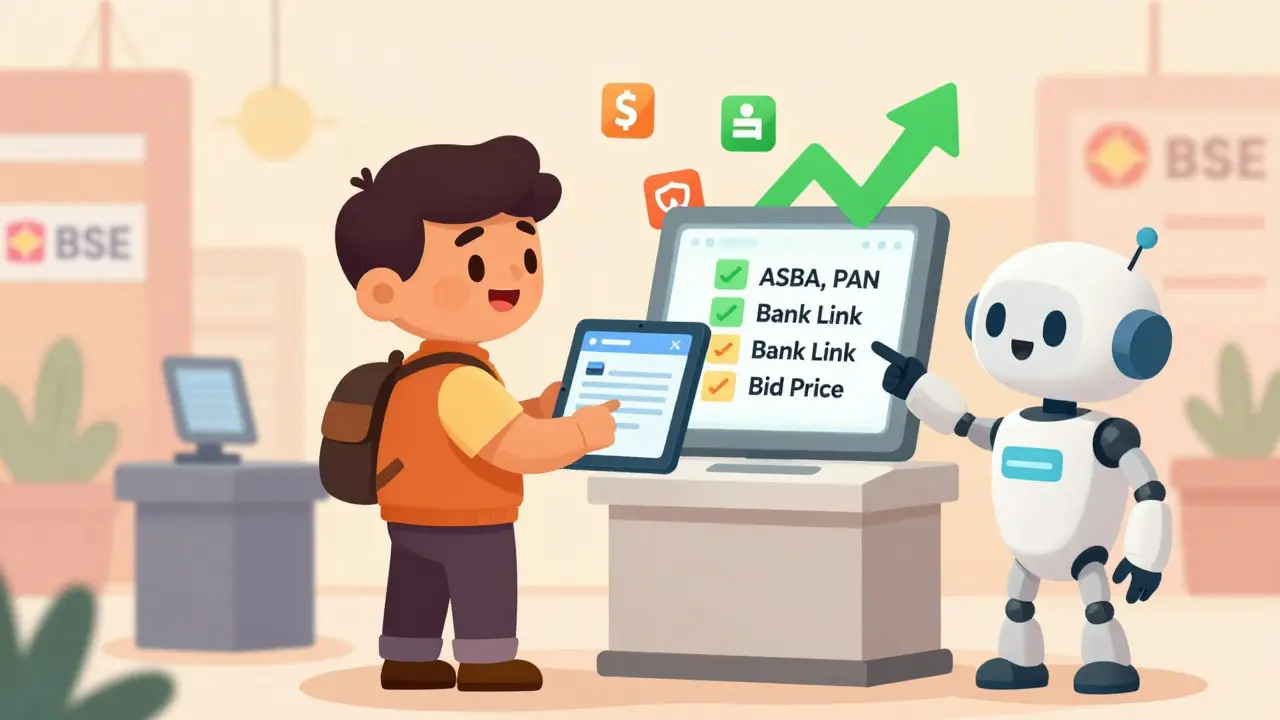
- Choose your bid - You’ll see a price range. Say a company sets it at ₹200-₹210 per share. You can bid at any price within that range. Bidding at the upper limit doesn’t guarantee allotment - but it does improve your odds.
- Link your bank account - Your bank must be on the ASBA (Applications Supported by Blocked Amount) list. ASBA freezes the money you bid with. It’s not debited until shares are allotted. If you don’t get shares, the money returns automatically.
- Apply through your broker or bank - Most people use apps like Zerodha, Groww, or HDFC Bank’s net banking. Log in, find the IPO section, enter your bid, and submit.
- Wait for allotment - After the IPO closes, the company and its registrar (like Link Intime or Karvy) process applications. Allotment happens within 5-7 days. You’ll get an SMS or email.
Pro tip: Apply early. Many IPOs get oversubscribed on day one. Waiting until the last day means you’re competing with everyone else at once.
What Happens After You Apply?
There are three outcomes:
- You get all the shares you applied for - Rare. Only happens in undersubscribed IPOs.
- You get some shares - Common. If 10 people apply for 100 shares, and only 50 are available, you might get 5 each.
- You get zero shares - Happens often. Oversubscription rates of 50x or more aren’t unusual. If you bid low, your chances drop further.
Even if you don’t get shares, your money isn’t lost. It’s released automatically. No fees. No delays.

Why Do So Many IPOs List at a Premium?
On listing day, many IPOs jump 20%, 50%, even 100% in price. Why?
It’s not magic. It’s psychology.
Companies price IPOs conservatively to ensure they sell out. They know retail investors are eager. So they leave money on the table. That gap between the IPO price and the first trading price is called the listing premium. It’s a signal - not a guarantee.
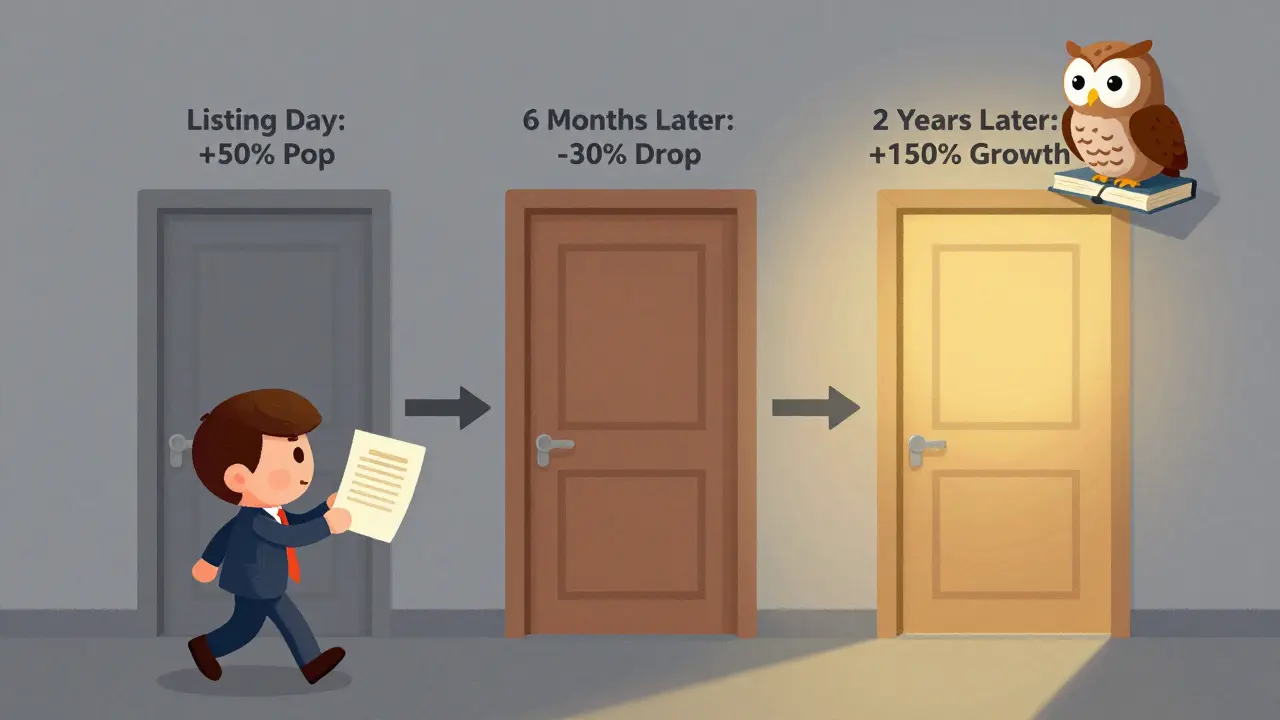
Take the 2025 IPO of MyGate, a property tech startup. It priced at ₹385. On day one, it opened at ₹580 - a 50% jump. But six months later, it traded at ₹310. The hype faded. The business didn’t deliver.
Don’t chase the listing pop. Look at the company’s fundamentals: revenue growth, debt levels, market size, and management quality.
Red Flags to Watch For
Not all IPOs are created equal. Here’s what to avoid:
- High debt - Companies with debt-to-equity ratios above 1.5 are risky.
- Unproven business model - If they’re burning cash and can’t explain how they’ll make money, walk away.
- Overhyped marketing - Big ad campaigns don’t equal strong finances.
- Weak promoters - Check who owns the company. Are they selling their stake? That’s a warning.
- No track record - Startups with less than three years of financial statements are speculative.
SEBI requires all IPOs to publish a detailed prospectus. Read it. Not the summary. The full document. Look for the Use of Proceeds section. If the company says it will use ₹500 crore to pay off loans, that’s fine. If it says “for general corporate purposes,” that’s vague - and risky.
How Much Should You Invest?
There’s no rule. But here’s a practical guideline:
- Never invest more than 5-10% of your portfolio in IPOs.
- Only apply to IPOs you understand. If you can’t explain what the company does in one sentence, skip it.
- Never use borrowed money. IPOs aren’t guaranteed wins.
Think of IPOs as lottery tickets - not investments. Most people lose. A few win big. But you can tilt the odds by being selective.
Best IPOs in India (2024-2025)
Not all IPOs are winners. But some stood out:
- IRCTC - Listed in 2021, still up 200%+ since IPO. A monopoly in rail ticketing with steady revenue.
- Policybazaar - Insurance platform. Grew revenue 40% year-over-year. Now profitable.
- CarTrade - Used car marketplace. Strong margins. Low debt.
- Delhivery - Logistics firm. Profitable since 2023. Serves Amazon, Flipkart.
Notice a pattern? All four had clear revenue models, strong management, and real customers. Not just buzz.
Common Mistakes New Investors Make
Here’s what goes wrong:
- Applying for every IPO - You’ll get diluted. Focus on 2-3 per year.
- Bidding at the highest price - It doesn’t help if the company is overvalued.
- Selling on day one - You lock in a quick gain, but miss long-term growth.
- Ignoring the prospectus - If you don’t read it, you’re gambling.
One investor applied to 12 IPOs in 2025. Got shares in only two. One of them dropped 30% in two months. The other doubled. Net gain? Zero. He spent months chasing noise.
Where to Find Reliable IPO Info
Stick to official sources:
- SEBI website - Lists all registered IPOs.
- BSE/NSE websites - Real-time IPO calendars.
- Company prospectuses - Download PDFs directly from the issuer’s site.
- Brokerage apps - Zerodha, Groww, Upstox - they show IPO details with alerts.
Avoid social media hype. Telegram groups, YouTube influencers, and Reddit threads are full of misinformation. They’re not analysts. They’re promoters.
What Comes After the IPO?
Getting shares is just the start. Now you’re a shareholder. You’ll get:
- Dividend notices (if the company pays them)
- Annual reports
- Shareholder meeting invites
Hold the shares for at least six months. That’s when the market starts pricing them based on real performance - not hype.
Many IPOs fall after the initial surge. That’s normal. The real test is whether the company can grow its profits, not its stock price on day one.
Final Advice: Be Patient, Be Selective
IPO investing in India isn’t about getting rich quick. It’s about getting in on solid companies before they become household names. The best investors don’t chase every IPO. They wait. They read. They wait again.
There’s no rush. If you miss an IPO, another one will come. But if you invest in a weak company, you might lose money for years.
Remember: A great company doesn’t need a listing to be valuable. A bad company doesn’t become good just because it’s public.