NPS Strategy in India to Build a ₹1 Crore Retirement Corpus: A Case Study
Building a ₹1 crore retirement corpus in India isn’t a fantasy-it’s a math problem with a clear solution. Many people think they need to save huge amounts every month, or wait until they’re 40 to start. But the truth is, starting early and using the right tool can make it easier than you think. The National Pension System (NPS) is one of the most powerful, underused instruments for retirement planning in India today. It’s not flashy. It doesn’t promise high returns like gold or crypto. But over 25-30 years, with disciplined contributions and smart asset allocation, NPS can reliably turn modest monthly investments into a ₹1 crore corpus.
How NPS Works: The Mechanics Behind the Numbers
NPS is a government-backed pension scheme open to all Indian citizens between 18 and 70. It’s designed to be low-cost, transparent, and flexible. You contribute money each month, and it gets invested across three asset classes: equity (up to 75%), corporate bonds, and government securities. You choose your allocation-or let it auto-adjust as you age through the ‘Auto Choice’ option.
Here’s what makes NPS stand out:
- Low fees: Total expense ratio is under 0.01% per year, far lower than mutual funds or ULIPs.
- Tax benefits: You get deductions under Section 80C (up to ₹1.5 lakh) plus an additional ₹50,000 under Section 80CCD(1B).
- Market-linked growth: Unlike fixed deposits or PPF, your money grows with the market-giving you better long-term returns.
- Portability: You can switch employers, cities, or even move abroad and keep your NPS account active.
At retirement, you can withdraw 60% of the corpus as a lump sum (tax-free), and the remaining 40% must be used to buy an annuity that gives you a monthly pension. This structure ensures you don’t outlive your money.
The ₹1 Crore Goal: Realistic Numbers, Real People
Let’s say you’re 30 years old today. You want ₹1 crore by age 60. That’s 30 years to grow your money. Assuming an average annual return of 9.5%-a conservative estimate based on historical NPS performance from 2015 to 2025-you’d need to invest just ₹5,600 per month.
That’s less than the cost of two coffee orders a day.
Here’s how it breaks down:
| Starting Age | Years to Retirement | Assumed Return | Monthly Investment Required |
|---|---|---|---|
| 25 | 35 | 9.5% | ₹3,900 |
| 30 | 30 | 9.5% | ₹5,600 |
| 35 | 25 | 9.5% | ₹8,200 |
| 40 | 20 | 9.5% | ₹12,800 |
Notice how starting just five years earlier cuts your monthly burden by nearly half. That’s the power of compounding. The earlier you start, the less you need to force yourself to save each month.
Case Study: Arjun, 32, Software Engineer in Bengaluru
Arjun earns ₹18,000 per month after tax. He’s not rich. He doesn’t have side hustles or inherited wealth. But he started NPS in 2022 at age 30, contributing ₹6,000 per month. He chose the ‘Auto Choice’ option, letting the system reduce his equity exposure by 1% every year after age 35.
He also claimed the extra ₹50,000 tax deduction under 80CCD(1B). That saved him ₹15,000 in taxes annually. He reinvested that tax saving back into his NPS account.
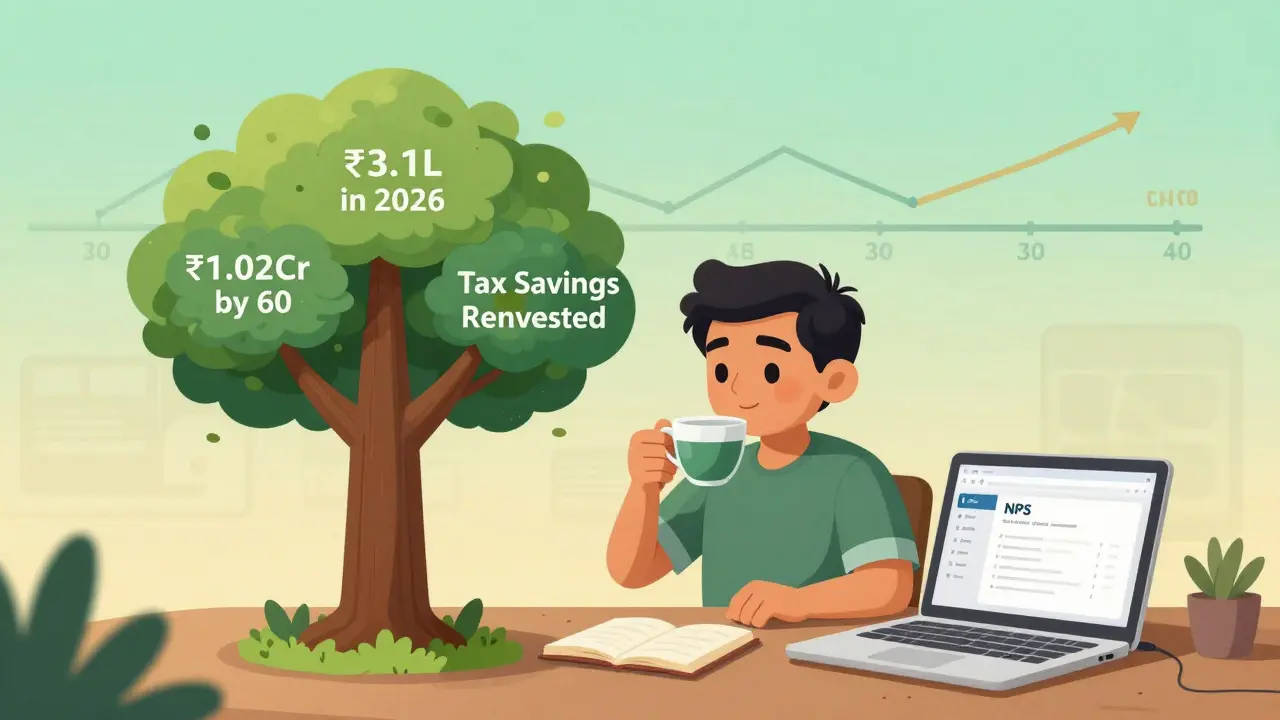
By 2026, his NPS corpus is ₹3.1 lakh. At this pace, with 9.5% returns, he’ll hit ₹1.02 crore by age 60. He doesn’t check his balance every week. He doesn’t panic when markets drop. He just keeps contributing. He’s already halfway there-not because he earned more, but because he started early and stayed consistent.
Why NPS Beats Other Options
People compare NPS to PPF, mutual funds, or fixed deposits. Here’s why NPS wins for long-term retirement:
- vs PPF: PPF caps at ₹1.5 lakh/year and offers 7.1% returns. To hit ₹1 crore in 30 years, you’d need to invest ₹11,000/month. NPS does it with ₹5,600.
- vs Mutual Funds: Equity mutual funds may give similar returns, but their expense ratios are 1.5-2.5%. Over 30 years, that eats up over ₹25 lakh in fees. NPS costs less than ₹10,000 in total fees.
- vs FDs: Fixed deposits give 6-7% returns and are taxable. Even with tax-saving FDs, you won’t beat NPS’s combination of tax efficiency and growth.
NPS isn’t perfect. You can’t withdraw before 60 without penalties. The annuity payout isn’t guaranteed to keep up with inflation. But for most Indians, it’s the most efficient retirement engine available.
How to Start: A Step-by-Step Guide
If you’re ready to begin, here’s how to set up your NPS account in under 15 minutes:
- Choose a Point of Presence (PoP)-banks like SBI, ICICI, or online platforms like CAMS or Karvy.
- Submit your Aadhaar, PAN, and bank details. Most PoPs allow online registration.
- Select your investment preference: Active Choice (you pick equity/bond ratio) or Auto Choice (system adjusts as you age).
- Set up a recurring monthly contribution via UPI or auto-debit.
- Link your NPS account to your income tax return to claim the ₹50,000 deduction.
You’ll get a PRAN (Permanent Retirement Account Number). Keep it safe. You can track your balance on the NPS Trust website or through the NPS mobile app.

Common Mistakes to Avoid
Most people who fail to build a ₹1 crore corpus don’t fail because they earn too little. They fail because of these habits:
- Waiting for the ‘right time’: There’s no perfect moment. The best time to start was 10 years ago. The second best is today.
- Switching too often: Don’t change your allocation every time the market dips. NPS works because of consistency, not timing.
- Ignoring the extra ₹50,000 deduction: This is free tax savings. Not claiming it is like leaving ₹15,000 on the table every year.
- Thinking NPS is only for government employees: Private sector workers benefit even more because they don’t get pensions.
What Happens After 60?
At retirement, you have options:
- Take 60% as a lump sum-tax-free.
- Use 40% to buy an annuity from an IRDA-approved provider. Choose a lifetime annuity with inflation adjustment if you can afford the lower initial payout.
- Keep your money in NPS longer if you don’t need it yet. You can defer annuity purchase up to age 70.
Many retirees combine NPS with other savings-like PPF, real estate, or family support-to create a balanced income stream. The goal isn’t to rely on one source. It’s to stack reliable systems.
Final Thought: It’s Not About Being Rich. It’s About Being Prepared.
You don’t need to be a high earner to build a ₹1 crore retirement fund. You just need to start, stay consistent, and use the right tool. NPS is that tool. It’s not the only one, but it’s the most efficient for the average Indian. The numbers don’t lie. ₹5,600 a month. 30 years. 9.5% returns. ₹1 crore.
What’s stopping you?
Can I withdraw money from NPS before 60?
Yes, but only under limited conditions: critical illness, higher education for children, or buying a first home. You can withdraw up to 25% of your contributions (not the total corpus), and it’s taxable. Early withdrawal reduces your retirement corpus significantly, so it should be a last resort.
Is NPS better than mutual funds for retirement?
For most people, yes. NPS has lower fees, better tax efficiency, and mandatory annuity purchase to prevent outliving your money. Mutual funds offer more flexibility but come with higher costs and no built-in income structure. If you’re disciplined and know how to manage withdrawals, mutual funds can work-but NPS is simpler and more reliable.
How much pension will I get from NPS after 60?
It depends on the annuity plan you choose. With a ₹1 crore corpus and 40% (₹40 lakh) used for annuity, you can expect ₹25,000-₹35,000 per month for life, depending on your age, gender, and the annuity provider. Inflation-adjusted plans will pay less initially but grow over time.
Can I invest more than ₹50,000 in NPS for tax benefits?
Yes, you can invest any amount in NPS. But only ₹50,000 qualifies for the additional tax deduction under Section 80CCD(1B). Any amount above that still grows tax-free and can be withdrawn tax-free at retirement, but won’t reduce your current taxable income.
Is NPS safe? What if the market crashes?
NPS is regulated by PFRDA and backed by the Government of India. Your money is invested in diversified portfolios across government bonds and corporate securities. While equity exposure means short-term volatility, over 30 years, markets tend to recover. Historically, NPS has delivered 9-10% annual returns over the last decade. The system is designed for long-term growth, not short-term gains.
If you’re reading this and thinking, "I’ll start next month," remember: every month you wait adds ₹200-₹300 to your monthly requirement. Don’t delay. Open your NPS account today. The future you will thank you.