
Pre-Launch Property Investment in India: Benefits and Risks Explained
Buying a home or an apartment before the construction even breaks ground sounds like a dream for investors. You get the lowest price, you pick the best floor, and you watch your asset appreciate while the builders lay bricks. But in the Indian real estate market, that "dream" can quickly turn into a nightmare if you aren't careful. Pre-launch property investment offers some of the highest returns in the sector, but it also carries risks that can wipe out your capital entirely.
The difference between a smart move and a costly mistake often comes down to one thing: due diligence. Are you buying from a builder who has delivered on time for five years straight, or one who is promising the moon with no track record? This guide cuts through the marketing hype to show you exactly what pre-launch investments entail, where the money is made, and where it disappears.
What Is Pre-Launch Property?
To understand the risk, you first need to understand the product. In the context of Indian real estate, pre-launch refers to the stage where a developer has acquired land, obtained initial approvals, and started marketing the project, but has not yet received the final Completion Certificate or sometimes even the full Building Plan approval from the local municipal authority.
This phase sits before the "launch" (when the project gets its RERA registration number) and long before "possession" (when you get the keys). It is essentially buying a promise. You are paying for a plot of land and a blueprint, trusting that the builder will execute that blueprint within a specific timeframe and quality standard. Unlike buying a resale flat, where you can inspect the plumbing and check the neighborhood noise levels, pre-launch is a blind bet on the developer's competence and financial health.
The Allure: Why Investors Chase Pre-Launch Deals
If the risk is high, why do so many people jump in? The answer is simple math. The potential upside in pre-launch investments is significantly higher than in ready-to-move-in properties. Here is what drives the demand:
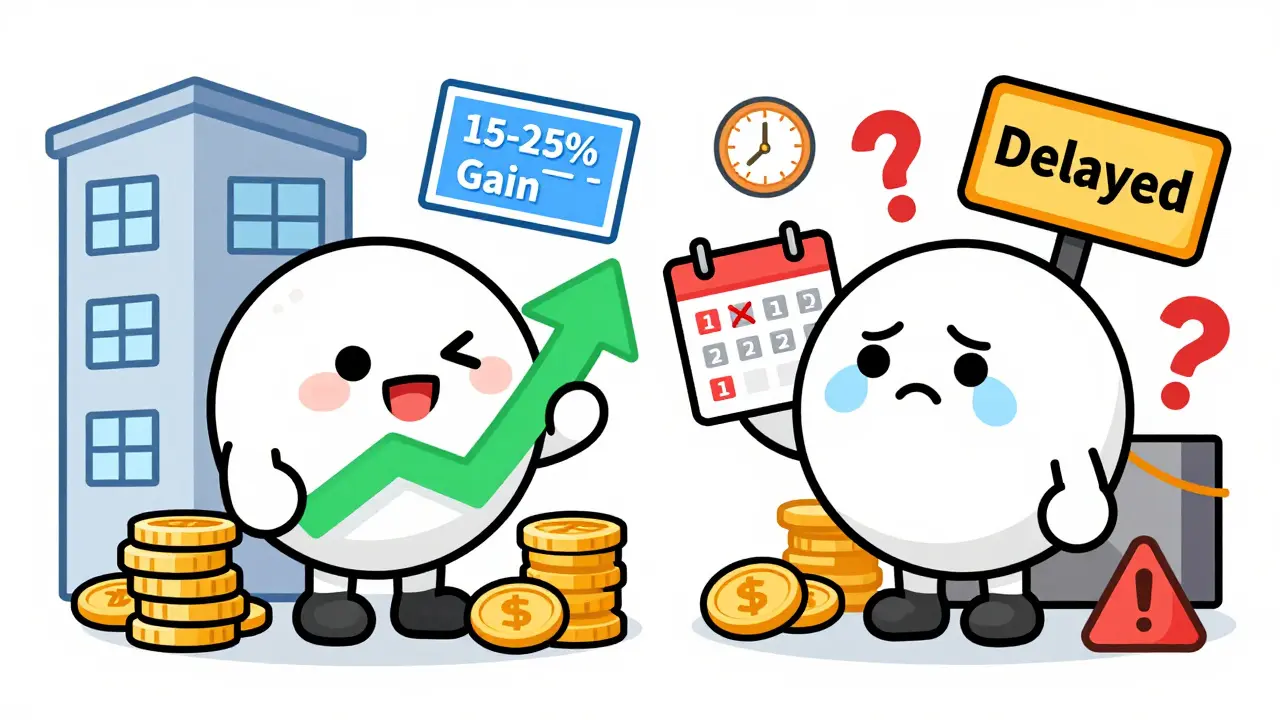
- Price Appreciation: Developers price pre-launch units at a discount-often 15% to 25% lower than the eventual launch price. If the project completes successfully, you have already banked this gain before you even sign the possession papers.
- First Mover Advantage: You get first dibs on the best units. Think corner apartments with double windows, top-floor penthouses without overhead neighbors, or ground-floor villas with private gardens. By the time the project launches publicly, these premium options are usually gone.
- Customization Options: At this stage, developers are eager to close deals. They may allow you to change wall layouts, upgrade flooring materials, or modify kitchen designs at a fraction of the cost compared to renovating later.
- Payment Plans: Builders often offer flexible payment structures during the pre-launch phase. You might pay just 10-20% upfront, with the rest linked to construction milestones, giving you time to arrange financing.
For example, in cities like Bangalore or Hyderabad, tech corridor developments have seen property values double within three years of a major highway announcement. Investors who bought pre-launch near those proposed corridors reaped massive rewards. But they were the lucky ones who picked the right location and the right builder.
The Hidden Dangers: Where Money Goes Wrong
Let’s be honest. The Indian real estate sector has a history of delays, quality compromises, and outright fraud. Before the introduction of RERA (Real Estate Regulation and Development Act), investors had little recourse when builders vanished with their money. While RERA has improved transparency, risks remain.
- Project Delays: This is the most common issue. A project promised for two years might take four. During this time, your money is locked up, inflation erodes its value, and you miss out on rental income. Delays often stem from legal disputes over land titles or funding shortages.
- Quality Compromises: To cut costs, some builders use substandard materials. What was promised as "marble flooring" might become cheap tiles. "Smart home features" might be non-functional gadgets. When you buy pre-launch, you can’t verify the build quality until years later.
- Legal Disputes: If the land wasn’t legally cleared, the entire project can be halted by courts. You could end up with a piece of paper that says you own an apartment, but no physical apartment exists because the land is under litigation.
- Developer Insolvency: Not all builders survive economic downturns. If a developer goes bankrupt mid-construction, your investment becomes part of the bankruptcy proceedings. Recovery rates for unsecured creditors (which you are) are notoriously low.
I’ve seen cases where investors lost 40% of their principal because they bought from a small, unknown builder offering "too good to be true" prices. The lesson? Cheap prices are rarely cheap for a reason other than hidden trouble.
RERA: Your Safety Net (And How to Use It)
The Real Estate Regulation Authority (RERA) was introduced in 2016 to protect buyers. It mandates that developers register their projects and disclose key details. However, pre-launch sales happen *before* RERA registration. This creates a gray area.
Here is how to navigate it safely:
- Check for Prior Registrations: Even if the current project isn’t registered, check if the builder has other active projects listed on your state’s RERA website. Look for complaints against them. A clean record across multiple projects is a strong positive signal.
- Verify Land Title: Demand to see the original land ownership documents. Hire an independent lawyer to verify that the land is free from encumbrances, mortgages, or court disputes. Do not rely on the builder’s legal team.
- Understand the Agreement: The pre-launch agreement should clearly state the refund policy if the project fails to get RERA registration or if construction halts. Ensure there is a clause for interest compensation in case of delays beyond a reasonable grace period.
- Escrow Accounts: Under RERA, 70% of payments must go into an escrow account dedicated to the project. Ask the builder if they are following this protocol, even in pre-launch phases. If they insist on taking cash or personal cheques, walk away immediately.
RERA is not a magic wand, but it provides a framework for accountability. Ignoring it is like driving without a seatbelt-you hope nothing happens, but you know the consequences if it does.
Due Diligence Checklist: Vetting the Builder
You wouldn’t hire a surgeon based on their smile alone. Don’t hire a builder based on their brochure. Conduct rigorous background checks. Here is a practical checklist:
| Check Area | What to Verify | Red Flags |
|---|---|---|
| Track Record | Visit at least 3 completed projects by the same builder. Talk to existing residents about maintenance and quality. | No completed projects; only ongoing ones. Residents complain about poor construction. |
| Financial Health | Check credit ratings from agencies like CRISIL or ICRA. Look for consistent debt repayment history. | Low credit rating; frequent restructuring of debt; reliance on partner funds. |
| Land Ownership | Original sale deed, khata book, and NOC from local authorities. Ensure land is not agricultural unless converted. | Leasehold land without clear renewal terms; disputed boundaries; lack of conversion certificates. |
| Approvals | Master plan permission, environmental clearance, and building plan approval status. | Promises of "future approvals"; vague answers about permit status. |
| Market Reputation | Search online forums, social media groups, and news articles for recent complaints or litigation. | Multiple lawsuits pending; negative reviews citing delayed possession. |
If any of these checks fail, do not proceed. The market is full of opportunities; you don’t need to force a bad deal.
Location Strategy: Beyond the Blueprint
A beautiful apartment in a dead zone is still a bad investment. Pre-launch pricing assumes future growth, so you must validate that growth potential yourself. Don’t just look at the map; look at the city’s master plan.
Ask these questions:
- Connectivity: Is a metro line, highway, or ring road planned nearby? Check the government’s infrastructure budget allocation. Promised roads that haven’t broken ground in five years are likely political promises, not imminent realities.
- Amenities: Are schools, hospitals, and shopping centers within a 5km radius? Or will you be living in a desert for the next decade? Proximity to established hubs adds immediate value.
- Zoning Laws: Ensure the area is zoned for residential use. Industrial zones nearby can negatively impact livability and resale value. Check for any proposed large-scale industrial projects that might bring pollution or traffic.
- Demand Drivers: Is there a tech park, university, or hospital being built nearby? These create sustained rental demand. For instance, areas around medical universities in Pune consistently see high rental yields due to student and doctor housing needs.
Invest in locations where the city is growing, not just where the builder is building.

Financing Pre-Launch Properties
One major hurdle is financing. Most banks in India do not provide loans for pre-launch properties until the project receives RERA registration and construction reaches a certain stage (usually plinth level or slab completion).
This means you often need to pay 30-50% of the total cost upfront using your own savings. This locks up significant capital. If you plan to take a home loan later, ensure your credit score is pristine and that you have enough liquidity to cover the initial payments without straining your finances.
Some developers offer "construction-linked payment plans," where you pay as floors are built. This aligns your payments with progress, reducing risk. Always prefer this over lump-sum payments early on.
When to Walk Away
Knowing when to say no is as important as knowing when to say yes. Walk away if:
- The builder pressures you to sign immediately with threats of price hikes.
- The agreement lacks clear clauses on delay penalties and refunds.
- There are discrepancies in the floor plan vs. the approved building plan.
- You cannot verify the land title independently.
- The price seems significantly lower than comparable projects in the area without a logical explanation.
Patience is your greatest asset. There will always be another opportunity. Losing your capital on a bad pre-launch deal can set you back years.
Conclusion: Smart Risk, Not Gamble
Pre-launch property investment in India is not for the faint-hearted. It requires research, patience, and a healthy dose of skepticism. But for those willing to do the homework, the rewards can be substantial. Focus on reputable builders, verify every legal document, and choose locations with genuine growth drivers. Treat it as a serious business transaction, not a lottery ticket. Your future self will thank you for the diligence you show today.
Is it safe to invest in pre-launch properties in India?
It can be safe if you conduct thorough due diligence. Key safety measures include verifying the builder's track record, checking land title deeds, ensuring RERA compliance (or understanding the pre-RERA risks), and reviewing the agreement for delay penalties. Never invest with unknown developers or those with a history of litigation.
Can I get a home loan for a pre-launch property?
Generally, no. Most banks in India require the project to be RERA-registered and construction to have reached a certain stage (like plinth level) before approving loans. You typically need to fund the initial 30-50% of the cost from your own savings until the project qualifies for mortgage financing.
What happens if the builder delays the project?
If the builder delays possession, you are entitled to compensation as per the sale agreement and RERA guidelines. This usually involves monthly interest payments on the amount paid for each month of delay. Ensure your contract explicitly states these penalty clauses before signing.
How do I verify the builder's credibility?
Visit their previously completed projects and talk to residents. Check their credit ratings from agencies like CRISIL or ICRA. Search for pending legal cases against them on court websites. Also, review their presence on your state's RERA portal for any past complaints or violations.
What is the typical return on investment for pre-launch properties?
Returns vary by location and market conditions. Historically, pre-launch investments have yielded 15-25% appreciation upon project launch, plus further gains upon possession. However, these returns are tied to the duration of the investment and carry significant risk if the project fails or delays occur.