Primary Market vs Secondary Market in India: Key Differences, IPOs & Trading
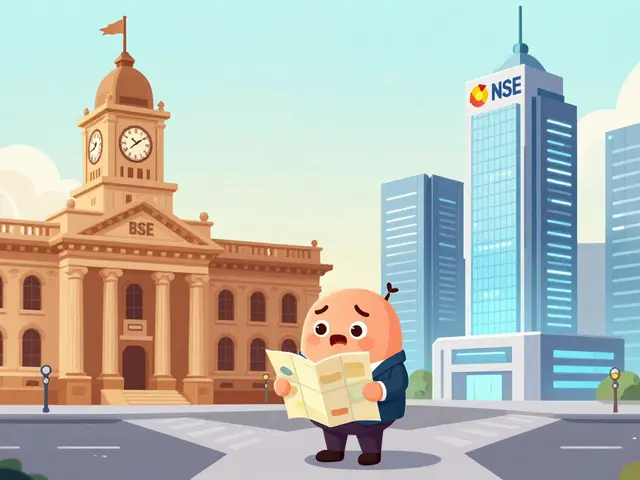
You’ve heard the buzzwords. You see the headlines about a company going public or the daily fluctuation of Sensex points. But when you actually look at your phone to buy a share, where does that money go? Who gets it? And why does the price jump after an Initial Public Offering (IPO) closes?
Understanding the difference between the primary market and the new issue market is the single most important step for any investor in India. It’s not just academic jargon; it dictates how you make money, what risks you take, and which rules apply to your wallet.
The primary market is where new securities are created. The secondary market is where those existing securities change hands. Confusing the two can lead to costly mistakes, like trying to trade an IPO before it lists or misunderstanding why a company’s share price drops despite good earnings. Let’s break down exactly how these two ecosystems work in the Indian context, who regulates them, and how you can use both to build wealth.
What Is the Primary Market in India?
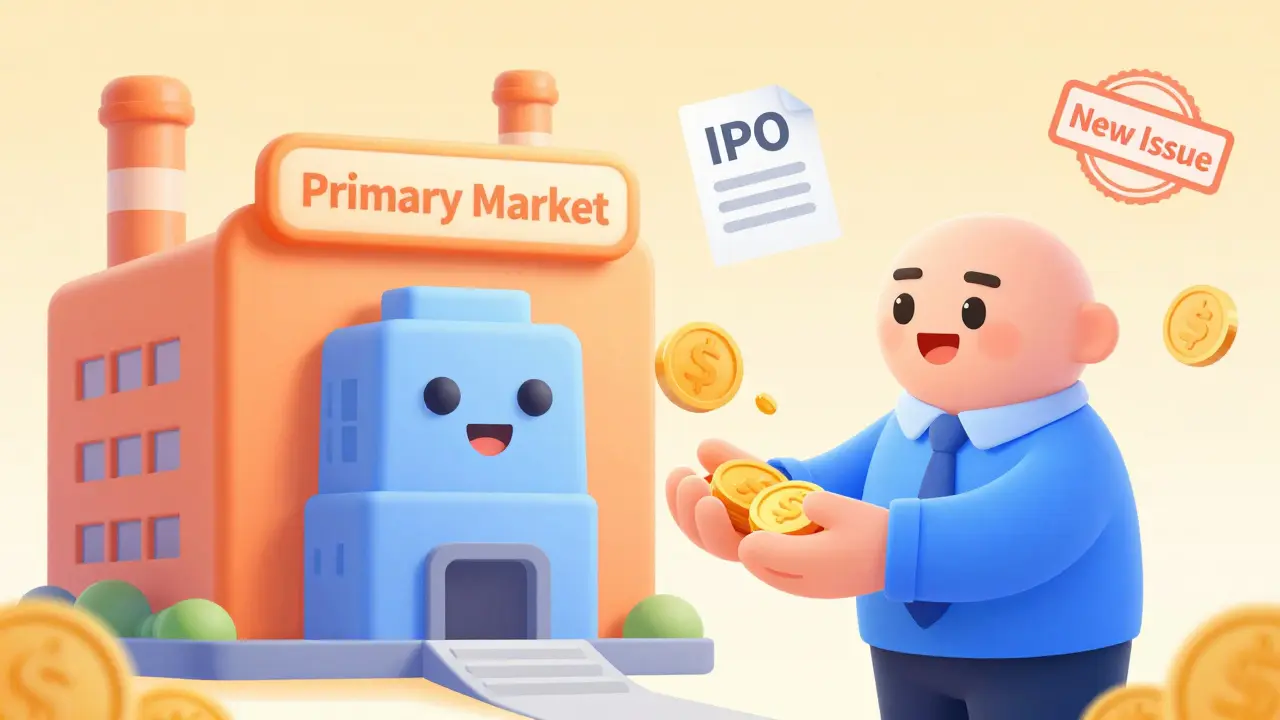
Think of the primary market as the factory floor. This is where companies raise capital directly from investors for the first time. When a private company decides to go public, it enters this arena through an Initial Public Offering (IPO).
In this phase, the money you pay for shares goes straight into the company’s bank account. They use this cash to expand factories, pay off debt, fund research, or hire staff. The company doesn’t care if you sell those shares five minutes later; they only care about getting the funds during the subscription window.
There are three main ways companies raise money here:
- Initial Public Offerings (IPOs): A private company sells shares to the public for the very first time. Think of recent listings like Zomato or Nykaa.
- Fresh Issues: An already-listed company issues *new* shares to raise more capital. This dilutes existing shareholders but brings in fresh cash.
- Right Issues: Existing shareholders get the right to buy additional shares, usually at a discount, to maintain their ownership percentage.
The pricing here isn’t determined by minute-to-minute buying and selling pressure. Instead, it’s set through a process called book building. Investment banks help the company determine a price band based on valuation metrics, and investors bid within that range. The final issue price is decided once the bidding closes.
Regulation is tight here because you’re dealing with unproven public entities. The Securities and Exchange Board of India (SEBI) is the regulatory body that protects investor interests and ensures transparency in capital markets oversees every step. Companies must file a Draft Red Herring Prospectus (DRHP) and a Red Herring Prospectus (RHP), disclosing everything from financial health to risk factors. You can read these documents on the SEBI website or the company’s investor relations page before investing.
How Does the Secondary Market Work?
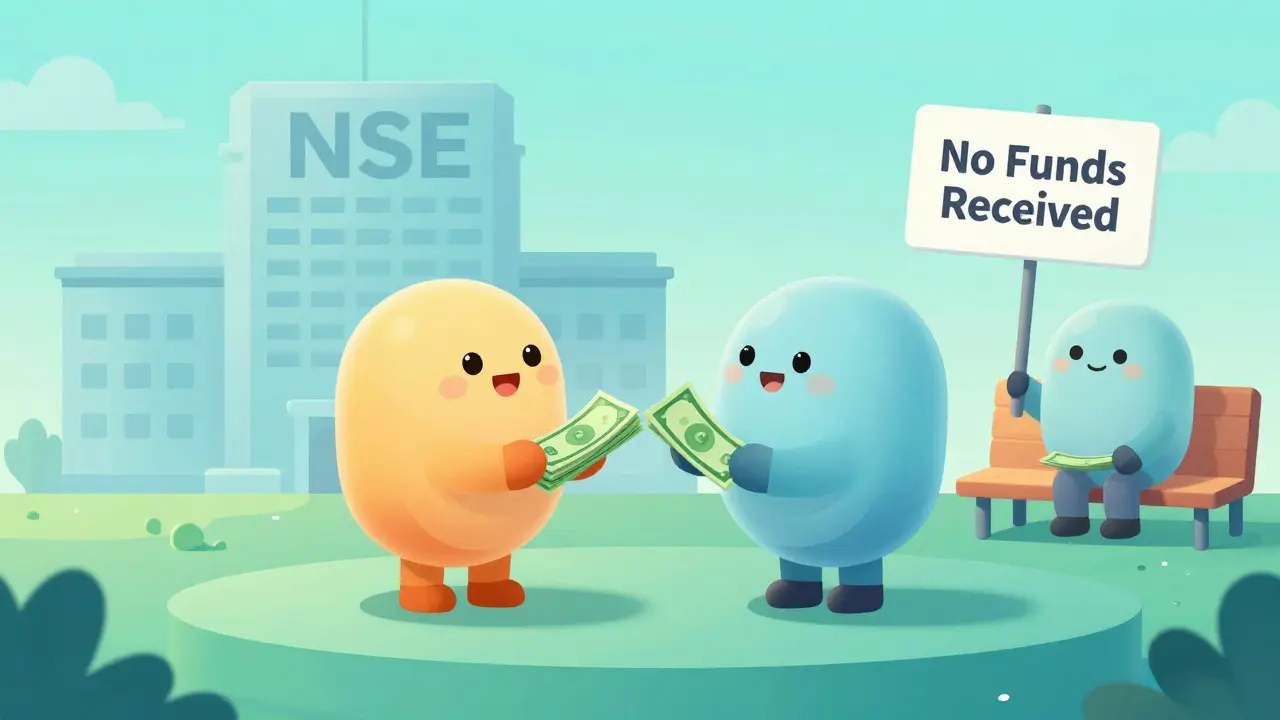
Once the IPO closes and the shares are allotted, they move to the secondary market. This is the exchange floor-specifically, the National Stock Exchange (NSE) and the Bombay Stock Exchange (BSE) in India. Here, no new money goes to the company. If you buy one share of Reliance Industries today, the seller receives the money, not Reliance.
This market provides liquidity. Without it, IPOs would fail because investors wouldn’t want to lock up their money with no exit strategy. Prices here are driven purely by supply and demand. If everyone thinks a tech startup will dominate AI, they buy, and the price rises. If there’s bad news, they sell, and it crashes.
To participate, you need a Demat account to hold the shares electronically and a Trading Account linked to a broker to execute orders. Popular brokers in India include Zerodha, Upstox, and Angel One. You place a buy order, match it with a seller, and the transaction settles via the clearing corporation-either CDSL (Central Depository Services Limited) or NSDL (National Securities Depository Limited).
The secondary market operates continuously during trading hours (9:15 AM to 3:30 PM IST). It includes various segments:
- Cash Segment: Buying and selling shares for immediate delivery (T+1 settlement cycle now applies in India).
- F&O Segment: Futures and Options contracts, allowing leverage and hedging.
- Block Deals: Large transactions involving significant quantities of shares, often used by institutional investors.
Unlike the primary market, prices are volatile. They react to quarterly results, global cues, RBI policy changes, and even social media trends. This volatility creates opportunities for active traders but poses risks for passive holders.
Key Differences: Primary vs. Secondary Market
| Feature | Primary Market | Secondary Market |
|---|---|---|
| Flow of Funds | Investor → Company | Investor ↔ Investor |
| Price Determination | Book Building / Fixed Price | Supply and Demand |
| Risk Level | High (Unlisted history, valuation uncertainty) | Moderate (Historical data available, but volatile) |
| Liquidity | Low (Money locked until allotment/listing) | High (Can sell instantly during market hours) |
| Regulatory Focus | Disclosure & Transparency (SEBI strict oversight) | Fair Trading & Manipulation Prevention |
| Participants | Companies, Retail Investors, QIBs, HNI | Retail Traders, Institutions, FII/DII |
Notice the critical distinction in risk. In the primary market, you’re betting on a future promise. The company might overstate its growth potential to attract bids. In the secondary market, you have years of price action, fundamental ratios, and analyst reports to guide you. However, secondary markets carry the risk of herd mentality and emotional trading.
Who Regulates These Markets?
In India, the ecosystem is heavily supervised to prevent fraud and ensure fair play. The backbone is SEBI. Established in 1988 and given statutory powers in 1992, SEBI acts as the police force of the capital markets.
For the primary market, SEBI ensures that the prospectus is honest. They check if the promoters aren’t siphoning funds and if the valuation is reasonable. For the secondary market, SEBI monitors trading patterns for insider trading and market manipulation. They enforce circuit filters-limits on how much a stock can rise or fall in a day-to prevent panic.
Other key players include:
- Stock Exchanges (NSE/BSE): Provide the platform for trading. They also list companies and ensure compliance with listing agreements.
- Depositories (CDSL/NSDL): Hold your shares in electronic form. They don’t trade but ensure safe custody.
- Clearing Corporations (NSCCL/NCL): Guarantee settlement. If a buyer defaults, the clearing corporation pays the seller, ensuring trust in the system.
This multi-layered regulation means that while you can lose money due to poor choices, the system itself is robust against theft or collapse.
How to Invest in Both Markets
Participating in the primary market requires a few extra steps compared to clicking "buy" on an app. To apply for an IPO, you need:
- A Demat Account and Trading Account with an IPO-enabled broker.
- A linked bank account with sufficient funds (for ASBA - Application Supported by Blocked Amount).
- Knowledge of the cut-off lot size and minimum application amount.
You apply during the subscription window, usually 3-5 days long. Your money is blocked in the bank but not debited until allotment happens. If oversubscribed, you might get partial allotment or nothing at all. Once listed, the shares appear in your Demat account, and you can trade them in the secondary market.
For the secondary market, the barrier to entry is lower. Open a Demat account, complete KYC (Know Your Customer), and start trading. You can buy fractional shares (if supported by your broker) or full lots. Most retail investors prefer the secondary market for flexibility-you can invest ₹500 today and ₹1000 next month. In the primary market, you’re stuck with the lot size defined in the IPO.
Smart investors use both. They monitor IPOs for high-quality businesses at potentially discounted valuations (primary market advantage). Then, they hold those shares in the secondary market, adding to positions when dips occur, using technical analysis and fundamental reviews to time exits.

Risks and Rewards: What Should You Watch Out For?
The primary market offers the reward of early access. If you spot a unicorn company before it lists, you might get in at a lower price than the opening trade. However, the risk is lack of information. Private companies don’t publish quarterly reports. You rely on the RHP, which can be dense and biased toward positive narratives. Also, grey market premiums (GMP)-unofficial estimates of listing gains-are often inflated to attract retail interest.
The secondary market rewards patience and discipline. Compound interest works best here when you reinvest dividends and let winners run. The risk is behavioral. Fear of missing out (FOMO) drives you to buy at peaks. Panic selling locks in losses. Additionally, secondary market prices reflect all known information, making it harder to find "hidden gems" unless you dig deep into fundamentals.
Tax implications differ too. In India, Long-Term Capital Gains (LTCG) tax on equity holdings above ₹1.25 lakh per year is 10% (without indexation) if held for more than 12 months. Short-term gains are taxed at 20%. This applies to both markets, but since IPOs are often held longer, investors aim for LTCG benefits. Be aware that STT (Securities Transaction Tax) is deducted at source in the secondary market, simplifying your tax filing.
Which Market Is Right for You?
If you’re a beginner, stick to the secondary market. Use SIPs (Systematic Investment Plans) in ETFs or mutual funds to build a base. Learn how price movements correlate with news. Develop a watchlist. Once you understand valuation metrics like P/E ratio, P/B ratio, and ROE, you can start evaluating IPOs.
If you have capital to spare and appetite for research, allocate a small portion (say 5-10%) to primary market opportunities. Look for sectors with tailwinds-like renewable energy, fintech, or healthcare-and scrutinize the promoter background. Avoid chasing hot IPOs solely based on GMP rumors.
Remember, the primary market is a one-time event for each company. The secondary market is a continuous journey. Master the latter first, then use the former as a tool for diversification and alpha generation.
Can I lose money in the primary market?
Yes. If the company performs poorly post-listing or if the IPO was overvalued, the share price may fall below the issue price. Unlike fixed deposits, equity investments carry capital loss risk. Always read the Risk Factors section in the RHP.
Is it better to buy shares in IPO or after listing?
It depends. IPOs offer potential discounts if undervalued, but lack historical price data. Post-listing, you have transparency and liquidity. For conservative investors, waiting for the stock to stabilize in the secondary market is safer. For aggressive investors, IPOs offer early entry.
What is ASBA in IPO applications?
ASBA stands for Application Supported by Blocked Amount. It allows you to apply for IPOs without transferring funds from your bank account. The amount is blocked until allotment. If not allotted, the block is released. This ensures safety of funds and simplifies the process.
Do companies benefit from secondary market trading?
Indirectly, yes. A liquid secondary market enhances the company’s brand value and makes future fundraising easier. High trading volumes indicate investor confidence. However, the company does not receive direct cash from secondary trades.
How do I track IPO status?
You can check IPO status on your broker’s portal, the BSE/NSE website, or SEBI’s registrar portals (like Link Intime or KFintech). Statuses include Pending, Allotted, Rejected, or Refunded. Tracking helps manage expectations and plan secondary market entries.