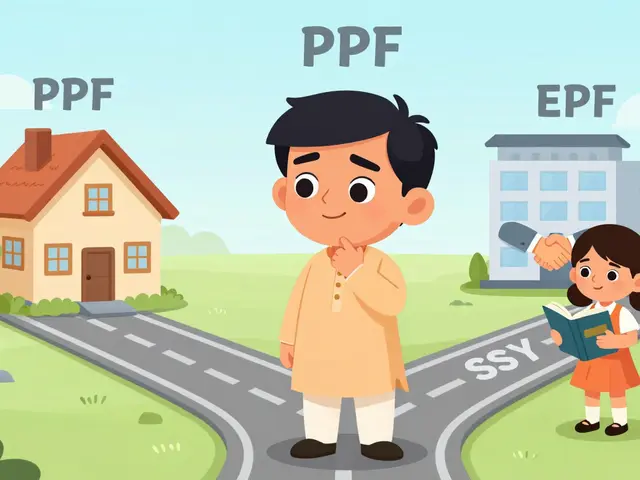
Section 80C and New vs Old Tax Regime in India: Which Route Saves More?
Every year, millions of Indian taxpayers face the same question: should they stick with the old tax regime and claim deductions like Section 80C, or switch to the new regime with lower rates but no deductions? It’s not just about numbers-it’s about your lifestyle, your savings, and what you actually spend money on. The choice isn’t as simple as picking the lower rate. Let’s cut through the noise and show you exactly which route saves more money-based on real incomes, real deductions, and real life.
What Section 80C Actually Lets You Deduct
Section 80C of the Income Tax Act isn’t one rule-it’s a whole list of ways you can reduce your taxable income by up to ₹1.5 lakh per year. You don’t just get this benefit by accident. You have to actively invest or pay certain things. The most common ones:
- Public Provident Fund (PPF) contributions
- Employee Provident Fund (EPF) contributions
- Life insurance premiums
- Principal repayment on home loans
- Five-year fixed deposits with banks or post offices
- National Pension System (NPS) contributions (up to ₹50,000 extra under Section 80CCD(1B))
- Equity Linked Savings Scheme (ELSS) mutual funds
Here’s the catch: you can’t just claim ₹1.5 lakh without spending it first. If you’re not putting money into any of these instruments, Section 80C doesn’t help you. Many people assume they’re getting a tax break just because they’re salaried, but if their employer’s EPF is their only contribution and it’s under ₹1.5 lakh, they’re barely touching the limit. Others max it out with ELSS, NPS, and home loan repayments-but that’s only useful if you’re already planning to invest anyway.
The New Tax Regime: Simpler, But Stricter
The new tax regime, introduced in 2020 and made the default in 2023, replaced the old system with lower income tax slabs-but removed almost all deductions. No more 80C, no more HRA exemption, no more medical reimbursements. In return, the tax rates dropped across the board. For example:
| Income Range (₹) | Old Regime Rate | New Regime Rate |
|---|---|---|
| 0-3,00,000 | 0% | 0% |
| 3,00,001-6,00,000 | 5% | 5% |
| 6,00,001-9,00,000 | 10% | 10% |
| 9,00,001-12,00,000 | 15% | 15% |
| 12,00,001-15,00,000 | 20% | 20% |
| Above 15,00,000 | 30% | 30% |
The new regime adds a ₹50,000 standard deduction for salaried people, but that’s it. No housing, no insurance, no tuition fees. If you’re not using Section 80C, the new regime might save you money. But if you’re already investing in PPF, ELSS, or NPS, you’re giving up real tax savings just to get a slightly lower rate.
Who Wins With the Old Regime?
If you’re a salaried employee with a household income under ₹10 lakh, and you’re already saving for retirement or a home, the old regime is almost always better. Here’s why:
- A person earning ₹12 lakh annually, with ₹1.5 lakh in 80C deductions, pays tax on ₹10.5 lakh.
- Under the old regime, that’s ₹1,12,500 in tax (after standard deduction and rebates).
- Under the new regime, with no deductions, tax is ₹1,37,500.
- Difference? ₹25,000 saved per year.
That’s not small change. That’s a full month’s rent, or a year’s worth of health insurance. And it gets even better if you have kids. If you pay ₹1.2 lakh in school fees for two children, that’s ₹1.2 lakh off your taxable income right there-on top of your EPF and PPF. The old regime rewards people who save for the future. The new regime rewards people who don’t.

Who Should Switch to the New Regime?
The new regime shines for two groups:
- People with low or no deductions: If you’re single, rent a flat, don’t have a home loan, and don’t invest in insurance or mutual funds, you’re not using Section 80C anyway. Why keep the complexity? The new regime gives you lower rates with zero paperwork.
- High earners with minimal investments: If you earn ₹20 lakh or more but only contribute ₹30,000 to EPF, you’re not maxing out 80C. The new regime’s flat 30% rate above ₹15 lakh might still beat the old regime’s 30% + surcharge + cess.
For example, someone earning ₹18 lakh with only ₹2 lakh in deductions (EPF + home loan) pays ₹3,15,000 in tax under the old regime. Under the new regime? ₹3,00,000. That’s ₹15,000 saved. Not huge, but worth it if you hate filing forms.
The Real Test: Do the Math for Your Life
There’s no one-size-fits-all answer. You need to calculate based on your actual spending. Here’s how:
- List every 80C-eligible expense you made this year: EPF, PPF, ELSS, home loan principal, insurance premiums.
- Add them up. If it’s less than ₹1.5 lakh, you’re not using the full deduction.
- Calculate your tax under both regimes using an online calculator (the Income Tax Department’s official one works).
- Compare the final tax liability.
- Don’t forget: the new regime’s standard deduction is ₹50,000. The old regime gives you HRA and other allowances too-include those if you qualify.
Pro tip: Most people who switch to the new regime regret it after a year. They realize they were already investing, and now they’re paying more tax. If you’re unsure, file under the old regime. You can switch back next year. The government lets you choose every year-no penalty, no lock-in.
What About NPS and Section 80CCD?
Section 80CCD(1B) lets you claim an extra ₹50,000 deduction for NPS contributions-on top of the ₹1.5 lakh under 80C. That’s ₹2 lakh total if you max both. But this only works under the old regime. The new regime doesn’t allow this. If you’re contributing to NPS for retirement, you’re already in the old regime’s sweet spot. Dropping it for the new regime means losing ₹15,000+ in annual tax savings.
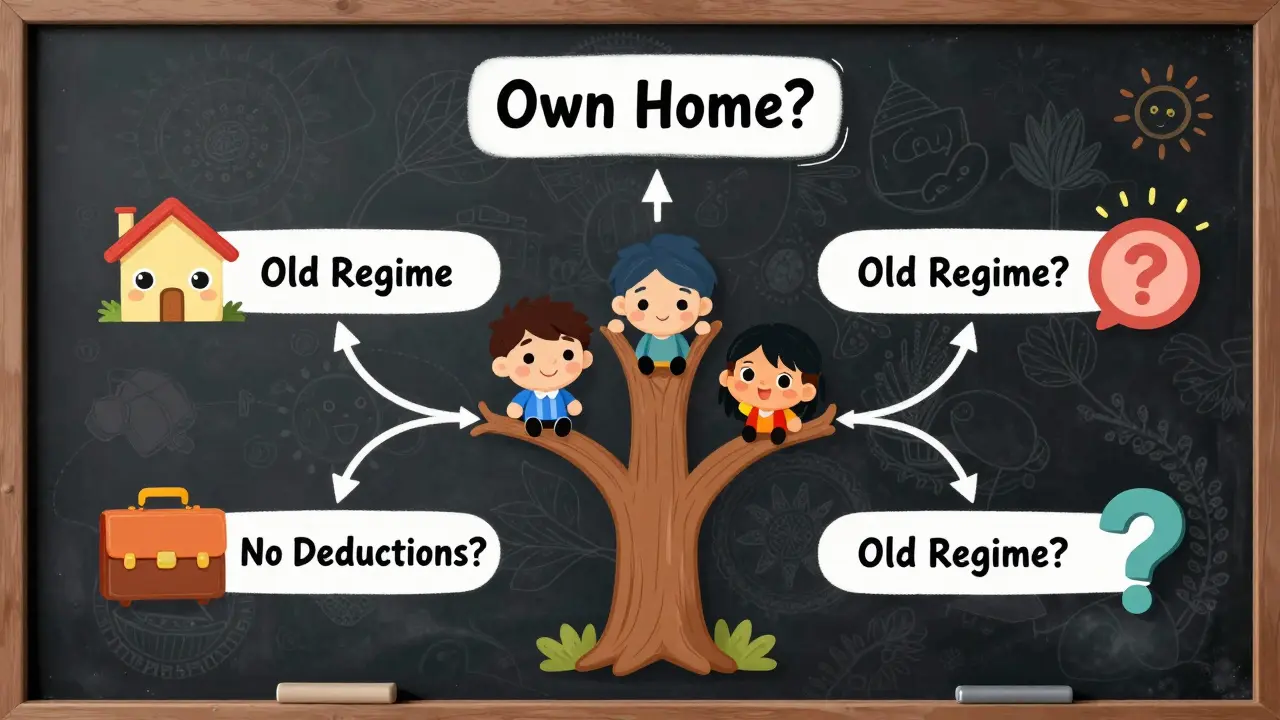
Final Decision: A Simple Flowchart
Here’s how to pick without doing complex math:
- If you own a home and pay EMIs → stick with old regime.
- If you have kids and pay school fees → old regime.
- If you buy life insurance every year → old regime.
- If you’re single, rent, and don’t invest → new regime.
- If you earn over ₹20 lakh and have no deductions → new regime.
- If you’re unsure → choose old regime. You can always switch later.
Most people save more under the old regime. Not because it’s complicated-but because they’re already doing the right things: saving for retirement, buying homes, insuring families. The new regime doesn’t punish savers. It just ignores them. And if you’re one of those savers, you’re leaving money on the table.
Can I switch between old and new tax regimes every year?
Yes, salaried individuals can choose between the old and new tax regimes every financial year. You decide when filing your return. No penalty for switching. But if you’re a business owner or freelancer, you can only switch once in your lifetime, and only if you don’t have business income.
Is Section 80C disappearing?
No, Section 80C is still active, but only if you choose the old tax regime. The new regime removes it. So if you want to keep using it, you must opt out of the new regime when filing your return. The government hasn’t proposed removing Section 80C-it’s still a core part of India’s savings incentive structure.
What if I have multiple sources of income?
If you have salary income plus business income, you can only choose the new regime once in your lifetime. After that, you’re locked in. If you only have salary income, you can switch every year. Always check your income sources before deciding. Business income limits your flexibility.
Does HRA exemption still exist under the new regime?
No. The new tax regime removes HRA exemption, along with all other itemized deductions. If you’re renting and claiming HRA, you’re better off under the old regime. The ₹50,000 standard deduction doesn’t come close to replacing HRA for most urban professionals.
Can I claim both Section 80C and Section 80D?
Yes, but only under the old regime. Section 80D (for health insurance) is separate from Section 80C and has its own limit of ₹25,000-₹50,000. Together, they can reduce your taxable income by over ₹2 lakh. The new regime doesn’t allow either. If you pay for health insurance for your parents or yourself, the old regime is almost always better.
If you’re unsure about your tax choice this year, run the numbers. Use the official income tax calculator. Don’t guess. Don’t follow friends. Your savings depend on what you actually spend-not what you think you should spend. The right regime isn’t about popularity. It’s about your life.