What Is Short Selling in India? Rules, Risks, and SEBI Guidelines
Short selling in India sounds like a trick - sell something you don’t own, hope it drops, and buy it back cheaper. But it’s not magic. It’s a legal, regulated strategy used by experienced traders to profit from falling prices. If you’ve ever wondered how some people make money when the market crashes, short selling is why. But it’s not for everyone. The risks are real, the rules are strict, and one wrong move can wipe out your account faster than a market rally.
How Short Selling Works in India
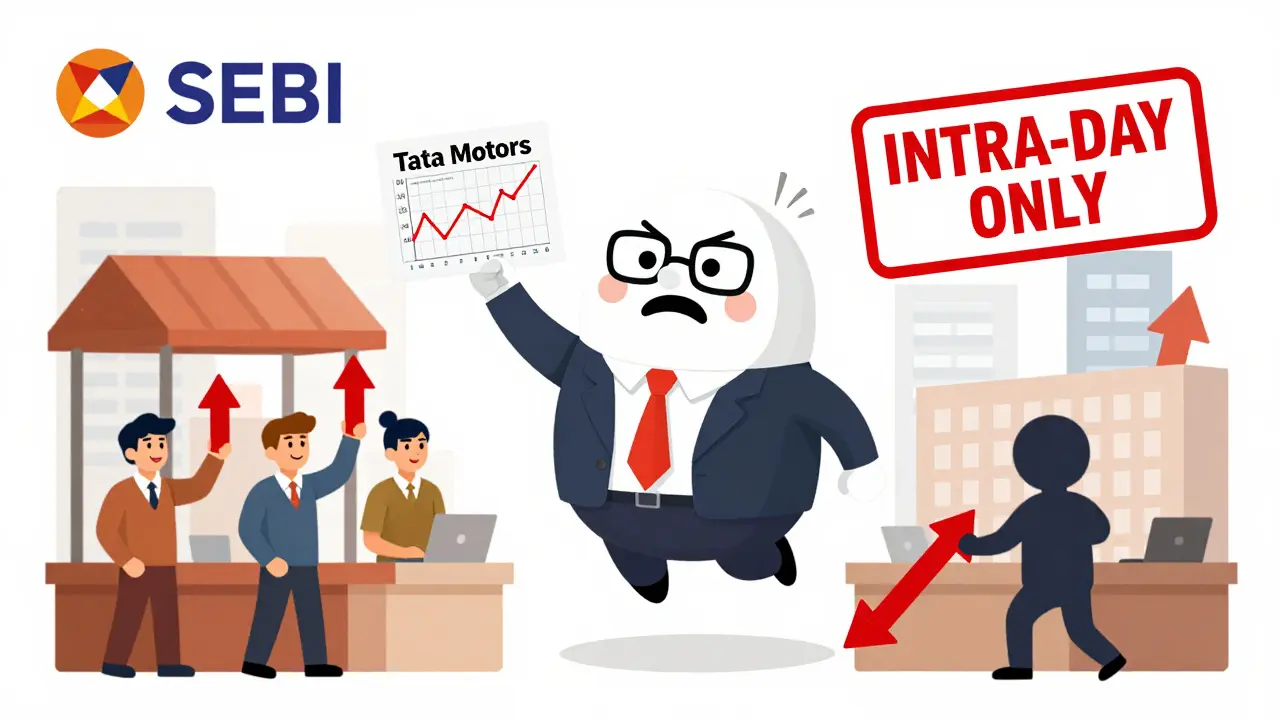
Short selling means borrowing shares you don’t own, selling them immediately, and hoping to buy them back later at a lower price. The difference is your profit. For example, you borrow 100 shares of Tata Motors at ₹500 each. You sell them right away for ₹50,000. A week later, the price drops to ₹400. You buy back the 100 shares for ₹40,000 and return them to the lender. You pocket ₹10,000 - minus brokerage and interest.
This isn’t speculation. It’s a precise transaction with three steps: borrow, sell, cover. You can’t just sell shares from your demat account unless you own them. That’s why you need to borrow through a broker. In India, this happens mostly through the short selling mechanism in the derivatives market (F&O) or via the Securities Lending and Borrowing (SLB) system.
Most retail traders use futures and options to short. You don’t need to physically borrow shares - you just sell a futures contract. But if you want to short a stock directly in the cash market, you must use SLB. The SLB system is managed by stock exchanges and allows lenders (usually mutual funds or institutional investors) to lend shares to borrowers (traders) for a fee.
SEBI Rules for Short Selling in India
The Securities and Exchange Board of India (SEBI) tightly controls short selling to prevent market manipulation and crashes. In 2007, after a major market crash linked to abusive short selling, SEBI banned naked short selling. That means you can’t sell shares you haven’t borrowed or arranged to borrow.
Today, the rules are clear:
- You must have a valid borrow arrangement before selling short in the cash market.
- Short selling in the cash segment is allowed only for intraday trades - you must cover your position before market close.
- Naked short selling (selling without borrowing) is illegal and results in penalties, account freezes, or even bans.
- For F&O trading, shorting is permitted overnight, but you must maintain margin requirements.
- SEBI monitors unusual short interest spikes and can impose temporary bans on short selling during extreme volatility (like in 2020 and 2022).
SEBI also requires brokers to report short positions daily. If a stock’s short interest hits 10% of its free float, SEBI may trigger a ban. That happened with stocks like Adani Enterprises in 2023 - short selling was suspended for a week to prevent panic.
Where You Can Short Sell in India
You have two main ways to short in India:
- Derivatives (F&O): Sell futures or buy put options. This is the most common method. You don’t need to borrow shares. You just place a sell order in the futures market. Your risk is limited to the margin you post, but losses can still be huge if the stock surges.
- Securities Lending and Borrowing (SLB): You borrow shares through an exchange-approved platform (like NSE’s SLB system). You pay a lending fee, sell the shares, and buy them back later. This is used for direct cash market shorting, but it’s more complex and expensive. Only active traders use this regularly.
Most brokers like Zerodha, Upstox, and ICICI Direct offer both options. But SLB requires extra steps: you must find a lender, agree on a fee (usually 5-15% annually), and ensure the shares are available. If the lender recalls the shares, you must cover immediately - even if the price is rising.
Risks of Short Selling in India
Short selling looks like a sure thing when the market is falling. But it’s one of the riskiest strategies in trading. Here’s why:
- Unlimited losses: When you buy a stock, the most you can lose is 100%. But when you short, the stock can rise infinitely. A ₹100 stock can go to ₹500, ₹1,000, or more. Your loss grows with every rupee it climbs.
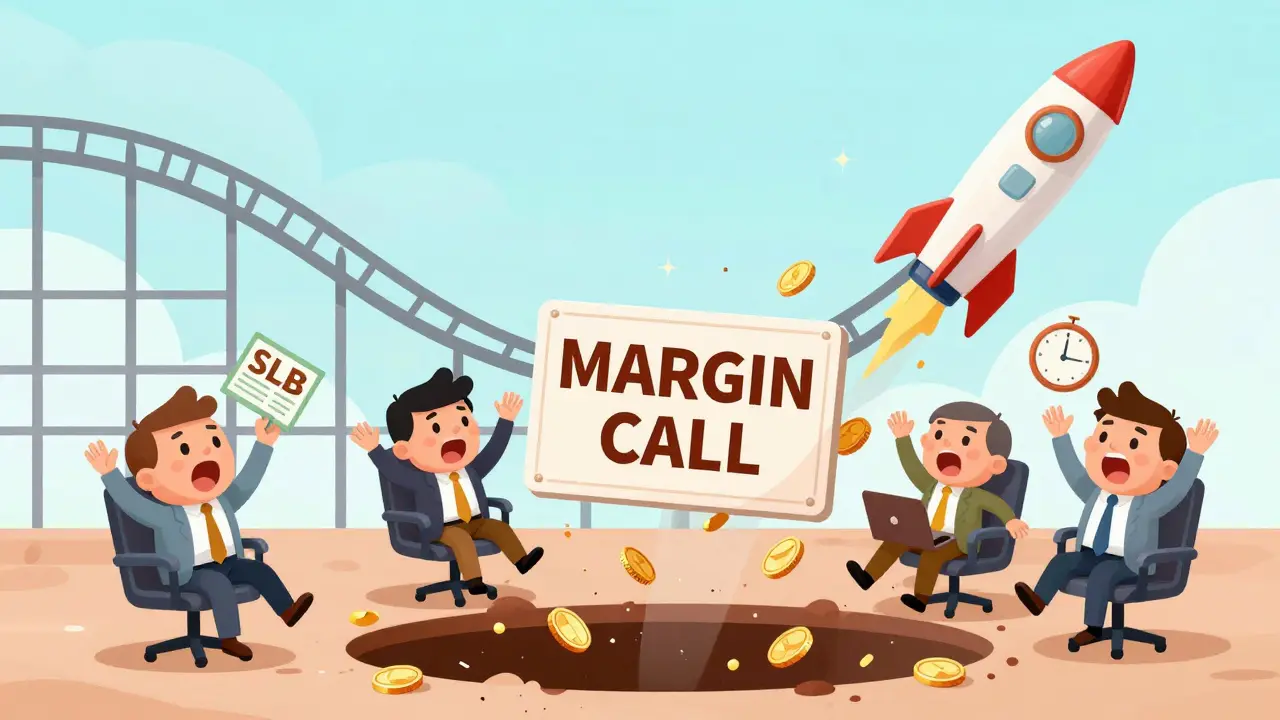
- Margin calls: Brokers require you to keep money in your account as collateral. If the stock rises, you must add more margin. If you can’t, your position gets forcibly closed - often at the worst possible price.
- Short squeezes: When a heavily shorted stock starts rising, traders rush to cover their positions. This drives the price even higher. Remember GameStop in 2021? That happened in India too - stocks like Reliance Power and Indiabulls Real Estate saw 300% spikes in days because shorts got trapped.
- Borrowing costs: SLB fees can be high, especially for popular short targets. During market stress, fees can jump to 20-50% per month. Some stocks become impossible to borrow.
- SEBI bans: If SEBI suspends short selling on a stock, you can’t open new positions. Existing ones may be forced to close at a loss.
One trader I spoke to lost ₹8.5 lakh in three days shorting a pharma stock. He thought the earnings report would tank the price. Instead, the company announced a big acquisition. The stock jumped 42%. His broker liquidated his position. He didn’t have enough margin left to cover.
Who Should Short Sell in India?
Short selling isn’t for beginners. It’s for traders who:
- Understand technical analysis and market sentiment
- Have a strict risk management plan (stop-losses, position sizing)
- Trade with capital they can afford to lose
- Monitor news, earnings, and regulatory actions daily
- Are comfortable with high stress and fast-moving markets
Most retail investors in India lose money shorting. A 2024 NSE report showed that 78% of intraday short sellers in the cash market lost money over a 12-month period. Only those who used stop-losses and traded less than 5% of their portfolio per trade broke even.
If you’re new, try paper trading first. Use a simulator to short stocks for a month. See how often you get stopped out, how margin calls feel, and how quickly prices can turn.

Alternatives to Short Selling
If short selling feels too risky, here are safer ways to profit from falling markets:
- Buy put options: You pay a premium, but your loss is capped. If the stock drops, you profit. If it rises, you only lose the premium.
- Invest in inverse ETFs: India has a few, like Nippon India’s Nifty 50 Inverse ETF. They rise when the index falls. No borrowing needed.
- Go cash: If you think the market is heading down, sell your holdings and wait. Holding cash is the safest short position.
Put options are the most popular alternative. A ₹50 premium on a Nifty put can give you ₹1,000 of exposure. You lose ₹50 if you’re wrong. You gain thousands if you’re right.
Final Thoughts
Short selling in India is legal, but it’s a high-stakes game. SEBI’s rules are designed to protect you - not to make it easy. The market doesn’t owe you profits. If you short, you’re betting against the collective optimism of thousands of investors. And history shows that optimism usually wins.
If you do short, keep it small. Use stop-losses religiously. Never ignore SEBI alerts. And never, ever try to ‘average down’ a losing short position. That’s how accounts die.
Short selling isn’t a path to quick wealth. It’s a tool for disciplined traders who know when to walk away. Most people should avoid it. But if you’re one of the few who understands the risks, it can be part of a smart strategy - not the whole strategy.
Is short selling legal in India?
Yes, short selling is legal in India, but only under strict rules set by SEBI. You can short in the derivatives market (F&O) or through the Securities Lending and Borrowing (SLB) system in the cash market. Naked short selling - selling without borrowing - is illegal and punishable by fines or account suspension.
Can I short sell stocks overnight in India?
You can short overnight only through futures and options (F&O). In the cash market, short selling is restricted to intraday trades - you must buy back the shares before the market closes. If you don’t, your broker will automatically square off your position at the end of the day, often at a loss.
What happens if I can’t cover my short position?
If you can’t cover your short position - because you don’t have enough margin or the stock keeps rising - your broker will force a buy-back (called a buy-in). This usually happens at the worst possible price. You’ll also face penalties from SEBI and your broker. In extreme cases, your account may be frozen.
How much money do I need to start short selling?
There’s no fixed minimum, but you need enough margin to cover potential losses. For F&O shorting, brokers typically require 20-40% of the contract value as margin. For SLB, you need cash to cover the sell proceeds and potential margin calls. Most experienced traders recommend starting with at least ₹2-3 lakh to manage risk properly.
Can SEBI ban short selling on a stock?
Yes. SEBI can suspend short selling on individual stocks or entire indices during extreme volatility. This happened in March 2020 during the pandemic crash and again in early 2023 for Adani Group stocks. These bans are temporary - usually lasting a few days to a week - and are meant to prevent panic selling and market manipulation.