Land Investment in India: Due Diligence, Zoning, and NA Conversion Guide
Quick Essentials for Land Buyers
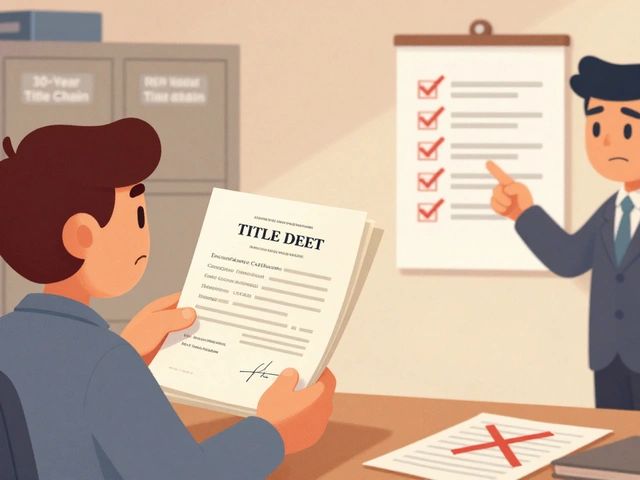
- Title Verification: Never trust a verbal promise; always verify the 30-year chain of ownership.
- NA Status: Agricultural land cannot be used for residential or commercial purposes without Non-Agricultural (NA) conversion.
- Zoning: Check the local Master Plan to see if your plot falls under a residential, industrial, or green zone.
- NOCs: No Objection Certificates from local bodies are non-negotiable for legal construction.
The Non-Negotiables of Due Diligence
Most people think checking the deed is enough. In reality, that's just the first page of the book. To avoid buying a "litigation-heavy" plot, you need to perform a deep dive into the property's history. Start with the 7/12 extract or the RTC (Record of Rights, Tenancy and Crops) if you're in states like Maharashtra or Karnataka. These documents tell you who actually owns the land and if there are any loans against it.
You should also look for a Encumbrance Certificate is a legal document that proves a property is free from any monetary or legal liabilities . If you see an entry in the EC that hasn't been cleared, the previous owner might have taken a loan from a private lender or a bank, and that debt now sticks to the land, not the person.
Physical verification is where many investors fail. Don't just look at the map; walk the boundary. Use a professional surveyor to ensure the plot size matches the documents. It's surprisingly common to find a neighbor's fence encroaching two feet into your "bought" land, which can lead to years of fighting in civil court.
Understanding Zoning and the Master Plan
Ever wonder why some plots are cheap while others nearby are astronomical? It's usually because of zoning. Every city has a Master Plan is a statutory document that maps out the future land use of an entire urban area over a 20-year period . If your plot is marked as a "Green Zone" or "Agricultural Zone," you cannot legally build a warehouse or a housing complex there, regardless of how much you paid for it.
Zoning is dynamic. A piece of land might be agricultural today, but if the government decides to extend the city limits or build a new highway nearby, it could be re-zoned as residential. This is where the biggest profits are made-buying in the "path of growth." However, betting on a zoning change is a gamble. Always check the current zoning status with the local Urban Development Authority before signing any agreement.

The NA Conversion Process: Turning Farm Land into Assets
In India, you cannot simply build a house on agricultural land. You need NA Conversion (Non-Agricultural conversion) which is the legal process of changing the land use category from agricultural to residential, commercial, or industrial . This is a bureaucratic hurdle that varies wildly by state.
To get NA status, you generally need to apply to the Collector or the District Magistrate. You'll have to pay a conversion fee (premium) to the government. The process involves checking if the land is accessible by a public road and if the conversion won't deplete the area's food-producing capacity. If the land is "Forest Land," getting NA conversion is almost impossible.
| Feature | Agricultural Land | NA (Non-Agricultural) Land | Commercial/Industrial Land |
|---|---|---|---|
| Primary Use | Farming/Crops | Housing/Small Business | Factories/Malls |
| Risk Level | High (for developers) | Low | Medium |
| Conversion Required? | Yes, for construction | Already Converted | Already Converted |
| Resale Value | Lower (unless near city) | Higher (Ready to build) | Variable based on ROI |
Decoding the NOC (No Objection Certificate)
An NOC (No Objection Certificate) is a legal document issued by an organization or government agency stating they have no objection to the proposed use of the land . You don't just need one; you often need several. If you're building a commercial complex, you might need an NOC from the Fire Department, the Pollution Control Board, and the Aviation Authority (if you're near an airport).
A common pitfall is ignoring the "Local Body NOC." In rural-urban fringes, the Gram Panchayat might give you a letter saying they're fine with your project, but the District Planning Committee might override it. Always ensure your NOCs come from the highest relevant authority. Without these, your construction is considered illegal, and the municipality has the power to demolish it without notice.

The Danger of Power of Attorney (PoA) Sales
Be extremely careful with land sold via a General Power of Attorney (GPA) which is a legal instrument that allows one person to act on behalf of another in legal and financial matters . In some parts of India, people use GPA to transfer land quickly and avoid stamp duty. This is a recipe for disaster.
The Supreme Court of India has clarified that GPA is not a transfer of ownership. If you buy land through a GPA and the original owner passes away, their legal heirs can claim the land, and your GPA becomes useless. Always insist on a registered Sale Deed. The stamp duty might be higher, but it's the only way to ensure you actually own the dirt under your feet.
Strategic Steps for Your First Purchase
If you're diving into Land Investment in India, don't rush. The best deals aren't the cheapest ones, but the ones with the cleanest titles. A plot that is 20% more expensive but comes with a clear NA certificate and a verified 30-year chain is a much better investment than a "bargain" plot with a disputed boundary.
Start by identifying your goal. Are you looking for long-term land banking (buying and holding for 10 years) or immediate development? For land banking, focus on corridors where the government is planning new infrastructure, like the Delhi-Mumbai Industrial Corridor. For development, prioritize land that already has NA status and basic road access.
Can anyone buy agricultural land in India?
No. In many Indian states, only a registered farmer can purchase agricultural land. If you are not a farmer, you may be legally barred from buying such plots in states like Karnataka or Maharashtra. Always check the specific state land laws before attempting a purchase.
How long does the NA conversion process take?
It varies significantly. In a streamlined system, it can take 3 to 6 months. However, in complex cases involving multiple departments, it can take over a year. Some developers sell "NA-pending" plots-be careful, as the application can be rejected.
What is the difference between a Sale Deed and a Conveyance Deed?
A Sale Deed is the primary document used to transfer the ownership of a property from the seller to the buyer. A Conveyance Deed is a broader term that covers any legal transfer of property, including gifts or inheritance. For a standard purchase, the registered Sale Deed is what you need for legal title.
What happens if I build on agricultural land without NA conversion?
It is considered an illegal construction. The local authorities can issue a demolition notice, fine you heavily, and you will be unable to get a permanent electricity connection or water line for the property. Furthermore, you won't be able to get a bank loan for the construction.
Is an Encumbrance Certificate (EC) enough to prove ownership?
No. An EC only tells you if there are existing mortgages or legal disputes registered against the property. It does not prove that the person selling the land is the rightful owner. You must combine the EC with a Title Search Report and a review of the Sale Deeds to confirm ownership.