Property Loan-to-Value (LTV) in India: What Banks Finance and Why It Matters
When you’re buying a home in India, the bank doesn’t give you all the money. Not even close. Most lenders will only finance 70% to 90% of the property’s value-and that percentage is called the loan-to-value (LTV) ratio. It’s not just a number on a form. It’s the difference between owning a house and renting one for years. Understand LTV, and you control your finances. Ignore it, and you could end up stuck with a loan you can’t afford or a down payment you didn’t plan for.
What Exactly Is Loan-to-Value (LTV)?
LTV is the percentage of a property’s value that a bank is willing to lend you. If a flat costs ₹80 lakh and the bank offers an LTV of 80%, you’ll get ₹64 lakh as a loan. You need to pay the rest-₹16 lakh-yourself. That’s your down payment.
It’s a simple formula: LTV = (Loan Amount ÷ Property Value) × 100. Banks use it to measure risk. The higher the LTV, the more risk they take. If you default, they sell the property. If the loan is too close to the property’s value, they might not recover their money after auction fees, legal costs, and market dips.
In India, LTV rules aren’t random. They’re set by the Reserve Bank of India (RBI) and vary by property type, buyer status, and loan amount.
How Much Can You Borrow? RBI’s LTV Rules in 2025
The RBI updates LTV limits every few years. As of 2025, here’s what banks follow:
- For homes under ₹75 lakh: Up to 90% LTV for first-time buyers. This means you only need 10% down.
- For homes between ₹75 lakh and ₹1 crore: LTV capped at 80%. You need at least 20% down payment.
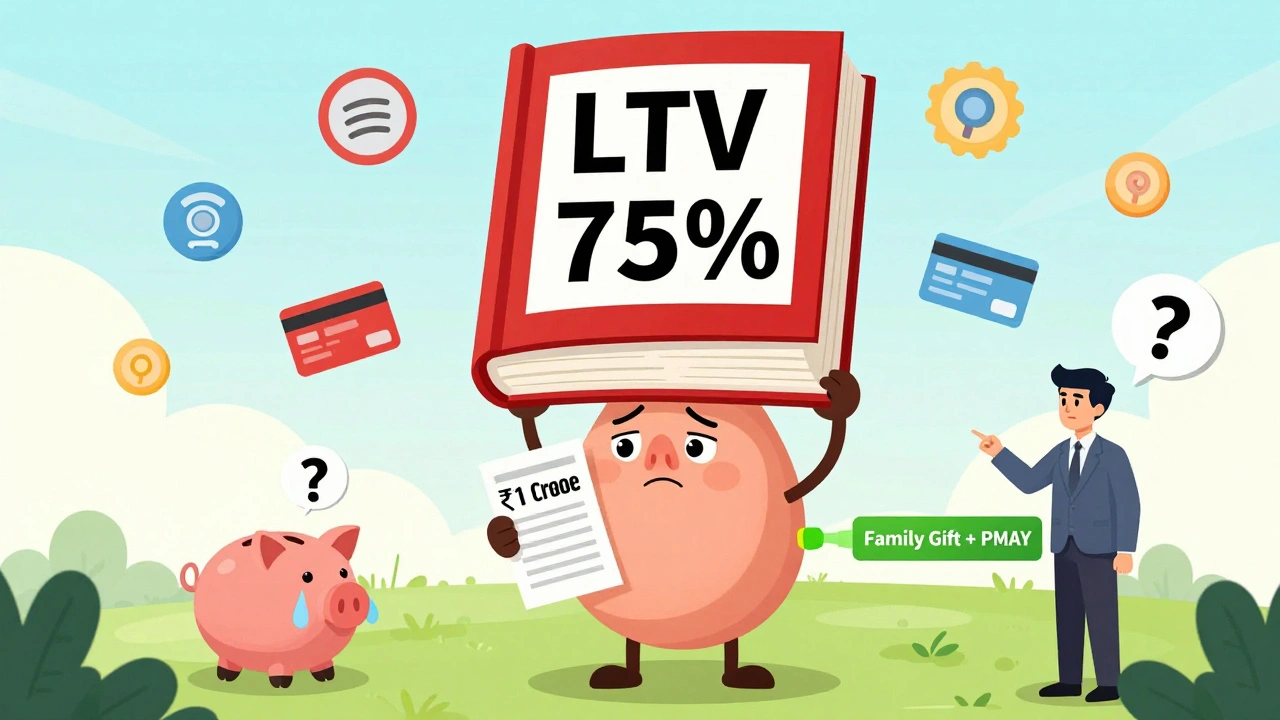
- For homes above ₹1 crore: LTV drops to 75%. You must pay 25% out of pocket.
- For second homes or investment properties: LTV is 70% across all price ranges. No exceptions.
These aren’t suggestions. Banks break these rules and risk penalties from the RBI. So even if a lender says they’ll give you 85% on a ₹90 lakh flat, they’re bending the rules-and that’s dangerous for you. If the bank gets caught, your loan could be frozen or recalled.
Why LTV Matters More Than Interest Rates
Most people chase the lowest interest rate. But a 0.25% difference in rate means nothing if you can’t afford the down payment.
Take two buyers:
- Buyer A: Buys a ₹70 lakh home with 90% LTV. Down payment: ₹7 lakh. Loan: ₹63 lakh at 8.5% interest.
- Buyer B: Buys the same home with 80% LTV. Down payment: ₹14 lakh. Loan: ₹56 lakh at 8.25% interest.
Buyer B pays less interest monthly-but they had to save ₹7 lakh extra. That’s two years of rent in many cities. Buyer A gets into the market faster, builds equity quicker, and can refinance later. In a rising market, timing matters more than a tiny rate cut.
LTV affects your cash flow, your timeline, and your ability to buy again. A 70% LTV on a second property means you need double the savings. That’s why investors often wait years before buying their second home.
What Happens If You Don’t Have Enough for the Down Payment?
Some people try to fake it. They borrow from friends, take personal loans, or use credit cards to cover the down payment. That’s a trap.
Banks check your financial history. If you’ve taken a ₹5 lakh personal loan two months before applying for a home loan, they’ll see it as debt. Your debt-to-income ratio spikes. Your loan gets rejected-or worse, approved at a lower LTV.
There’s one legal workaround: using family funds. If your parents gift you the down payment, you need a signed gift letter. Banks require proof it’s not a loan in disguise. They’ll ask for bank statements showing the money moving from their account to yours. No cash under the mattress.
Another option: government schemes. Pradhan Mantri Awas Yojana (PMAY) offers interest subsidies for low- and middle-income buyers. Under PMAY-Urban, you can get up to ₹2.67 lakh in interest subsidy if your home is under ₹12 lakh. That doesn’t change LTV, but it lowers your monthly payment enough to make a higher LTV loan work.
How Property Valuation Impacts Your LTV
Banks don’t lend based on what you paid. They lend based on what their approved valuer says the property is worth.
If you bought a flat for ₹85 lakh from a seller who inflated the price, but the bank’s valuer says it’s worth ₹75 lakh, your LTV is calculated on ₹75 lakh-not your purchase price.
So if you planned on 80% LTV (₹68 lakh), you now only get ₹60 lakh. You’re short ₹8 lakh. You either pay more cash, walk away, or renegotiate the sale price.
This is why you should always get your own independent valuation before signing a deal. Don’t trust the builder’s or seller’s quote. Use a certified valuer from the bank’s panel. If there’s a big gap between your offer and the bank’s valuation, walk away. The property is overpriced.
Investment Properties: The 70% LTV Rule
Buying property to rent out? LTV drops to 70%. No exceptions.
Why? Because rental income is unpredictable. Tenants move out. Vacancies happen. Maintenance costs rise. Banks know this. They treat investment properties as higher risk than primary homes.
So if you want to buy a ₹1.2 crore apartment to rent, you need ₹36 lakh in cash. That’s not easy. Many investors use equity from their first home. They refinance their primary residence to pull out cash. But RBI limits refinancing LTV to 75% for primary homes. So you can’t pull out 100% of your equity.
This is why many investors start small. They buy one affordable property, build equity over 5-7 years, then use that to fund their next purchase. It’s slow. But it’s safe.
What If the Property Value Drops After You Buy?
Markets go down. Prices fall. That’s normal.
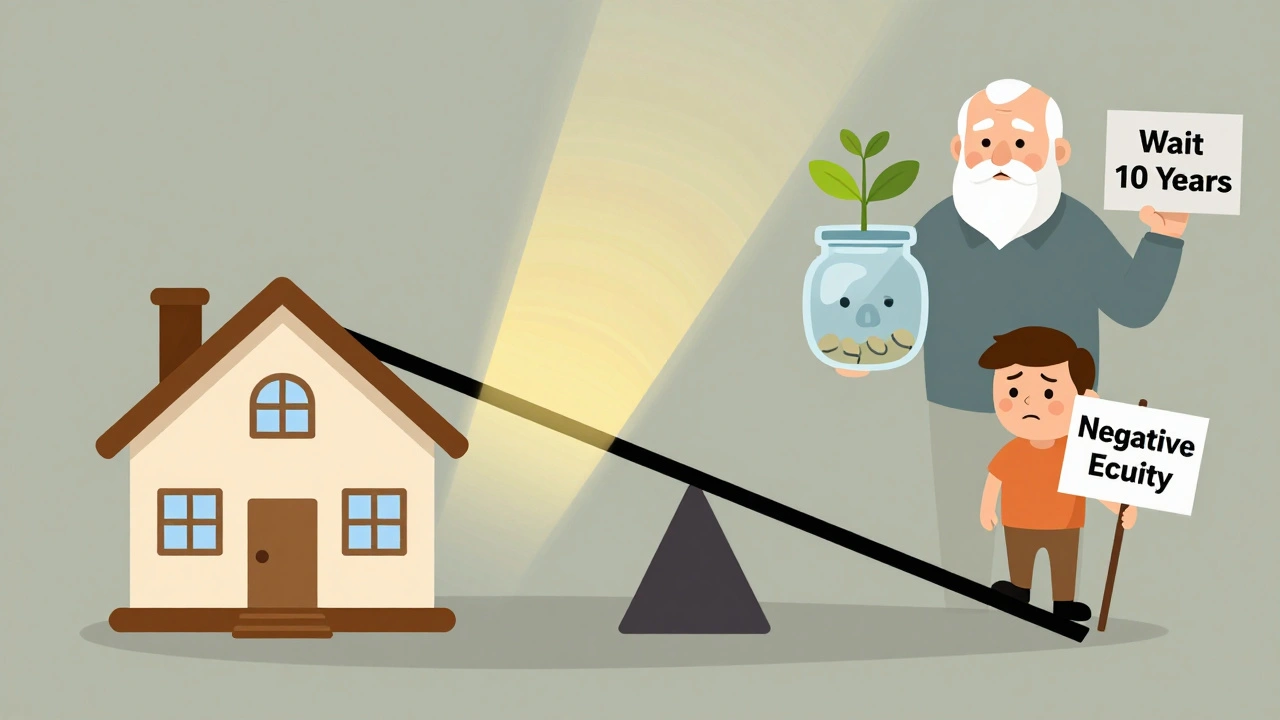
But if your property value drops below your loan amount, you’re in negative equity. You owe more than the house is worth. You can’t sell without bringing cash to the table. You can’t refinance. You’re stuck.
That’s why LTV limits exist-to protect you from this.
Example: You bought a ₹1 crore home with 80% LTV. Loan: ₹80 lakh. A year later, prices drop 15%. The home is now worth ₹85 lakh. You still owe ₹80 lakh. You’re in negative equity by ₹5 lakh.
Now, if you need to move for a job, you can’t sell. You’d need to pay ₹5 lakh just to clear the loan. Most people can’t do that.
That’s why experts say: never stretch to 90% LTV unless you’re certain the market is stable and you plan to stay for 10+ years.
How to Improve Your LTV Chances
There are smart ways to get a better LTV offer:
- Boost your credit score. Banks give higher LTV to borrowers with scores above 750. Pay bills on time. Clear old debts.
- Have a stable income. Salaried employees get better LTV than freelancers. If you’re self-employed, show 3+ years of ITRs.
- Use a co-applicant. Add a spouse or parent with strong income. It increases your eligibility.
- Choose a lower-priced property. Staying under ₹75 lakh lets you access 90% LTV. That’s a game-changer.
- Don’t apply for other loans. No car loans, personal loans, or credit card spikes 6 months before applying.
One real case: A couple in Pune applied for a ₹70 lakh home loan. Their credit scores were 720. They got 80% LTV. They waited 4 months, paid off a ₹4 lakh credit card balance, improved their scores to 780, and reapplied. Got 90% LTV. Saved ₹7 lakh in down payment. That’s a ₹1,200 monthly savings on EMI.
What Banks Won’t Tell You
Banks want your business. But they don’t want you to fail. That’s why they hide the truth: LTV limits are designed to protect you, not them.
They’ll push you to take the maximum loan. They’ll say, “You qualify for 90%.” But they won’t say: “What if your salary drops? What if you lose your job? What if rent doesn’t cover your EMI?”
Ask yourself: Can I still pay the EMI if interest rates go up 2%? Can I cover 6 months of EMIs if I’m unemployed? If the answer is no, don’t take the highest LTV.
Remember: A lower LTV means a smaller loan. Smaller loan means lower EMI. Lower EMI means less stress. Less stress means you can hold the property longer-and that’s how you build real wealth in real estate.
Final Thought: LTV Is Your Anchor
Property isn’t just about bricks and mortar. It’s about money, timing, and discipline.
LTV tells you how much you can borrow. But it also tells you how much you must earn, save, and plan for. It’s the invisible hand that keeps you from overextending.
Don’t chase the biggest loan. Chase the smartest one. The one that lets you sleep at night, even when the market shakes.