
Section 80C Mistakes: Top Filing Errors to Avoid in India (2026 Guide)
You’ve worked hard all year. You’ve saved money, invested wisely, and followed the rules-or so you thought. Then comes April, and with it, the dread of filing your Income Tax Return (ITR). Suddenly, a notice from the Income Tax Department arrives. Not because you owe millions, but because of a small, avoidable mistake in claiming Section 80C is a provision under the Indian Income Tax Act that allows taxpayers to reduce their taxable income by investing in specified instruments up to ₹1.5 lakh per financial year.. These errors are common, costly, and entirely preventable.
If you’re like most salaried professionals or freelancers in India, you likely rely on Section 80C to lower your tax burden. But here’s the truth: just making an investment doesn’t mean you’ll automatically get the benefit. The way you claim it, document it, and report it matters just as much. In this guide, we’ll walk through the most frequent pitfalls people fall into when claiming Section 80C-and how to sidestep them before they cost you time, money, or worse, a penalty.
The ₹1.5 Lakh Cap Isn’t Just a Suggestion-It’s a Hard Limit
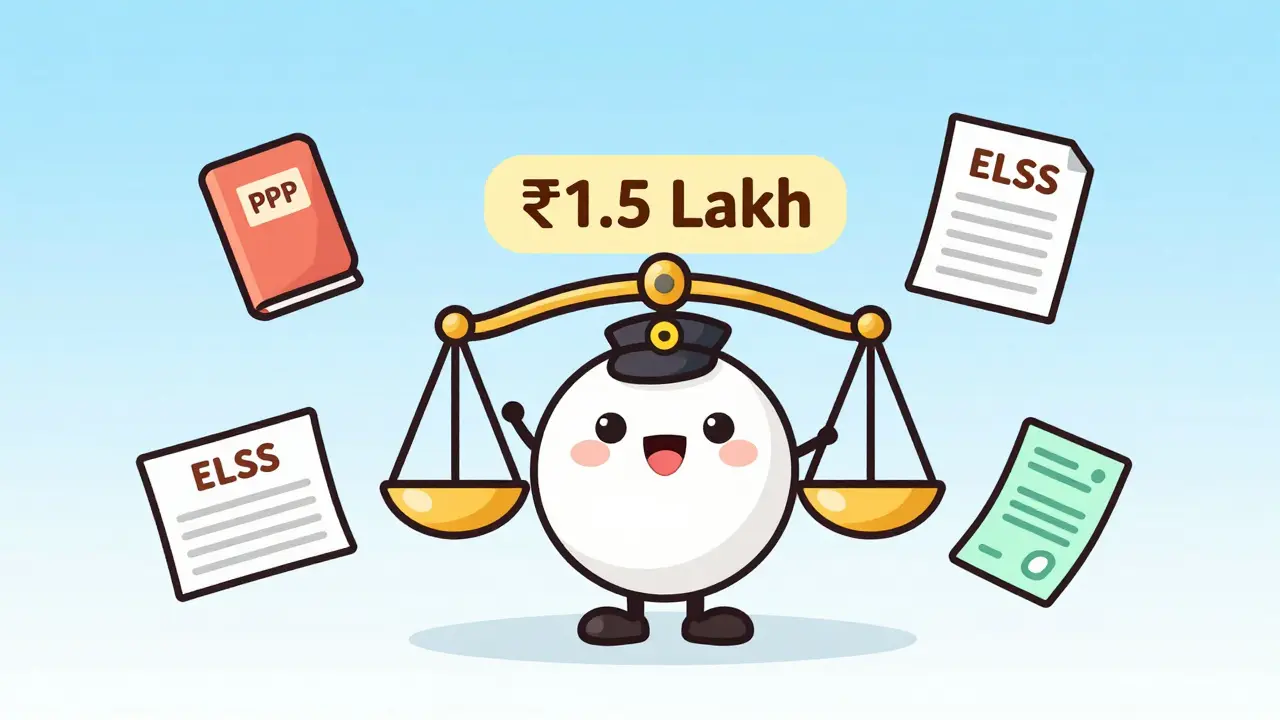
One of the biggest misconceptions about Section 80C is that you can claim unlimited deductions if you invest across multiple eligible instruments. That’s not true. The total deduction allowed under Section 80C is capped at ₹1.5 lakh per financial year, regardless of how many different investments you make. This includes contributions to Public Provident Fund (PPF), Equity Linked Savings Schemes (ELSS), life insurance premiums, tuition fees for children, National Savings Certificate (NSC), Sukanya Samriddhi Account, and more.
Here’s where things go wrong: many taxpayers list each investment separately in their ITR without realizing the aggregate limit. For example, if you invest ₹80,000 in PPF and ₹90,000 in ELSS, your total claimed deduction should still be ₹1.5 lakh-not ₹1.7 lakh. Exceeding this cap leads to disallowed claims, which may trigger scrutiny notices or even penalties during assessment.
| Investment Type | Eligible Amount | Notes |
|---|---|---|
| Public Provident Fund (PPF) | Up to ₹1.5 lakh | Part of overall 80C limit |
| Equity Linked Savings Scheme (ELSS) | Up to ₹1.5 lakh | Lock-in period: 3 years |
| Life Insurance Premiums | Up to ₹1.5 lakh | Only for self, spouse, children |
| National Savings Certificate (NSC) | Up to ₹1.5 lakh | Tax-free interest earned |
| Sukanya Samriddhi Account | Up to ₹1.5 lakh | For girl child below 10 years |
| Tuition Fees (Children Only) | Up to ₹1.5 lakh | Max two children; no hostel fees |
To stay compliant, keep a running tally of all your Section 80C investments throughout the year. Use spreadsheets or tax apps to track cumulative amounts. When filling out Form ITR-1 or ITR-2, ensure the sum of all entries does not exceed ₹1.5 lakh. If you accidentally overclaim, correct it immediately via revised return within the due date.
Mixing Up New vs. Old Regime Rules Can Cost You Big
Another major source of confusion stems from India’s dual tax regime system introduced in Budget 2020. Under the new tax regime, most exemptions and deductions-including Section 80C-are unavailable unless opted out explicitly. Meanwhile, the old regime retains these benefits but comes with higher slab rates.
Many taxpayers assume they can pick and choose which deductions apply while staying under the new regime. That’s incorrect. Once you opt for the new regime, you lose access to Section 80C entirely. Conversely, opting for the old regime means giving up perks like standard deduction enhancements or lower base slabs.
This mix-up often happens when employers pre-fill Form 16 assuming employees want the old regime. Some individuals then file returns using the new regime without updating their choices, leading to mismatches between employer declarations and actual filings. Always verify your chosen regime before submitting your ITR. A quick calculation comparing both scenarios helps decide what works best for your situation.
Claiming Deductions Without Proper Documentation Is Risky Business
Imagine receiving a notice asking you to prove every rupee claimed under Section 80C. Would you have receipts ready? Most people don’t think about documentation until it’s too late. Yet, failing to maintain proper records is one of the top reasons for rejected claims.
Under Section 80C, you must retain proof of payment for every eligible investment. This includes bank statements showing transfers to PPF accounts, certificates issued by mutual fund houses for ELSS purchases, premium receipts for life insurance policies, and school fee challans for tuition expenses. Digital copies stored securely online work fine-but only if they’re legible and verifiable.
A real-world scenario illustrates why this matters: Mr. Ramesh filed his ITR claiming ₹1.4 lakh under Section 80C based on informal notes he kept. During scrutiny, he couldn’t produce valid proofs for nearly half of those investments. As a result, his claim was reduced significantly, resulting in additional taxes plus interest charges. Lesson learned: always back up digital records with physical backups whenever possible.
- Keep original documents safe for at least six years after filing.
- Use cloud storage solutions labeled clearly (“Tax Docs FY2025-26”).
- Cross-check annual summaries provided by banks/brokers against personal logs.
Ignoring Timing Requirements Leads to Missed Opportunities
Timing plays a crucial role in maximizing benefits under Section 80C. Unlike some other sections where partial-year contributions count proportionally, Section 80C requires payments made strictly between April 1 and March 31 of the relevant financial year. Payments made outside this window-even by a day-won’t qualify.
Consider this case: Ms. Priya paid her entire life insurance premium on March 30, 2025. She believed she’d secured full eligibility for AY 2025-26. However, since part of the policy renewal fell into April 2025, only the portion corresponding to April-March 2026 counted toward her current year’s deduction. Such overlaps create ambiguity unless carefully tracked.
To avoid similar issues, schedule automatic payments well ahead of deadlines. Set reminders for quarterly reviews of investment statuses. Also, confirm whether certain instruments allow split-year coverage (like recurring deposits) versus lump-sum ones (like NSCs).
Failing to Update PAN Details Across Platforms Creates Mismatches
Your Permanent Account Number (PAN) serves as the backbone linking all financial transactions tied to your identity. Yet, inconsistent PAN usage across platforms remains surprisingly prevalent among taxpayers trying to claim Section 80C benefits.
For instance, imagine opening a PPF account using one PAN variant (e.g., including spaces differently formatted) compared to another platform like your broker’s portal. While seemingly minor, such discrepancies confuse automated matching systems used by the Central Processing Centre (CPC) during reconciliation processes. Consequently, legitimate claims might get flagged erroneously.
Always double-check consistency across:
- Banks and financial institutions
- Mutual fund registrars
- Insurance providers
- School administration portals
If unsure, visit the NSDL website to validate registered PAN details. Correct any inconsistencies promptly before initiating next year’s filings.

Overlooking Spouse/Dependent Claims Adds Complexity
While Section 80C primarily applies to individual filers, married couples sometimes attempt joint optimization strategies involving shared investments. Unfortunately, misunderstanding dependency rules complicates matters further.
Specifically, spouses cannot pool resources arbitrarily to boost combined deductions beyond individual limits. Each person files independently unless dependent status qualifies under specific conditions outlined elsewhere in the law. Misinterpreting these nuances results in either inflated expectations or missed savings opportunities altogether.
Additionally, parents occasionally try claiming tuition fees paid for adult children studying abroad. Unless officially recognized dependents meeting strict criteria defined under Schedule VI, such expenditures won’t qualify under Section 80C anyway. Clarify eligibility beforehand rather than guessing later.
Not Reconciling Employer Declarations With Actual Filings Invites Trouble
Employers play significant roles in shaping employee perceptions around tax planning. Through Form 16 issuance, companies communicate estimated liabilities calculated assuming adherence to declared preferences regarding regimes and deductions. However, relying solely on employer estimates proves dangerous.
Suppose your company assumes you’ll pursue maximum allowable Section 80C benefits while simultaneously offering voluntary provident fund contributions exceeding statutory thresholds. Without reconciling figures manually, discrepancies emerge quickly upon final submission. Result? Either underpayment leading to penalties OR overpayment causing unnecessary delays refund processing times.
Proactive steps include:
- Reviewing projected tax liability early Q3/Q4 stages
- Adjusting monthly TDS requests accordingly via updated declaration forms
- Verifying alignment between reported figures versus actual investments completed
Regular communication with HR departments ensures smoother transitions moving forward too.
Final Thoughts Before Submitting Your Return
Claiming Section 80C correctly involves balancing precision, patience, and persistence. Small oversights compound rapidly once submitted electronically. By addressing common stumbling blocks proactively-whether related to caps, documentation practices, timing constraints, or technological integrations-you position yourself favorably vis-à-vis regulatory requirements.
Remember, knowledge empowers action. Equip yourself adequately now so future seasons bring fewer surprises instead. After all, smart preparation today translates directly into peace tomorrow.
Can I claim more than ₹1.5 lakh under Section 80C?
No, the maximum deduction permitted under Section 80C is ₹1.5 lakh annually irrespective of how many qualifying investments you make. Any excess amount gets ignored during computations.
What happens if I forget to attach proofs while filing?
Though initial submissions rarely demand attachments upfront, subsequent audits require presenting originals/fair reproductions proving authenticity behind stated figures. Lack thereof invites reductions alongwith potential surcharges depending severity levels involved.
Does switching tax regimes affect previously claimed deductions?
Yes, changing regimes impacts ongoing calculations significantly. Opting anew negates prior advantages enjoyed earlier thereby necessitating recalculations afresh starting fresh slate entirely.
Are there exceptions allowing extended deadlines for corrections?
Generally speaking, extensions granted sparingly contingent upon genuine hardships faced individually. Standard practice dictates adhering closely prescribed timelines avoiding complications arising otherwise unnecessarily.
How do I check if my PAN matches everywhere consistently?
Visit official NSDL portal login section enter credentials retrieve verified profile snapshot displaying associated accounts linked thereto compare visually cross-reference discrepancies found rectify immediately thereafter.