Income from House Property
When you own a property and earn money from it—whether through rent or deemed rental value—that’s called income from house property, the taxable earnings generated by owning real estate in India, as defined under the Income Tax Act. This isn’t just about renting out a flat; it includes vacant properties that are deemed to generate income, even if no rent is collected. If you own more than one home, the tax rules change depending on which one you live in and which one you rent out. Many people assume only rented properties count, but the law treats your second home as if it’s rented, even if it’s empty.
Section 24, the part of India’s Income Tax Act that specifically governs deductions for income from house property lets you reduce your taxable amount. You can claim up to ₹2 lakh for interest paid on a home loan, and a flat 30% of the net annual value for repairs and maintenance. Municipal taxes you’ve already paid are also fully deductible. But here’s the catch: you can’t claim both the interest deduction and the 30% standard deduction on the same property unless you’re renting it out. If you’re living in one home and renting another, you get full benefits on the rented one.
What if you own a property but don’t rent it out? The tax department still assigns it a deemed rental income, the estimated income a property could generate if it were rented, used to calculate tax even when no rent is received. This is based on location, size, and comparable rents in your area. If you’ve taken a home loan, you can still claim interest under Section 24—but only after the construction is complete. Pre-construction interest is allowed in five equal annual installments starting the year the house is ready.
Many people mix up house property, any building or land attached to it that generates income, whether residential or commercial with business income. If you’re running a hotel out of your home, that’s business income. But if you’re renting out a single apartment in your building, it’s house property income. The rules for depreciation, expenses, and deductions are completely different.
You can also claim deductions if you’ve inherited a property or received it as a gift. The tax liability stays with the owner, not the previous owner. And if you’ve sold a property but still have a home loan, you can carry forward the unclaimed interest for up to eight years under Section 24.
What if you’re married and both names are on the property? Each spouse can claim up to ₹2 lakh in interest deduction, but only if the property is jointly owned and the loan is also in both names. If one person pays the entire EMI, only that person can claim the deduction unless there’s a formal agreement.
The key to minimizing tax on house property is accurate calculation and proper documentation. Keep rent receipts, loan statements, municipal tax receipts, and property papers. The tax department doesn’t ask for them upfront—but if they audit you, you’ll need them.
Below, you’ll find clear guides on how to calculate your actual income from house property, how to claim deductions without mistakes, and how to handle multiple properties under the same roof. Whether you’re a first-time landlord, a retiree renting out a spare room, or someone trying to reduce tax on an empty flat, the posts here cut through the confusion.
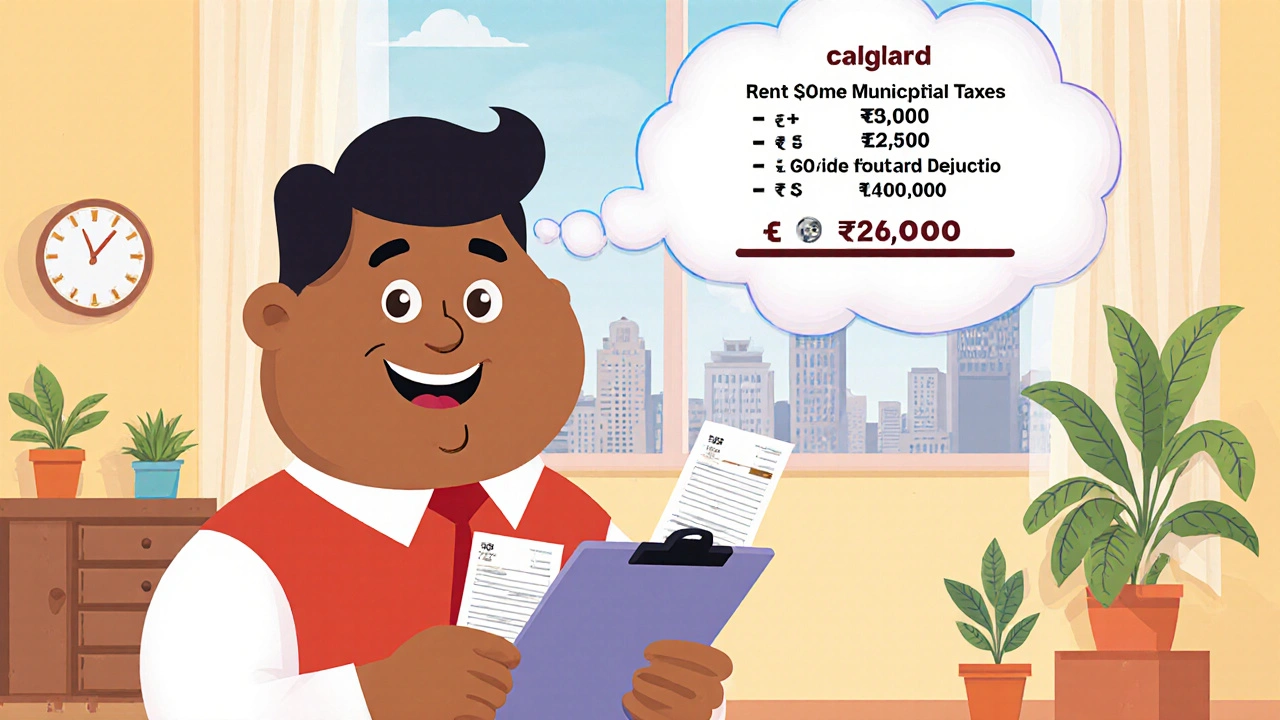
Learn how to correctly declare rental income in India and claim all eligible tax deductions to lower your tax bill. Avoid common mistakes and stay compliant with current rules.
Continue Reading