Mutual Fund Costs: What You Really Pay and How It Hits Your Returns
When you invest in a mutual fund, a pooled investment vehicle that buys stocks, bonds, or other assets on behalf of investors. Also known as unit trust, it’s one of the most popular ways to grow money in India—but what you pay matters just as much as what you earn. Many people focus only on past returns, but the real killer of long-term gains is often hidden in the fine print: expense ratio, the annual fee charged by the fund to manage your money, expressed as a percentage of your investment. A 1% expense ratio might sound small, but over 10 years, it can eat up more than 10% of your total returns. That’s not magic—it’s math.
There are two main types of mutual fund plans in India: regular plans, where the fund house pays commissions to distributors or advisors. And direct plans, where you buy straight from the fund house without any middleman. The difference? Direct plans usually have expense ratios 0.5% to 1% lower. That doesn’t sound like much, but if you invest ₹5 lakh over 15 years at 12% annual growth, switching from regular to direct could add over ₹8 lakh to your final amount. That’s not a minor saving—it’s life-changing money. And it’s not just about fees. There are entry loads (mostly gone now), exit loads (charged if you pull out too soon), and transaction fees that add up. Even small charges compound over time, especially in debt funds where returns are thinner.
Most investors don’t realize how much they’re paying because the cost is hidden in the net asset value (NAV). You never see a bill. But every rupee paid in fees is a rupee that doesn’t grow for you. The best way to fight this? Always check the expense ratio before investing. Compare direct vs regular versions of the same fund. Use tools like Value Research or Morningstar to see how fees stack up. And if you’re using a financial advisor, ask them outright: "How much of my return is going to you?" You deserve to know. Below, you’ll find clear, practical guides that break down exactly how these costs work, how to switch funds without paying extra taxes, and which funds deliver real value after fees. No fluff. Just what you need to keep more of your money.
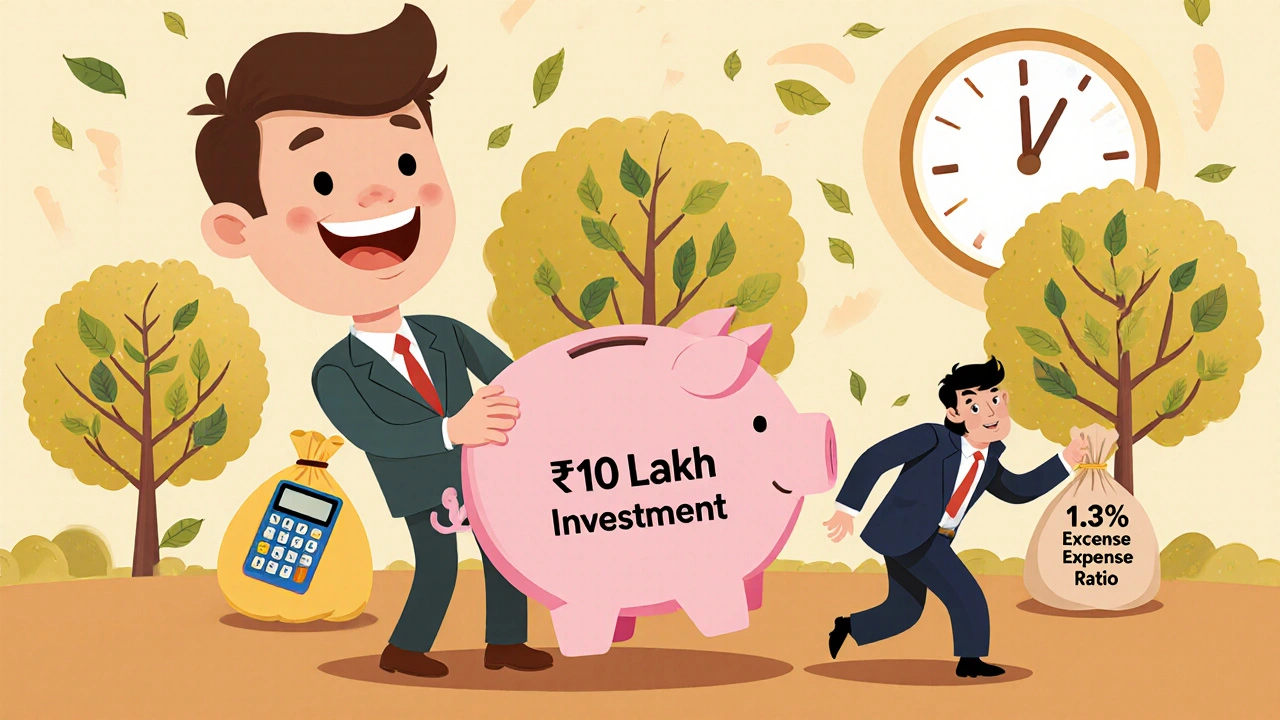
Learn how mutual fund expense ratios in India silently reduce your long-term returns and discover how switching to direct plans or index funds can save you lakhs over time.
Continue Reading