Tax-Saving Schemes for Self-Employed and Business Owners in India
If you're self-employed or run a small business in India, you know how hard it is to keep more of what you earn. Taxes eat into your profits, and without smart planning, you could be paying way more than you need to. The good news? India’s Income Tax Act gives you real tools to cut your tax bill-especially through Section 80C. This isn’t just about sticking money into a fixed deposit. It’s about using the right instruments, at the right time, to legally reduce your taxable income by up to ₹1.5 lakh every year.
What Section 80C Actually Lets You Deduct
Section 80C is the most popular tax-saving provision under Chapter VI-A of the Income Tax Act. It lets you claim a deduction of up to ₹1.5 lakh per financial year (April 1 to March 31) on specific investments and expenses. That means if you earn ₹12 lakh a year and put ₹1.5 lakh into eligible options, you’re taxed only on ₹10.5 lakh. For someone in the 30% tax bracket, that’s a direct savings of ₹45,000.
But here’s the catch: not every investment counts. Only those listed under Section 80C qualify. And not all of them are created equal. Some lock your money for 5 years. Others give you returns below inflation. You need to pick wisely.
Top 7 Section 80C-Eligible Options for Business Owners
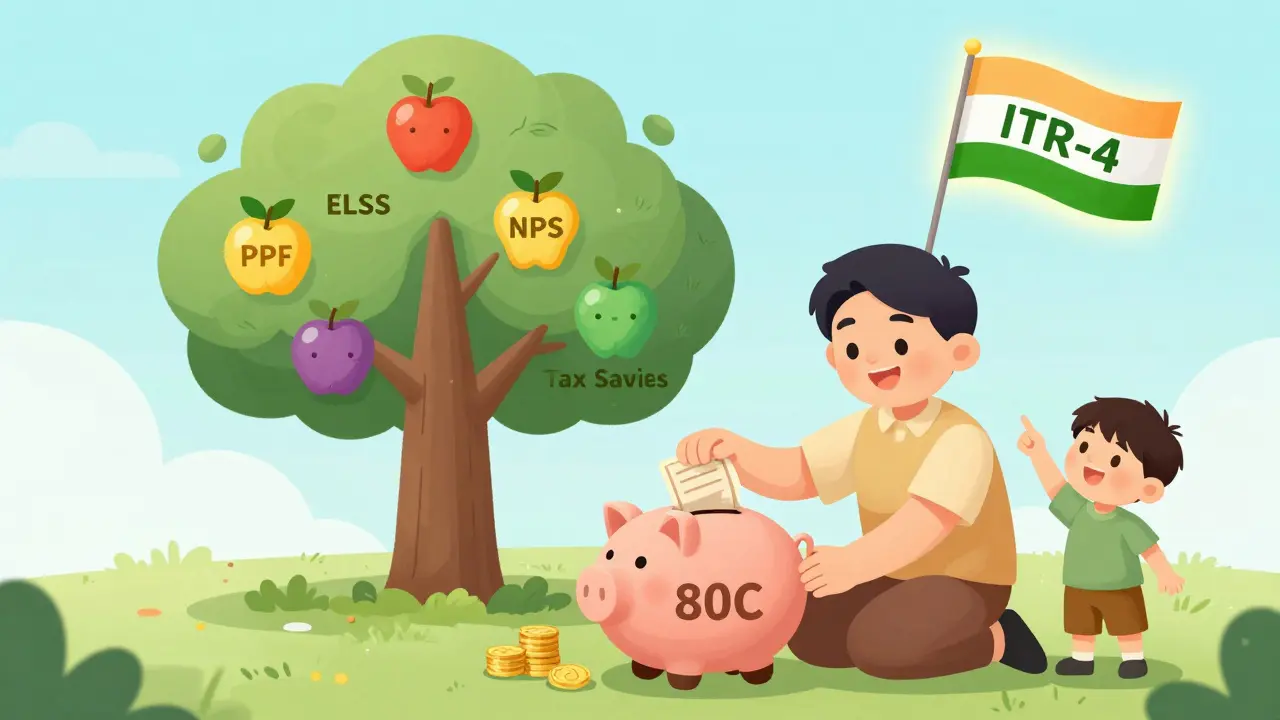
- Public Provident Fund (PPF): Open a PPF account at any post office or bank. You can deposit up to ₹1.5 lakh yearly. Interest is currently around 7.1% (as of 2025), compounded annually, and tax-free at maturity. The lock-in is 15 years, but you can take loans after 7 years. Best for long-term, risk-free growth.
- Employee Provident Fund (EPF): If you’re self-employed but have employees, your contribution to their EPF (up to 12% of salary) is deductible under Section 80C. Also, if you’re enrolled in EPF as an individual (like a sole proprietor who opts in), your own contribution counts.
- Life Insurance Premiums: Premiums paid for life insurance policies (on your own, spouse, or children) qualify. But only if the premium is less than 10% of the sum assured (20% for policies issued before April 1, 2012). Avoid over-insuring-many policies sold by agents have high premiums with low returns.
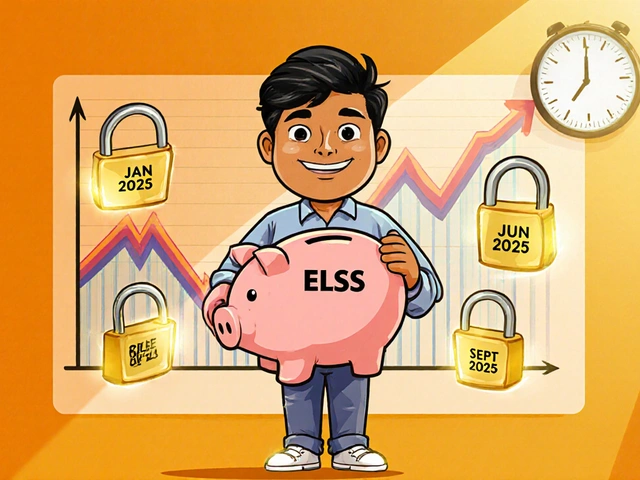
- Equity-Linked Savings Scheme (ELSS): These are mutual funds with a 3-year lock-in. They’re the fastest-growing Section 80C option because they offer equity market returns-historically 12-15% CAGR over 10 years. Unlike fixed deposits, they beat inflation. Best for those with a moderate risk appetite.
- Tax-Saving Fixed Deposits: Offered by banks, these have a 5-year lock-in. Interest is taxable annually, even though you can’t withdraw. Rates hover around 6-7%. Good if you hate volatility, but not ideal for wealth building.
- National Pension System (NPS): You can invest up to ₹50,000 extra under Section 80CCD(1B), on top of the ₹1.5 lakh limit. That’s a total of ₹2 lakh deduction if you max out both. NPS gives you exposure to equities, government bonds, and corporate debt. Withdrawals are partially taxable, but it’s the only option that forces retirement savings.
- School Tuition Fees: Payments for your children’s full-time education at any recognized Indian school qualify. No cap per child-so if you have two kids in private school, you can claim the full ₹1.5 lakh just on tuition. No other expense (books, uniforms, transport) counts.
What Doesn’t Count (And Why People Get It Wrong)
Many business owners waste money on wrong investments because they don’t know the rules. Here’s what doesn’t qualify:
- Health insurance premiums (that’s Section 80D)
- Home loan principal repayment (yes, it counts-but only under Section 80C, not as a separate benefit)
- Donations to charities (that’s Section 80G)
- Gold purchases or jewelry
- Investing in your own business (unless it’s structured as a pension plan or insurance)
One common mistake: people think buying a house qualifies under Section 80C. It doesn’t. But if you repay the principal on a home loan, that part does. Same with stamp duty and registration charges-those are eligible under 80C, but only in the year you pay them.

How to Maximize Your Deduction Without Locking Up All Your Cash
You don’t have to put all ₹1.5 lakh into one thing. Diversification is key. Here’s a real-world example from a Delhi-based freelance graphic designer earning ₹14 lakh/year:
- ₹50,000 in ELSS mutual funds (3-year lock-in, 14% average return)
- ₹40,000 in PPF (15-year horizon, tax-free growth)
- ₹30,000 in life insurance (basic term policy, no riders)
- ₹20,000 in tuition fees for two kids
- ₹10,000 in tax-saving FD
Total: ₹1.5 lakh. She’s fully utilizing 80C, got market-linked returns, and kept some liquidity. She also uses Section 80D (health insurance) and 80CCD(1B) (NPS) separately-so her total tax savings hit ₹78,000/year.
Timing Matters: When to Invest
Don’t wait until March 31. Many people panic in the last week and end up choosing poor options just to meet the limit. Instead:
- Start in April. Set up auto-debits to ELSS or PPF.
- Track your investments using a simple spreadsheet. Include date, amount, instrument, and receipt number.
- Keep all receipts. Even if you invest online, download and store the transaction confirmation.
- If you’re a business owner, use a separate bank account for tax-saving investments. It makes audit prep easier.
Business-Specific Tips: What Sole Proprietors and Partners Should Know
If you run a sole proprietorship, partnership, or LLP, your personal income is your business income. That means all your business expenses reduce taxable income-but so do your personal 80C investments.
Here’s what’s often missed:
- You can claim both business expenses (like rent, internet, software) and Section 80C deductions in the same year.
- If you pay yourself a salary from your business (even if it’s just ₹10,000/month), you can contribute to EPF or NPS as an employee-and deduct it under 80C.
- Don’t forget to file ITR-3 or ITR-4. If you’re claiming business income, you can’t file ITR-1.
Also, if you’ve been underreporting income in past years, don’t panic. The government’s Income Tax Settlement Commission allows voluntary disclosure with reduced penalties. But the best move is to stay compliant going forward.
Common Pitfalls and How to Avoid Them
- Over-investing in insurance: Many agents push policies with high premiums. Stick to term plans. They’re cheap and pure protection.
- Ignoring inflation: Fixed deposits at 6% won’t grow your wealth if inflation is 5%. Prioritize ELSS and PPF.
- Not tracking lock-ins: ELSS has 3 years. PPF has 15. Don’t accidentally withdraw early and lose tax benefits.
- Assuming all mutual funds qualify: Only ELSS funds have Section 80C status. Regular equity funds don’t.
Pro tip: Use the Income Tax e-Filing portal to check your 80C deductions. Go to ‘View Form 26AS’ and look under ‘Tax Deducted at Source’-you’ll see all your claimed investments listed by the institutions.
Next Steps: What to Do Right Now
It’s February 2026. You still have about 5 weeks left in this financial year. Here’s your action plan:
- Review your current investments. Have you hit ₹1.5 lakh yet?
- If not, calculate how much you need to invest to reach the limit.
- Choose the best option based on your risk profile: ELSS for growth, PPF for safety, tuition fees if you have kids in school.
- Invest before March 15 to avoid last-minute glitches.
- Save all receipts and update your records.
And if you’re planning ahead for next year, set up automatic transfers. Even ₹12,500 per month gets you to ₹1.5 lakh without thinking about it.
Can I claim Section 80C deductions if I don’t have a salary?
Yes. Section 80C applies to anyone with taxable income, whether you’re salaried, self-employed, or running a business. As long as you have income that’s taxable under ‘Income from Business or Profession’ or ‘Other Sources,’ you can claim these deductions.
Is it better to invest in ELSS or PPF for tax savings?
It depends on your goals. ELSS offers higher returns (12-15% historically) with a 3-year lock-in, making it ideal for wealth building. PPF gives lower returns (7.1%) but is completely tax-free at maturity and has a longer horizon. If you’re young and can handle market risk, go with ELSS. If you want guaranteed, risk-free growth, choose PPF. Many investors use both.
Can I claim tuition fees for my child studying abroad?
No. Section 80C only allows deductions for tuition fees paid to schools located in India. Fees for foreign universities, online international courses, or coaching centers abroad don’t qualify.
Do I need to submit proof to the Income Tax Department every year?
No, you don’t submit proof to the department directly. But your employer or bank might ask for it if you’re claiming deductions via TDS. Always keep scanned copies of investment proofs-receipts, bank statements, folio numbers-for at least 6 years in case of an audit.
Can I invest more than ₹1.5 lakh under Section 80C?
Yes, you can invest more, but only ₹1.5 lakh will be deductible. Any extra amount won’t reduce your taxable income. For example, if you put in ₹2 lakh, only ₹1.5 lakh counts. The remaining ₹50,000 grows but doesn’t give you a tax break.