
Tenancy Laws in India: Model Tenancy Act, Security Deposits, and Evictions Explained
Every year, millions of people in India move to cities for work, education, or family reasons. Many end up renting a home. But what happens when the landlord wants the place back? Or when the tenant doesn’t pay rent? The answer used to be messy-written agreements were rare, rules were unclear, and courts were overloaded. That’s changing. The Model Tenancy Act is now the clearest set of rules for renters and landlords across India, replacing outdated laws that dated back to the 1950s.
What Is the Model Tenancy Act, 2021?
The Model Tenancy Act (MTA) was introduced by the central government in 2021 to bring uniformity to rental laws across states. Before this, each state had its own rent control law-some were strict, others outdated. In Delhi, for example, rent increases were capped at 5% every three years, even if property taxes doubled. In Tamil Nadu, landlords couldn’t evict tenants for over 20 years unless they needed the property for personal use. The MTA fixes this by creating a single, modern framework that states can adopt voluntarily.
It’s not mandatory, but over 20 states have either passed or are moving to adopt it. The Act applies to all new rental agreements signed after June 2021. Existing tenancies can continue under old rules unless both parties agree to switch.
Key changes under the MTA:
- Written agreements are now required for all rentals
- Lease terms are capped at 11 months to avoid rent control laws
- Landlords must register agreements with the Rent Authority
- Disputes are resolved faster through dedicated Rent Courts
For landlords, this means more legal protection. For tenants, it means clearer rights and faster solutions when things go wrong.
Security Deposits: How Much Can a Landlord Ask For?
One of the biggest sources of conflict between tenants and landlords is the security deposit. Before the MTA, it was common for landlords to demand two, three, or even six months’ rent upfront. Some held onto the money for months after the tenant left, claiming damages without proof.
The Model Tenancy Act sets clear limits:
- For residential properties: security deposit cannot exceed two months’ rent
- For commercial properties: security deposit cannot exceed six months’ rent
Landlords must return the deposit within 30 days after the tenant vacates, minus any legitimate deductions. These deductions must be itemized-no vague claims like "it looks worn out." You need receipts: paint job, broken tiles, unpaid utility bills. If the landlord doesn’t return the deposit on time, the tenant can file a complaint with the Rent Authority and get interest added-up to 12% per year.
What if the landlord refuses to return the deposit? The tenant can take the case to the Rent Court. These courts are designed to resolve disputes in under 60 days, unlike regular civil courts that take years.
Real example: In Hyderabad, a tenant moved out after 14 months. The landlord withheld ₹25,000, saying "the walls were stained." The tenant provided photos taken on move-in day and receipts for cleaning services. The Rent Court ordered the full deposit returned, plus ₹3,000 in interest for the 90-day delay.
Evictions: When Can a Landlord Kick Out a Tenant?
Eviction used to be a nightmare. Landlords often threatened tenants with violence or illegal lockouts. Tenants, fearing retaliation, paid rent even when repairs were ignored. The MTA changes that by making eviction legal, transparent, and fair.
Under the Act, a landlord can only evict a tenant for these five reasons:
- The tenant hasn’t paid rent for over two months
- The tenant damaged the property beyond normal wear and tear
- The tenant sublets the property without written permission
- The landlord needs the property for their own use or for a close family member
- The tenant is using the property for illegal purposes
Important: The landlord can’t just show up with a notice. They must file a formal application with the Rent Authority. The tenant gets a chance to respond. A hearing is scheduled. Only after the court orders eviction can the tenant be asked to leave.
Even then, the tenant gets time. If the reason is non-payment of rent, the tenant can avoid eviction by paying all dues within 15 days of the notice. If the landlord claims personal need, they must prove it with documents-like a job transfer letter or medical records.
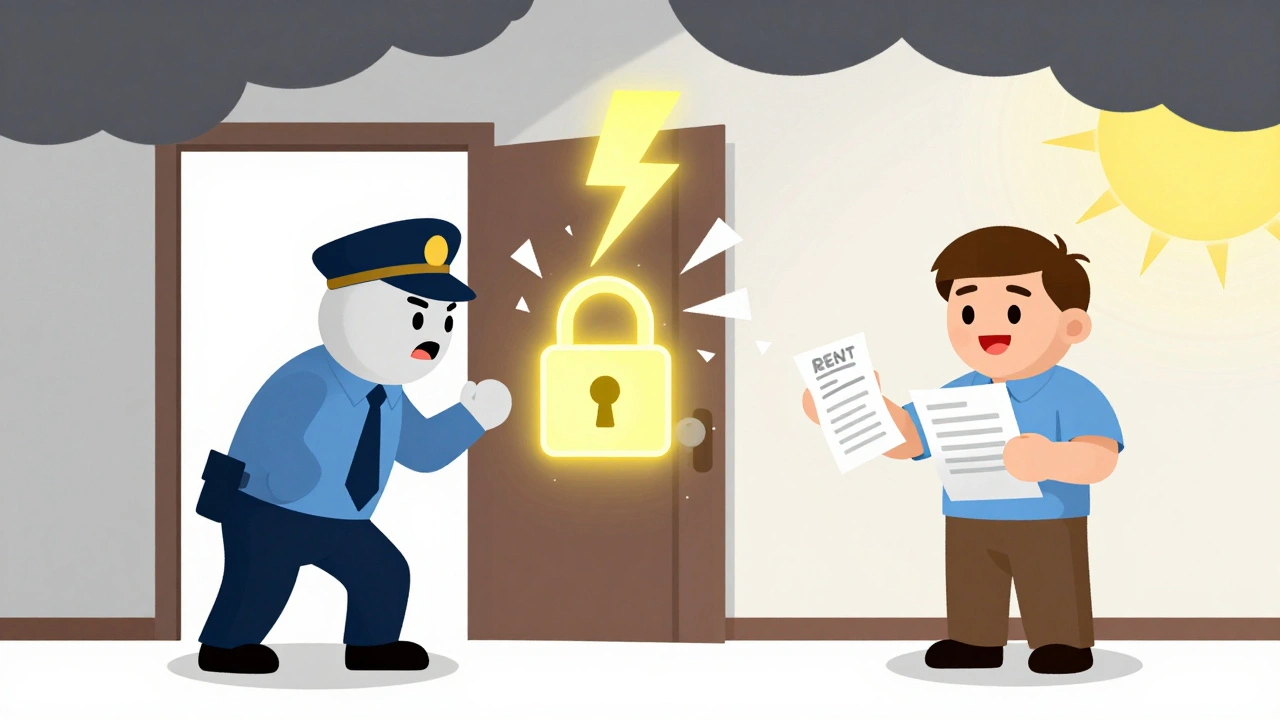
Landlords who try to force tenants out illegally-by cutting power, changing locks, or threatening them-can be fined up to ₹1 lakh and jailed for up to six months. This is a major shift. The law now protects tenants from bullying.

What Must Be in a Legal Rental Agreement?
A rental agreement under the MTA isn’t just a piece of paper-it’s a legally binding contract. If it’s missing key details, it’s invalid. Here’s what every agreement must include:
- Full names and IDs of both landlord and tenant
- Exact address of the rented property
- Monthly rent amount and due date
- Security deposit amount and return terms
- Duration of the lease (must be between 1 month and 11 months)
- Responsibilities for maintenance and repairs
- Utility payments (electricity, water, internet-who pays what)
- Conditions for renewal or termination
- Penalties for late rent or breach of terms
The agreement must be signed by both parties and registered with the state’s Rent Authority. Many states now offer online registration through their housing portals. In Maharashtra, you can upload the agreement, pay ₹500, and get a digital certificate within 48 hours.
Why does registration matter? Without it, the landlord can’t go to court to evict. The tenant can’t claim deposit refunds. It’s the only proof the law recognizes.
Who Pays for Repairs? Landlord or Tenant?
This is another common point of confusion. The MTA divides responsibilities clearly:
- Landlord pays for structural repairs: roof leaks, broken pipes, electrical wiring, foundation cracks
- Tenant pays for damage caused by negligence: broken windows, damaged fixtures, clogged drains from misuse
- Normal wear and tear: faded paint, worn carpet, loose handles-always the landlord’s responsibility
Landlords must respond to repair requests within 15 days. If they don’t, the tenant can fix it themselves and deduct the cost from the next month’s rent-with proof of receipt. This rule was tested in Bengaluru last year. A tenant reported a leaking roof for three months. The landlord ignored it. The tenant hired a contractor for ₹8,000, sent the bill via email, and deducted it from rent. The Rent Authority upheld the deduction.
For commercial tenants, the rules are stricter. If the lease is for a shop or office, the tenant may be required to handle minor repairs-but only if it’s written in the agreement. Oral promises don’t count.
What Happens If You Break the Lease Early?
Life changes. You get a job transfer. Your family moves. You need to leave before the lease ends. The MTA allows early termination-but with consequences.
If the tenant breaks the lease without valid reason, they must pay one month’s rent as penalty. If the landlord breaks the lease-for example, by selling the property without notice-they must pay two months’ rent to the tenant as compensation.
There are exceptions. If the property becomes unsafe-mold, structural collapse, no water for over a week-the tenant can leave immediately without penalty. They just need to send a written notice and take photos as proof.
One case in Pune: A tenant discovered black mold in the bathroom. The landlord refused to fix it. The tenant moved out after sending three notices. The Rent Court ruled in the tenant’s favor, returned the deposit, and ordered the landlord to pay ₹15,000 for relocation costs.
How to Protect Yourself as a Tenant or Landlord
Whether you’re renting out your apartment or looking for a place to live, here’s how to stay safe:
- Always sign a written agreement-never trust verbal promises
- Take dated photos of the property before moving in and after moving out
- Keep all rent receipts and communication in writing (WhatsApp messages count)
- Register your agreement online through your state’s Rent Authority portal
- Know your state’s specific rules-even under the MTA, some states add local rules
- Don’t pay rent in cash unless you get a signed receipt
- If you’re evicted illegally, contact the Rent Authority immediately
Landlords should avoid emotional decisions. Don’t raise rent mid-lease. Don’t threaten tenants. Don’t skip repairs. The law is on the tenant’s side now.
Tenants should avoid over-reliance on goodwill. Just because your landlord is nice doesn’t mean they won’t try to cheat you later. Document everything.
Frequently Asked Questions
Is the Model Tenancy Act applicable in all Indian states?
No, the Model Tenancy Act is not automatically binding across India. It’s a framework proposed by the central government, and each state must pass its own law to adopt it. As of 2025, over 20 states have implemented versions of it, including Maharashtra, Tamil Nadu, Karnataka, and Uttar Pradesh. States like West Bengal and Delhi still operate under older rent control laws. Always check your state’s housing department website to confirm which rules apply.
Can a landlord increase rent during the lease term?
No, under the Model Tenancy Act, rent cannot be increased during the fixed term of the lease. Any rent change must be agreed upon in writing before the lease starts or only at the time of renewal. If a landlord tries to raise rent mid-lease, the tenant can refuse and file a complaint with the Rent Authority. The authority can order the landlord to refund any illegal increases.
What if the landlord doesn’t return my security deposit?
If the landlord doesn’t return your security deposit within 30 days of vacating, you can file a complaint with the Rent Authority. You’ll need to provide your signed agreement, move-out photos, and proof of rent payments. The authority will summon the landlord and, if found guilty, order the deposit returned with interest at 12% per year. In some cases, the landlord may also face a fine.
Can I rent out my property without registering the agreement?
You can rent without registration, but you lose all legal protection. If the tenant doesn’t pay rent or damages the property, you can’t take them to court without a registered agreement. Registration is free or low-cost in most states and takes less than a week. It’s the only way to enforce your rights under the Model Tenancy Act.
Do I need a lawyer to file a tenancy dispute?
No. Rent Courts are designed for people without legal training. You can file a complaint online using your state’s Rent Authority portal. You’ll need to upload your agreement, photos, and messages. The court will notify the other party and schedule a hearing. Most cases are resolved in under two months without a lawyer. Legal aid is also available for low-income tenants in most cities.
Next Steps for Renters and Landlords
If you’re a landlord, log into your state’s housing portal today and register your next rental agreement. Make sure you’re following the new deposit limits and repair timelines. If you’re a tenant, check your lease agreement. Does it mention the Model Tenancy Act? If not, ask your landlord to update it. Keep copies of everything.
The days of silent suffering under unfair rental terms are ending. The law now gives power back to both sides-clear, fair, and enforceable. The key is knowing your rights and acting before problems escalate.