Lot Sizes in Indian Markets: Equity, F&O, and SME Explained
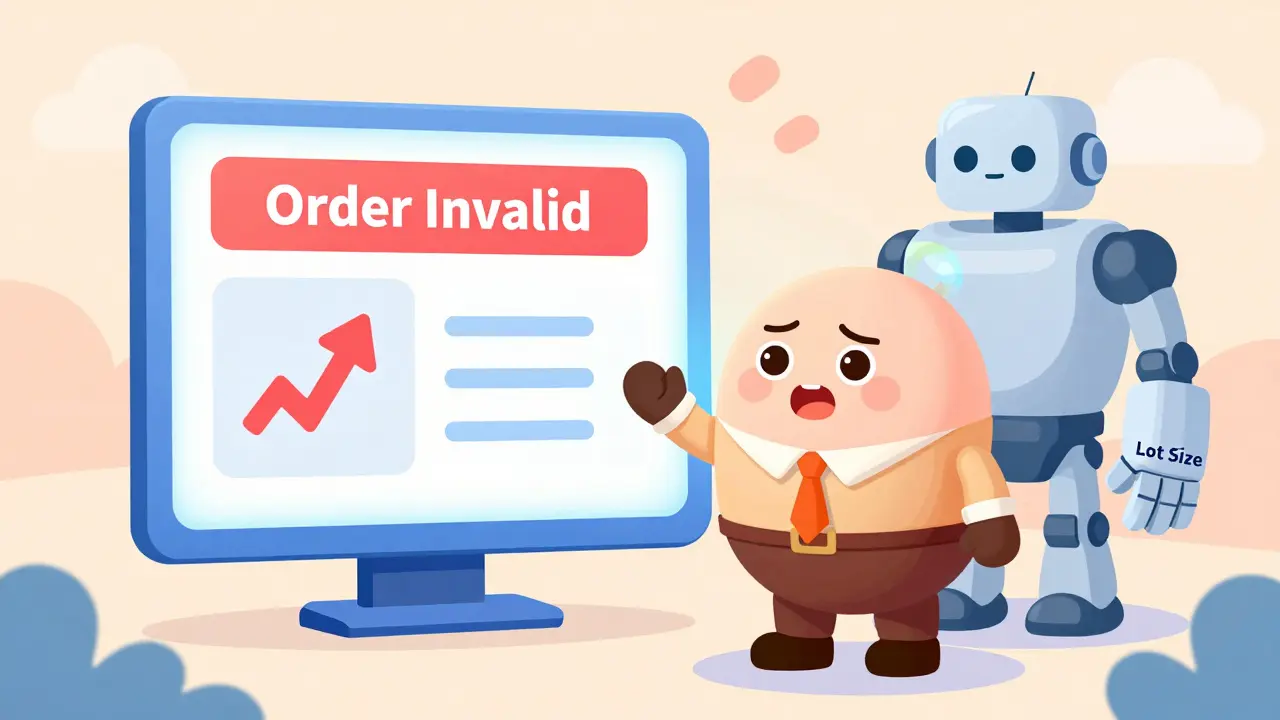
You click 'Buy' on a stock option, type in the quantity you want, and suddenly the platform tells you that your order is invalid. Why? Because you tried to buy just one unit of a product that doesn't exist in single units. This is the reality of **lot sizes** in the Indian markets. It’s not just a technical glitch; it’s a fundamental rule of how derivatives and certain equity segments operate.
If you are new to trading in India, this concept can feel like a hidden barrier. You might wonder why you can buy one share of Reliance Industries but cannot buy one contract of Nifty 50 options. The answer lies in liquidity, standardization, and risk management. Understanding these mechanics is crucial before you place your first trade in Futures and Options (F&O) or consider investing in Small and Medium Enterprise (SME) stocks.
What Exactly Is a Lot Size?
In simple terms, a lot size is the minimum number of shares or contracts you must trade at once. Think of it like buying soda at a wholesale club. You can’t buy just one bottle; you have to buy a case of 12. In the stock market, that "case" is the lot size.
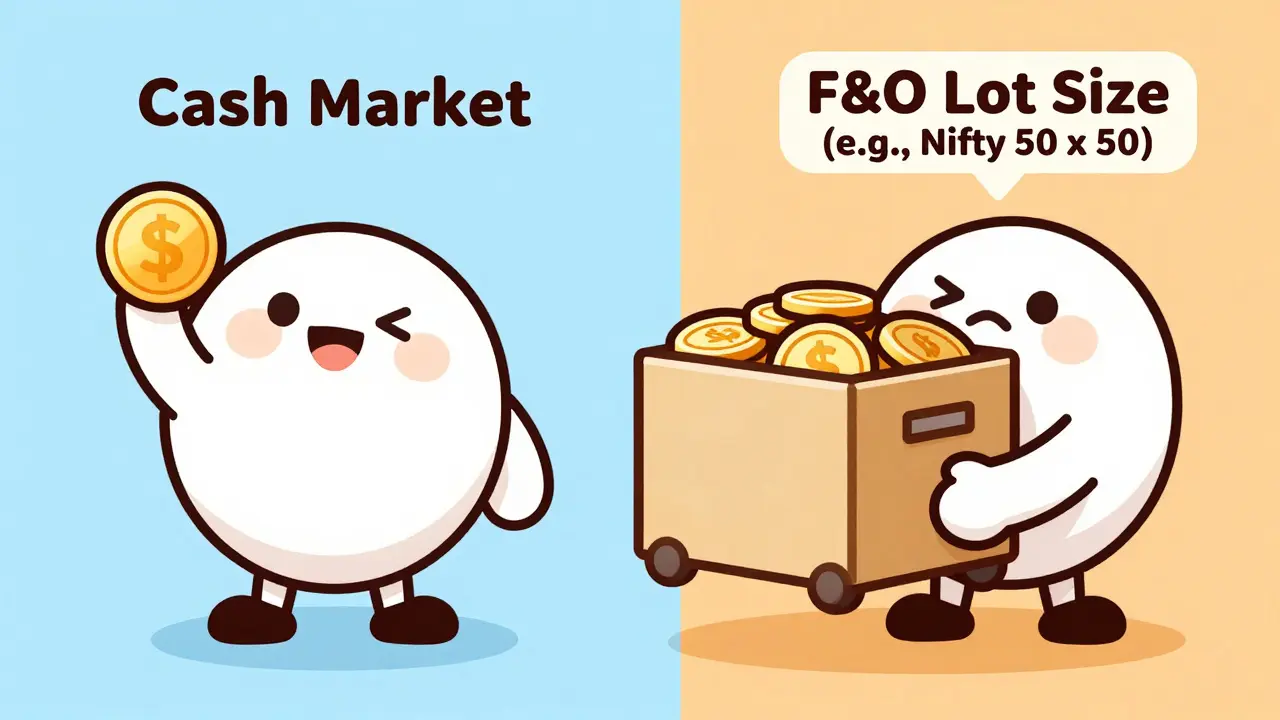
For Cash Market (equity delivery), there is generally no lot size. You can buy 1 share, 10 shares, or 100 shares. However, this freedom disappears when you step into the derivatives segment or specific equity categories.
The primary reason for lot sizes is standardization. When thousands of traders buy and sell futures or options, the exchange needs a standardized unit to match orders efficiently. If everyone could trade arbitrary quantities, the matching engine would struggle, and liquidity would dry up. By forcing everyone to trade in blocks of 50, 100, or 300, the market remains liquid and orderly.
F&O Trading: The Core of Lot Sizes
When people talk about lot sizes in India, they are almost always talking about Futures and Options. This is where the concept matters most. In the F&O segment, every underlying asset has a predefined lot size determined by the exchange-either the National Stock Exchange (NSE) or the Bombay Stock Exchange (BSE).
Let’s look at some common examples from the current market landscape:
- Nifty 50 Index: The lot size is typically 50. This means if the Nifty index is at 24,000, one futures contract represents 50 x 24,000 = ₹12,000,000 in notional value. However, you don’t pay the full amount; you only pay the margin.
- Bank Nifty: The lot size is usually 15. This smaller lot size makes it more accessible for retail traders compared to the broader Nifty.
- Reliance Industries: The lot size might be 250. To trade one future contract, you need exposure to 250 shares of Reliance.
- HDFC Bank: The lot size could be 800. This high number reflects the high price per share and the need to balance the contract value.
These numbers aren’t static. Exchanges review and revise lot sizes periodically based on volatility, open interest, and average daily turnover. A sudden change in lot size can significantly impact your strategy, so always check the latest data on the exchange website before placing an order.
How Lot Sizes Impact Your Margin and Risk
This is where many beginners get tripped up. Because you are trading in lots, the monetary value of each tick (price movement) is multiplied.
Imagine you are trading HDFC Bank futures with a lot size of 800. If the stock moves up by ₹1, your profit isn’t ₹1. It’s ₹800 (1 x 800). If it moves down by ₹1, you lose ₹800. This leverage is a double-edged sword. It amplifies gains but also magnifies losses.
To calculate the total contract value, use this simple formula:
Total Contract Value = Current Price × Lot Size
While you don’t pay the full contract value, your broker will require a margin deposit. For example, if the total contract value is ₹500,000, your broker might ask for 15-20% as margin, meaning you need around ₹75,000-₹1,00,000 in your account to hold one lot. This is why understanding lot sizes is critical for position sizing. You can’t just "buy a little bit" to test the waters in F&O; you’re committed to the full lot.
SME Segment: Different Rules, Different Risks
The SME Platform on BSE and NSE operates differently from the main cash market. While there is no strict "lot size" for buying individual SME shares in the same way as F&O, there are significant structural differences that affect how you trade them.
First, SME stocks are often illiquid. Unlike large-cap stocks where you can buy or sell thousands of shares instantly, SME stocks might have very low trading volumes. This means you might find it hard to exit a position quickly. Second, during Initial Public Offerings (IPOs), there are specific lot structures for allotment. Retail investors often apply in lots of 1,000 or 2,000 shares depending on the issue size.
Moreover, some brokers may impose their own minimum order sizes for SME stocks due to the lack of liquidity. Always check with your broker if there are any internal constraints before applying for an SME IPO or trading secondary market SME shares.
Index vs. Stock Futures: Key Differences
It’s important to distinguish between index futures and stock futures. Index futures (like Nifty 50) are settled in cash. You never receive the actual shares. Your profit or loss is calculated based on the difference between your entry price and the settlement price, multiplied by the lot size.
Stock futures, on the other hand, can sometimes be settled in physical shares, though most retail traders close their positions before expiry. The lot sizes for stock futures vary widely because each company has a different share price and market capitalization. The exchange adjusts these sizes to ensure that the notional value of contracts across different stocks remains somewhat comparable, preventing any single stock from dominating the derivatives market disproportionately.
| Segment | Underlying Asset | Typical Lot Size | Settlement Type |
|---|---|---|---|
| Cash Market | Any Listed Equity | 1 (No lot size) | Physical Delivery |
| Index Futures | Nifty 50 | 50 | Cash Settled |
| Index Futures | Bank Nifty | 15 | Cash Settled |
| Stock Futures | Reliance Industries | 250 | Physical/Cash |
| Stock Futures | HDFC Bank | 800 | Physical/Cash |
| SME IPO | Various SME Companies | Variable (often 1000+) | Allotment-based |

Common Mistakes Traders Make with Lot Sizes
One of the biggest errors is confusing the share price with the contract value. Beginners often see a stock priced at ₹100 and think they can control it with a small amount of money. But if the lot size is 100, the contract value is ₹10,000. With leverage, the required margin might be ₹2,000, but the risk exposure is still tied to the full ₹10,000 value.
Another mistake is ignoring the impact of lot size changes. Exchanges announce revisions well in advance, but traders often miss these updates. A sudden increase in lot size can reduce your potential returns if you were planning to trade multiple contracts. Conversely, a decrease might allow you to diversify more easily.
Finally, over-leveraging is a direct result of misunderstanding lot sizes. Because you only put up a fraction of the contract value as margin, it feels like you’re trading with "free money." But if the market moves against you, the losses are real and can exceed your initial margin, leading to margin calls or forced square-offs.
How to Check Current Lot Sizes
You don’t need to memorize all the lot sizes. They change, and there are hundreds of tradable instruments. Instead, rely on reliable sources:
- Exchange Websites: The NSE and BSE websites have dedicated sections for derivatives contracts where you can download the latest contract specifications.
- Trading Terminals: Most trading platforms display the lot size next to the instrument name. Look for details like "NIFTY-FUT" which will show the multiplier.
- Broker Calculators: Many brokers offer margin calculators that automatically factor in the current lot size and volatility to estimate your required margin.
Always verify the lot size before placing an order. A quick check can save you from unexpected margin requirements or failed trades.
Can I trade half a lot in F&O?
No, you cannot trade fractional lots in Futures and Options. The exchange mandates that all trades must be in multiples of the defined lot size. If the lot size is 50, you can trade 50, 100, 150, etc., but not 25 or 75.
Why do lot sizes change?
Exchanges adjust lot sizes to maintain optimal liquidity and manage risk. If a stock becomes too volatile or its price increases significantly, the exchange may increase the lot size to prevent excessive speculation. Conversely, if a stock’s price drops, the lot size might be reduced to keep the contract value accessible.
Is there a lot size for intraday equity trading?
No, intraday trading in the cash segment does not have a mandatory lot size imposed by the exchange. You can buy and sell any number of shares. However, some brokers may have minimum order sizes for practical reasons, but this is rare.
How does lot size affect my profit calculation?
Your profit or loss is calculated as: (Exit Price - Entry Price) × Lot Size × Number of Contracts. For example, if you buy 1 lot of Nifty (size 50) at 24,000 and sell at 24,100, your profit is (24,100 - 24,000) × 50 = ₹5,000.
Are lot sizes the same on NSE and BSE?
Not necessarily. While they often align for major indices like Nifty and Sensex, individual stock futures may have different lot sizes on different exchanges. Always check the specific exchange rules where you are trading.