80C Investments: Tax-Saving Options Like ELSS, PPF, and FDs in India
When you hear Section 80C, a provision under India’s Income Tax Act that lets you reduce your taxable income by up to ₹1.5 lakh per year. It’s not just a rule—it’s a tool that puts real money back in your pocket. Also known as tax-saving deductions, Section 80C isn’t about complicated finance jargon. It’s about choosing the right 80C investments, financial instruments approved by the government to help you save tax while building wealth that match your life stage, risk appetite, and goals.
Not all 80C options are the same. Some, like PPF, a government-backed savings scheme offering guaranteed returns and long-term security, are built for safety. Others, like ELSS funds, equity mutual funds with a mandatory 3-year lock-in that offer higher growth potential, push you to think long-term. Then there’s the tax-saving fixed deposit, a low-risk, fixed-return option ideal for conservative investors. Each has its own rhythm: PPF locks your money for 15 years, ELSS for just 3, and FDs for 5. Your choice isn’t just about returns—it’s about control, liquidity, and how much risk you’re willing to carry.
What makes 80C powerful isn’t just the deduction—it’s how these tools work together. Many people use a mix: a little PPF for stability, some ELSS for growth, and maybe a tax-saving FD for peace of mind. Employer contributions to EPF and NPS also count toward your ₹1.5 lakh limit, so you might already be using 80C without realizing it. The key is timing. Spreading your investments across the year—instead of dumping everything in March—reduces pressure and smooths out market risks. And while returns matter, don’t ignore the lock-in periods, tax treatment on maturity, and how inflation eats into fixed returns over time.
There’s no single best 80C investment. The right one depends on whether you’re saving for your child’s education, planning retirement, or just trying to lower your tax bill this year. Some people chase high returns and end up stuck with volatile ELSS funds during market crashes. Others play it too safe and miss out on compounding gains over 10 or 20 years. The goal isn’t to pick the top performer—it’s to build a mix that fits your life.
Below, you’ll find clear, no-fluff guides on exactly how each 80C option works, what returns you can expect, where the traps are, and how to use them smartly. Whether you’re new to investing or have been filing taxes for years, these posts cut through the noise and show you what actually matters.

Learn how to claim up to ₹1.5 lakh in tax deductions under Section 80C in India. Step-by-step guide on eligible investments, filing ITR, avoiding common mistakes, and maximizing savings.
Continue Reading
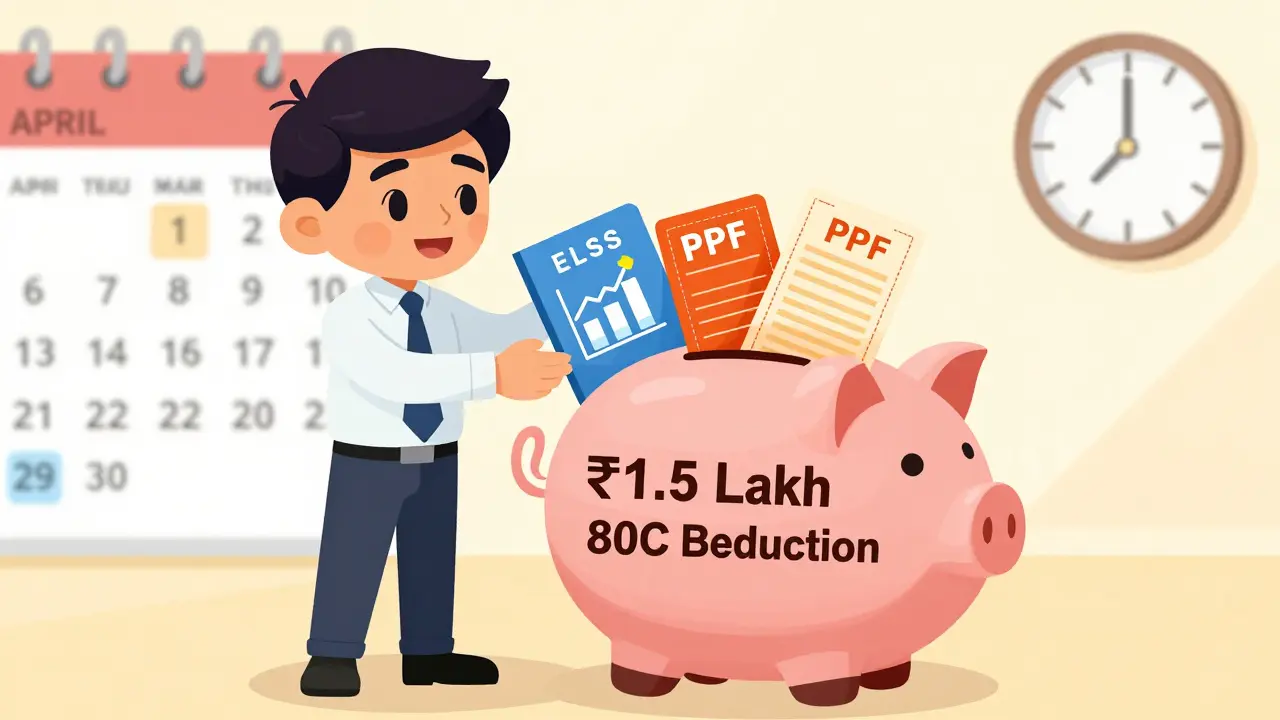
Learn how to use Section 80C in India to claim up to ₹1.5 lakh in tax deductions. Discover the best investments, avoid common mistakes, and maximize your tax savings with practical strategies.
Continue Reading

Use this monthly tax planning calendar to maximize your ₹1.5 lakh deduction under Section 80C in India. Avoid last-minute investments and start early to grow your savings and cut your tax bill.
Continue Reading

Learn the exact PAN, Aadhaar, and bank requirements to claim your full ₹1.5 lakh tax deduction under Section 80C in India. Avoid rejections and delays with this clear, step-by-step guide.
Continue Reading